




During the design and construction of underfloor heating systems, people often focus on pipe selection, heat source configuration, and the appearance of the floor paving, neglecting the “invisible” aspect of wiring. In fact, whether it’s the temperature control circuits and actuator wires in water-based underfloor heating, or the heating cables and control circuits in electric underfloor heating systems, the “reasonableness of the distance between wires” directly affects the system’s safety, stability, and long-term performance. Underfloor heating systems are usually in a closed structure, and once installed, the cost of later maintenance and adjustments is extremely high. If the wire spacing is improperly designed during the initial wiring stage, it may cause signal interference, localized overheating, and operational instability, even affecting the overall lifespan of the underfloor heating system.
Differences in Distance Requirements for Different Types of Underfloor Heating Wires
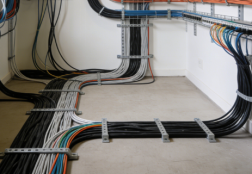
Before discussing the distance between wires, it’s necessary to clarify the types of wires involved in an underfloor heating system. Underfloor heating-related wires mainly include control signal lines, power supply wires, and cables that provide heating in electric underfloor heating systems. The operating conditions and safety requirements of wires with different functions are not the same. Control signal lines typically carry smaller currents and have relatively lower heat dissipation requirements, but are more sensitive to signal stability. Power supply lines, on the other hand, require careful consideration of heat generation and current carrying capacity. Heating cables themselves are heat sources, so their spacing design needs even more careful consideration. Therefore, there is no single standard for the minimum distance between underfloor heating wires; it needs to be designed differently based on the nature and purpose of the wires.
Electrical Safety is the Primary Consideration in Wire Spacing Design
In underfloor heating systems, wire spacing primarily serves the core objective of electrical safety. Wires that are too close together are prone to overheating due to poor heat dissipation, potentially leading to insulation aging and even safety hazards over long-term operation. A reasonable spacing ensures sufficient space for heat dissipation around the wires, keeping the operating temperature within a safe range. It also reduces problems such as wire compression and wear caused by construction errors. Especially in environments like underfloor heating where power is constantly supplied and concealed, safety margins are particularly important. Therefore, when designing wire spacing, it is better to leave appropriate margins than to excessively compress the space.
Avoiding Signal Interference and System Misjudgment
Besides safety issues, the distance between wires also affects the operational stability of the underfloor heating system. If control lines and power supply lines are too close together, they may be subject to electromagnetic interference, leading to unstable signal transmission and affecting the judgment and execution of the temperature control system. In applications such as zone control and intelligent temperature control, signal accuracy is particularly critical. Properly spacing different types of wires helps reduce interference risks and makes system command transmission more reliable. This is why underfloor heating wiring typically emphasizes the separate laying of different functional lines, rather than simply placing them side-by-side.
The Impact of Wire Distance from Construction and Maintenance Perspectives
From the perspective of construction and later maintenance, appropriate wire spacing is equally important. Insufficient spacing not only increases construction difficulty but also easily causes problems such as wire crossing and tangling during installation. When maintenance or component replacement is needed, overly dense wiring increases operational risks and may even affect the entire system. Reasonable spacing design helps improve construction quality and also reserves operational space for possible future maintenance and adjustments. Underfloor heating systems emphasize “one-time installation, long-term use,” therefore, actual operational needs should be fully considered during the wiring phase.
How close the wiring for underfloor heating systems can be is not simply a matter of “saving space,” but a systemic consideration requiring a balance between safety, stability, and maintainability. The differences in function and operating conditions among different types of wiring dictate varying spacing requirements. Appropriate wiring spacing effectively reduces the risk of overheating and interference, improves system reliability, and facilitates construction and subsequent maintenance. Conversely, neglecting this detail during the design and construction phases often leads to problems that gradually emerge during use, resulting in extremely high repair costs.