

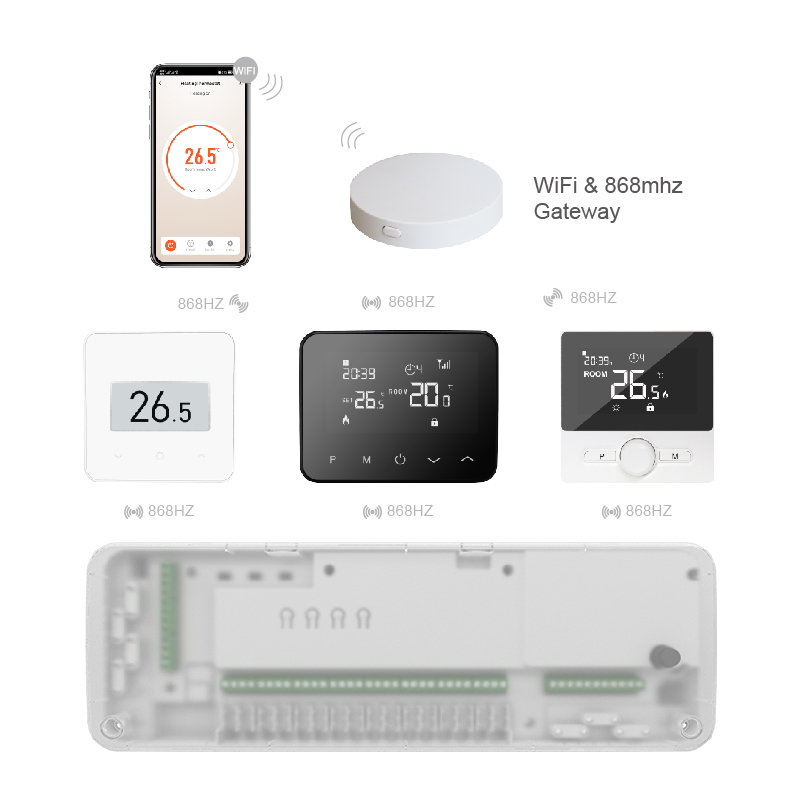
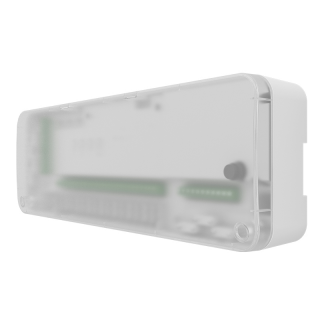
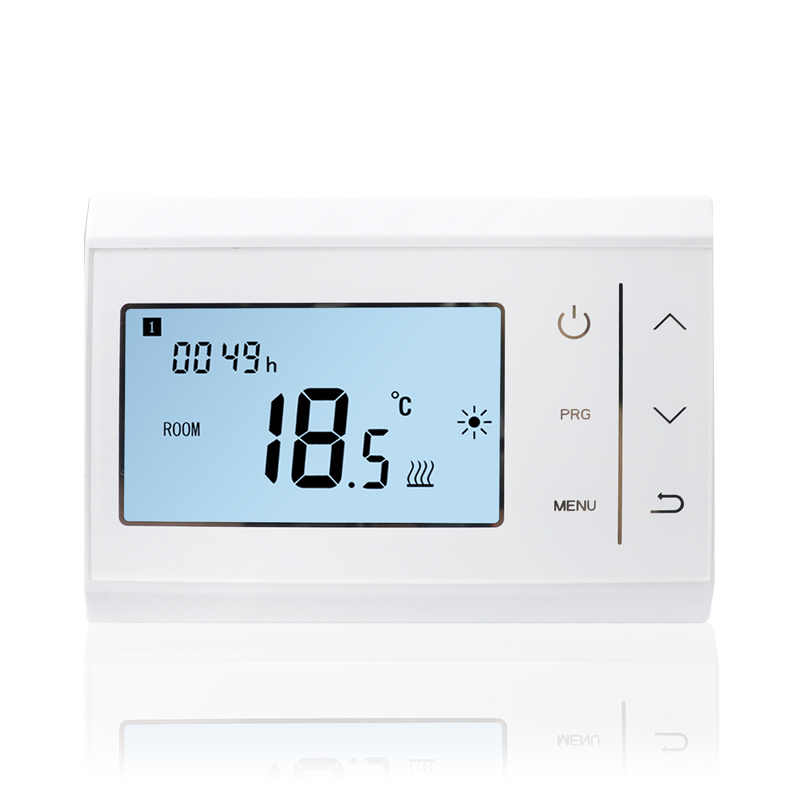
In modern homes and offices, underfloor heating systems are the preferred heating solution in winter due to their comfort, evenness, and concealment. For water-based underfloor heating systems, the wired control box is the core control unit, responsible for regulating the temperature of each circuit, controlling actuator actions, and communicating with the thermostat. The installation quality and location of the control box directly affect the operating performance and lifespan of the underfloor heating system. However, many users lack a systematic understanding of underfloor heating control box installation during renovation or upgrades, often neglecting crucial aspects such as location selection, fixing methods, wiring layout, and wiring specifications. Even if the control box itself is of good quality, improper installation can easily lead to problems such as insensitive circuit response, large temperature control errors, messy wiring, and even safety hazards.
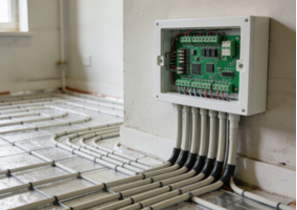
Choosing a Suitable Installation Location
The installation location of the underfloor heating control box directly affects operational convenience and system performance. A suitable installation location should meet the following conditions:
Ease of Operation and Monitoring: The control box should be installed in a frequently used indoor area or near maintenance access, allowing users and maintenance personnel convenient operation and inspection.
Avoid High Temperatures and Humidity: Avoid installation in direct sunlight, near radiators, or in areas with high humidity to prevent electrical equipment from being damaged by heat or moisture, which could shorten its lifespan.
Facilitate Wiring: The installation location should be close to the manifold or the area where underfloor heating pipes are concentrated, facilitating wiring for electrical wires, sensors, and actuators, and reducing signal attenuation or interference caused by long, redundant lines.
A reasonable installation location is fundamental to installation quality and ensures comfortable use and convenient maintenance in the future.
Control Box Fixing Method
Underfloor heating wired control boxes are generally wall-mounted. The fixing method directly affects safety and stability. The following points should be noted during installation:
Wall Load-Bearing and Flatness: Ensure the installation wall is flat and sturdy enough to support the weight of the control box and its internal equipment.
Use Appropriate Screws and Expansion Bolts: Select appropriate fasteners based on the wall material to ensure the control box is securely fixed and does not wobble.
Maintenance Space: Sufficient space should be reserved around the control box to facilitate future wiring, disassembly, and maintenance. It should not be placed flush against walls or other obstructions.
A secure and reasonable fixing method ensures the stability and safety of the control box during long-term use, while reducing circuit load and the risk of failure.
Wiring Layout and Specifications
Wire layout and wiring are among the most critical aspects of underfloor heating control box installation. Standardized wiring not only ensures stable system operation but also improves safety and maintainability. Key points include:
Wire Classification and Labeling: Power lines, temperature control signal lines, and actuator control lines should be laid separately and clearly labeled to avoid mixing or misconnection.
Maintaining Appropriate Spacing: Maintain appropriate spacing between wires to prevent mutual interference or overheating due to poor heat dissipation, ensuring safe operation.
Wiring Sequence and Secureness: Connect the power, sensor, and actuator lines in sequence according to the control box terminal instructions, ensuring the connections are secure and not loose.
Avoiding Wire Pressure or Bending: Pay attention to the bending radius and stress on the wires during wiring to prevent damage or interference with signal transmission.
Scientific wiring and standardized connections ensure precise control of each circuit by the control box, improving the response speed and temperature control accuracy of the underfloor heating system.
Commissioning and Safety Measures
After installation, commissioning is a crucial step to ensure the system operates normally. This mainly includes:
Pre-power-on inspection: Checking the wiring connections for correctness, ensuring there are no short circuits or leakage.
System power-on test: Testing the response of the thermostat and actuator in each circuit to ensure normal signal transmission and circuit operation.
Safety protection measures: Equipping the system with necessary overload protection and circuit breaker protection devices, and ensuring the control box’s dustproof and moisture-proof performance meets specifications.
Recording and labeling: Recording and labeling each circuit and line for easy maintenance and troubleshooting later.
The implementation of commissioning and safety measures is a critical step after installation, minimizing system failures and safety hazards.
The installation of the underfloor heating wired control box is not a simple mounting operation, but a systematic project involving location selection, fixing methods, wiring layout, wiring specifications, and commissioning and safety measures. A well-designed installation location facilitates both operation and wiring; a secure fixation ensures long-term equipment stability; standardized wiring guarantees accurate signal transmission and system security; and thorough commissioning provides reliable assurance for system operation. Neglecting any aspect can lead to insensitive loop control, large temperature control errors, or even safety hazards. The importance of scientific installation is even more pronounced in modern multi-loop, multi-zone underfloor heating systems.