As people’s demands for living comfort and quality of life continue to rise, underfloor heating has gradually become an important choice for modern residential heating. Among them, electric and water-based underfloor heating are currently the two most widely used forms. They differ significantly in heating principles, system structure, installation methods, and post-installation user experience, making “which is more expensive” one of the most important questions for users during the selection process.
Differences in System Composition Determine Different Cost Structures
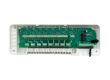
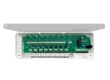
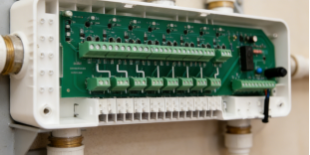
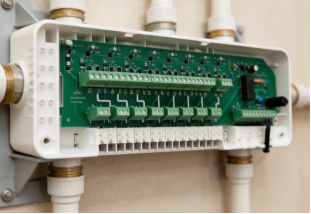
Electric underfloor heating mainly consists of heating cables or heating films, a temperature control system, and an insulation structure, making its overall structure relatively simple. Water-based underfloor heating, on the other hand, includes multiple parts such as heat source equipment, a piping system, a manifold, and a circulating pump, making the system more complex. Therefore, the cost structure of the two differs fundamentally: the cost of electric underfloor heating is more concentrated in energy consumption and electricity costs, while water-based underfloor heating is characterized by equipment investment, operating costs, and maintenance costs. This structural difference directly affects the subsequent cost.
Comparison of Operating Costs
During daily operation, electric underfloor heating uses electricity as its sole energy source, and its costs are closely related to usage duration and power consumption. Due to its high energy conversion efficiency and rapid heating, it offers significant advantages for short-term use. However, prolonged, 24/7 operation often results in high cumulative electricity costs. Water-based underfloor heating typically relies on centralized heat sources or independent heating equipment. Heat is transferred through water circulation, providing good thermal stability and heat storage capacity. Under continuous heating conditions, its operating costs per unit time are relatively more advantageous. Therefore, from a long-term perspective, water-based underfloor heating is often more economical in terms of operating costs.
Differences in Initial Investment and Installation Costs
During the installation phase, electric underfloor heating, due to its simple construction and high system integration, has relatively lower requirements for space and equipment, making initial investment generally more controllable. It is suitable for budget-conscious individuals or those with localized heating needs. Water-based underfloor heating requires complete piping and related equipment, placing higher demands on construction techniques and space conditions, thus generally resulting in higher initial investment. However, this cost is a one-time expense and can be gradually amortized over long-term use.
Hidden Costs Related to Maintenance and Service Life
Electric underfloor heating systems have a relatively simple structure and require less frequent maintenance. However, if localized damage occurs, repairs are difficult and often require the removal of the entire floor. While water-based underfloor heating systems are more complex, each component can be maintained in sections, resulting in a longer service life. Long-term stable operation is more conducive to controlling overall costs. Therefore, its overall cost advantage becomes increasingly apparent over a longer period of use.
There is no absolute “which is more expensive,” electric or water-based underfloor heating. The key lies in the composition of the costs and the length of the usage period. From a short-term and low-frequency usage perspective, electric underfloor heating has relatively controllable overall costs due to lower initial investment and flexible control. However, from a long-term, continuous heating perspective, water-based underfloor heating has a greater advantage in overall costs due to its more stable operating characteristics and lower unit operating costs. The cost difference of electric underfloor heating is more reflected in the accumulated electricity costs, while the cost pressure of water-based underfloor heating is mainly concentrated in the initial construction phase. When choosing, users should comprehensively weigh their own living time, heating habits, budget planning, and comfort requirements.