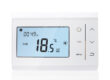
Boilers are the core heating equipment in many factories, hotels, and even some homes, acting like a “heat source steward,” while the boiler thermostat is the “temperature controller” in this steward’s hands. It precisely regulates the heat output of the boiler, keeping the temperature stable within the set range. However, many people have doubts about the safety of boiler thermostats. In fact, their safety performance is reflected in multiple aspects, including technical design, material selection, and proper use. As long as the right equipment is selected and the correct method is used, it can be used with complete peace of mind.

The safety of boiler thermostats stems first and foremost from their “intelligent” temperature control logic. Modern electronic thermostats are equipped with highly sensitive temperature sensors, acting like “temperature detectives,” capable of sensing the water temperature or heat transfer oil temperature at the boiler outlet in real time. Once the temperature deviates from the set value, for example, if the set temperature is 80℃ and the actual temperature rises to 81℃ or drops to 79℃, it will quickly “act”: if the temperature is too high, reduce heating; if the temperature is too low, increase the heat output. This closed-loop control system, characterized by real-time monitoring and rapid adjustment, can keep temperature fluctuations within a very small range, such as ±0.5℃, acting like a “safety lock” for the temperature and avoiding the risks caused by sudden temperature fluctuations. More importantly, it features a dual protection mechanism. If the sensor detects an abnormal temperature increase, such as overheating due to a malfunction, the system will first cut off the heating power supply and simultaneously issue a “beep” alarm. If the temperature continues to climb to a dangerous level, an independently designed mechanical over-temperature protector will step in, directly disconnecting the main circuit and completely cutting off the heat source to prevent the boiler from overheating and exploding. Taking a certain brand of thermostat as an example, its temperature control range is from -80℃ to 300℃. When heating a reaction vessel, it can quickly heat to 300℃ and also cool down to -20℃ within 10 minutes, all without manual intervention, making it safe and worry-free.
The materials and manufacturing processes used in the equipment are also crucial for safety. The outer shell of the boiler thermostat is mostly made of 304 stainless steel or engineering plastics, both of which are extremely durable. Stainless steel is high-temperature resistant and corrosion-resistant, able to withstand the high temperatures and humidity of boiler rooms; engineering plastics are lightweight yet strong, and not easily deformed. The internal heat transfer medium circulation pipes use either seamless steel pipes or Teflon-coated pipes. Seamless steel pipes offer excellent sealing, preventing heat transfer oil leakage; Teflon-coated pipes are resistant to chemical corrosion, and will not be damaged even if the heat transfer oil contains acidic substances. Key electrical components, such as relays and contactors, have all passed the national CCC certification and can operate stably at 220V or 380V without malfunctioning or malfunctioning due to voltage fluctuations. For example, the high and low temperature temperature controller has a closed circulation system, isolating the heat transfer oil from air, preventing oxidation and deterioration. The evaporator gaps only need to be cleaned every three months, effectively preventing sludge from clogging the pipes and avoiding equipment damage.
However, even the safest equipment can cause problems if used improperly. Therefore, standardized operation and regular maintenance are the “last mile” of safety assurance. Taking a constant temperature water bath as an example, the water level should not be too low, otherwise the heating element will dry-burn, damaging the equipment and even causing a fire; the water level should also not be too high, exceeding two-thirds of the capacity, as water may overflow and cause a short circuit. Oil baths require even more care; they must never be run dry without oil, otherwise the heating element will be damaged, and in severe cases, may cause a fire. Therefore, be sure to carefully read the instruction manual before use, ensure proper grounding of the power supply during installation, and avoid use in humid or flammable environments; during operation, regularly check whether the water tank leaks, whether the condensate drain pipe is in the correct position, and whether the pipes are clean; after use, promptly clean the condensate from the module to prevent metal parts from rusting. A chemical company once suffered damage to its evaporator due to microbial growth and pipe blockage caused by not cleaning the water tank of its high and low temperature thermostat, resulting in high repair costs and production delays.
The safety performance of a boiler thermostat is the result of the combined effect of technology, materials, and standards. From “intelligent” electronic temperature control to “reliable” mechanical protection, from durable material selection to strict manufacturing processes, and then to standardized operation and regular maintenance, every link builds a solid defense for safe operation. When selecting equipment, choose products that have passed ISO9001 quality certification. When using it, learn how to operate it and have it regularly inspected and maintained by professionals. This will ensure the boiler thermostat operates stably, allowing the boiler to run efficiently and safely. In the future, with the development of IoT technology, intelligent thermostats will also be able to achieve remote monitoring and early warning of malfunctions, further enhancing safety performance and providing greater peace of mind for users.