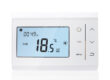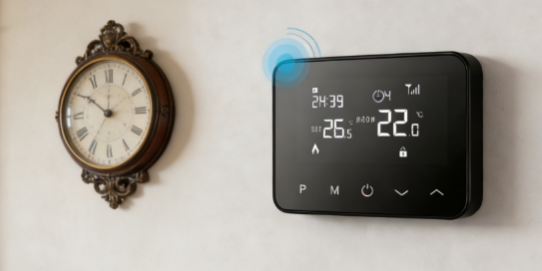
Boiler thermostats, as core equipment for regulating boiler temperature, play a crucial role in industrial production, heating systems, and some residential applications. They precisely control heat source output to ensure the boiler’s operating temperature remains stable within a set range, improving energy efficiency and ensuring equipment safety. However, improper use or neglect of maintenance can turn a thermostat into a source of safety hazards. From installation and commissioning to daily operation, from environmental adaptation to troubleshooting, every step must strictly adhere to regulations to ensure the boiler thermostat performs optimally and avoid risks caused by operational errors.
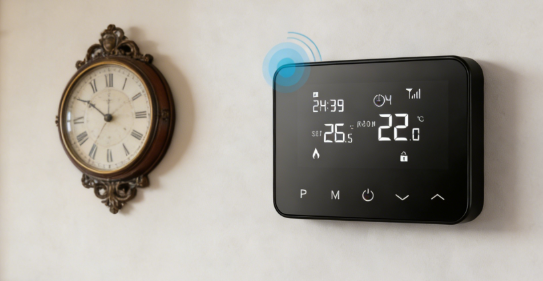
Installation and commissioning are the first steps to safe use of a boiler thermostat and require extreme caution. Before installation, it is essential to confirm that the equipment model matches the boiler’s power and temperature range to avoid temperature control failure or equipment damage due to power mismatch. For example, using an industrial-grade high-power thermostat for a small domestic boiler may result in frequent start-stop cycles due to excessively high control precision, shortening the equipment’s lifespan; conversely, using a low-power thermostat for a large industrial boiler may lead to temperature exceeding the limit due to response lag. The installation location should be far away from damp, high-temperature, or mechanically damaged areas to prevent moisture from entering the circuit board and causing short circuits, or high temperatures from reducing sensor sensitivity. During the commissioning phase, operate step-by-step according to the instruction manual. First, conduct a no-load test to observe whether the temperature display is accurate and whether the control logic is reasonable; then connect to the boiler for a load test to check whether the switching between heating and cooling modules is smooth, avoiding drastic temperature fluctuations due to incorrect parameter settings. A chemical plant once put the thermostat into use without commissioning, and the initial parameter deviation caused the boiler temperature to rise continuously, eventually triggering the over-temperature protection shutdown, affecting the operation of the entire production line.
Detailed management in daily operation directly affects the safety and stability of the thermostat. Before use, check whether the water tank or oil bath level is within the safe range. Too low a level may cause dry burning and damage to the heating element, while too high a level may overflow and cause a short circuit. For example, the water level in a thermostatic water bath should be controlled 2-3 cm above the heating element to ensure heating efficiency and avoid the risk of dry burning; the heat transfer oil in an oil bath needs to be replenished regularly to prevent the level from dropping due to evaporation. During operation, close monitoring of temperature changes is crucial. If the temperature consistently deviates from the set value or fluctuates excessively, the machine should be stopped immediately to check for loose sensors and control circuit malfunctions. A hotel incident where failure to address temperature anomalies promptly resulted in overheating of boiler water, scalding staff and highlighting the serious consequences of operational negligence. Furthermore, frequent start-ups and shutdowns should be avoided. Thermostats require time to stabilize and maintain temperature; frequent switching accelerates component aging and reduces equipment lifespan.
Environmental factors often overlooked influencing boiler thermostats can become a source of safety hazards. The equipment should be installed in well-ventilated areas to prevent overheating due to poor heat dissipation, which can affect the performance of electronic components. For example, in high-temperature summer environments, if the thermostat is installed in a confined space, insufficient heat dissipation may trigger overheat protection, leading to temperature control interruption. Simultaneously, it should be kept away from corrosive gases or liquids to prevent corrosion of sensors, circuit boards, and other components, which could cause poor contact or short circuits. In coastal areas or chemical plants, salt spray or chemicals in the air can accelerate equipment aging; therefore, the equipment surface should be cleaned regularly and an anti-corrosion coating applied. In low-temperature winter environments, it is crucial to take precautions against freezing in water tanks or oil pans to prevent liquids from freezing and expanding, which could damage pipes or equipment.
Regular maintenance is key to extending the lifespan of boiler thermostats and ensuring safety. Monthly checks of sensor cleanliness are necessary. Scale or dirt buildup on the surface can affect temperature detection accuracy, leading to temperature control deviations. For example, every 1 mm increase in scale thickness can increase sensor temperature measurement error by 0.5°C, and long-term accumulation can lead to overheating risks. Condensate drain pipes should be cleaned quarterly to prevent blockages that could cause condensate backflow and damage circuit boards or heating modules. Annual comprehensive overhaul by professionals is required, including checking for loose electrical connections, replacing aging components, and calibrating the temperature display. In one factory, neglect of regular maintenance led to oxidation of the relay contacts inside the thermostat, resulting in poor contact and ultimately causing boiler temperature malfunction, equipment damage, and production interruption.
Safe use of boiler thermostats requires attention throughout the entire process of installation, operation, environmental management, and maintenance. From selecting the appropriate model to standardized installation and commissioning, from daily operational details to addressing environmental challenges, and finally to regular professional maintenance, every step must be approached with rigor. Only by integrating safety awareness into every operational step can boiler thermostats become “guardians” of stable operation, rather than “creators” of safety hazards. With technological advancements, intelligent thermostats now possess functions such as remote monitoring and fault warnings; however, the standardization of human management remains the foundation of safety. In the future, while enjoying the convenience of technology, it is even more necessary to strengthen safety awareness, ensuring that boiler thermostats continue to play their value within a safe framework.