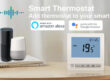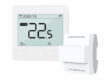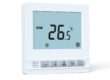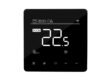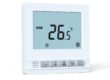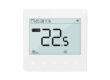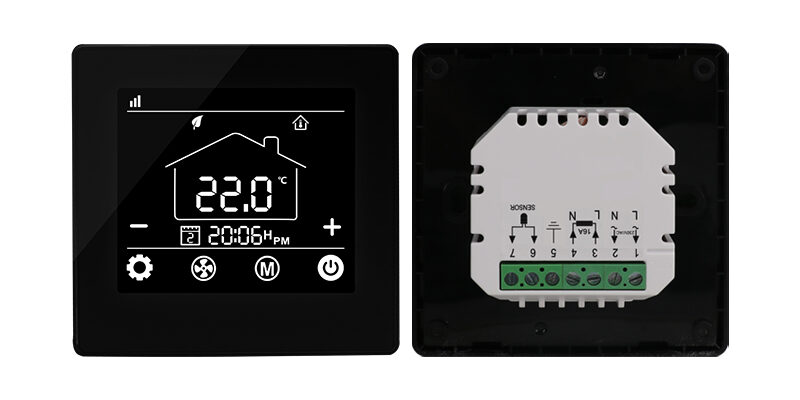
In modern HVAC systems, the FCU thermostat (Fan Coil Unit Thermostat) plays a central role in indoor temperature regulation. Whether in office buildings, hotel rooms, or residential spaces, precise temperature control enhances comfort while improving energy efficiency. This article explains how accurate indoor temperature control can be achieved through FCU thermostats, covering core functions, control principles, installation, commissioning, and optimization tips.
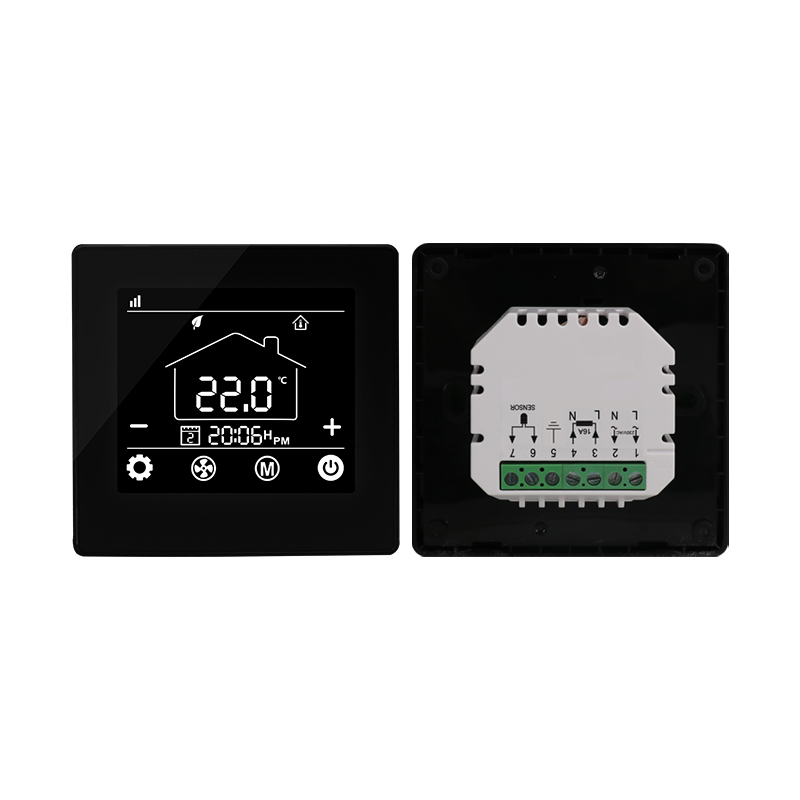
Core Functions of an FCU Thermostat
An FCU thermostat is designed to monitor indoor temperature and regulate fan coil operation automatically. Its main functions include:
Temperature sensing and regulation
The thermostat continuously measures room temperature using a built-in or external sensor. When the measured temperature deviates from the setpoint, it adjusts fan speed or valve opening to restore thermal balance.
Fan speed control
Most FCU thermostats support low, medium, high, or automatic fan modes. By adjusting airflow volume, the system responds quickly to temperature changes while maintaining stable indoor conditions.
Operating mode selection
Cooling, heating, and auto modes allow the thermostat to adapt to seasonal changes and varying thermal loads, ensuring consistent comfort throughout the year.
Programmable scheduling
Weekly or multi-period scheduling enables different temperature settings based on occupancy patterns, improving both comfort and energy savings.
Temperature Control Principles Behind Precision
Accurate indoor temperature control relies on effective coordination between the thermostat and the fan coil unit.
Closed-loop temperature feedback
The thermostat constantly compares actual room temperature with the setpoint. Control signals are sent to the fan motor or water valve, forming a continuous feedback loop that minimizes temperature deviation.
PID and proportional control
Advanced FCU thermostats use PID (Proportional–Integral–Derivative) algorithms to regulate output smoothly. This prevents temperature overshoot and reduces frequent on/off cycling, resulting in more stable indoor conditions.
Zoning control capability
In large buildings or hotels, individual thermostats allow each room or zone to be controlled independently, avoiding uneven temperature distribution and improving overall system efficiency.
Installation and Commissioning Considerations
Proper installation and setup are essential for achieving precise temperature control.
Correct installation location
The thermostat should be installed on an interior wall with good air circulation, away from direct sunlight, air outlets, or heat sources, ensuring accurate temperature sensing.
Wiring and communication interfaces
Thermostats may use dry contact outputs, 0–10V analog signals, or digital communication protocols such as Modbus or BACnet. Correct wiring ensures reliable communication with the FCU and building control system.
System commissioning
During commissioning, temperature setpoints, fan control logic, and control algorithms should be adjusted based on actual operating conditions. Observing temperature response curves helps confirm stable and precise performance.
Optimization Tips for Higher Accuracy
Use external temperature sensors
Remote or return-air temperature sensors provide a more representative measurement of room conditions, further improving control accuracy.
Leverage programmable features
Setting temperature schedules based on occupancy patterns—such as working hours or nighttime setbacks—enhances comfort while reducing unnecessary energy consumption.
Perform regular maintenance and calibration
Cleaning FCU filters, checking valve operation, and calibrating temperature sensors help maintain long-term control accuracy and system reliability.
Conclusion
With proper selection, installation, and configuration, an FCU thermostat enables precise indoor temperature control that enhances comfort and reduces energy consumption. By understanding control principles and applying optimization strategies, FCU thermostats can deliver stable, efficient performance in offices, hotels, and residential buildings. Precise temperature control is not only a comfort upgrade—it is a key factor in creating energy-efficient and intelligent HVAC systems.