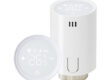
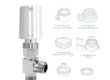
In home heating systems, thermostatic radiator valves are core components for regulating room temperature and improving comfort, yet their lifespan is often overlooked by users. In fact, the lifespan of a thermostatic valve not only affects replacement costs but also directly impacts the stability and energy efficiency of the heating system. From precision-manufactured sensors to industrial-grade corrosion-resistant designs, modern thermostatic valves have achieved a breakthrough by extending their lifespan to match that of the radiator itself, bringing users long-term value of “one-time installation, lifetime benefit.”

Sensor Technology: The Core Secret to Thermostatic Valve Lifespan
The “brain” of a thermostatic valve is its built-in temperature-sensing element, the performance of which directly affects the device’s lifespan. Traditional paraffin sensors, due to their low coefficient of thermal expansion and slow response, typically only operate stably for about 5 years. Sensors using liquid or gaseous working fluids, however, achieve more precise temperature sensing through molecular-level thermal motion. For example, Danfoss, a leading global HVAC brand, offers a gas-filled sensor that utilizes the high compressibility of gas to quickly adjust the valve opening during temperature fluctuations, achieving a lifespan of over 20 years. This technological breakthrough stems from the optimization of the sensor’s sealing structure—using multi-layered metal diaphragms to isolate the medium, preventing liquid leakage or gas escape, and ensuring the temperature-sensing element maintains stable performance during long-term use.
Materials and Processes: A Leap from “Short-Lived” to “Long-Lived”
Early thermostatic valves often faced problems such as corrosion and wear due to material defects. For example, ordinary brass valve bodies were prone to pitting corrosion in chlorinated water, and the valve stem seals aged and cracked at high temperatures, leading to equipment failure within 3-5 years. Modern thermostatic valves significantly extend their lifespan through material upgrades and process innovations: the valve body uses nickel-plated brass to form a dense oxide layer to resist corrosion; the valve stem is made of 304 stainless steel, combined with a graphite-filled PTFE seal, allowing stable operation in environments ranging from -10℃ to 120℃; the spring is made of 17-7PH precipitation-hardening stainless steel, maintaining elasticity even after 100,000 fatigue cycles. More importantly, some high-end products employ a triple-safety valve core design, using a redundant structure to ensure that the failure of a single component does not affect the overall function, theoretically extending the lifespan to over 30 years.
Environmental Adaptability: A Dual Test of Water Quality and Operating Conditions
The lifespan of a thermostatic valve is highly dependent on the operating environment. In centralized heating systems in northern regions, high water hardness and excessive oxygen content are the main causes of scale buildup and internal corrosion in the valve body. Data shows that in systems without filters, the average lifespan of a thermostatic valve is only 5-7 years, while a pre-filter (Y-type) can intercept more than 90% of impurities, extending its lifespan to over 10 years. For independent heating users, choosing a thermostatic valve suitable for low-temperature floor radiant heating is particularly important—these products reduce the valve core opening and closing pressure (from the conventional 0.3 bar to 0.1 bar), reducing the wear of the seals caused by water flow impact, and can still maintain a lifespan of over 15 years even under frequent start-stop conditions.
Maintenance and Installation: Details Determine Long-Term Benefits
Even with top-quality materials, improper use can still shorten the lifespan of a thermostatic valve. During installation, ensure the valve body is horizontally fixed to prevent the temperature sensor from being obstructed by curtains, which could cause malfunctions. Incomplete system flushing may cause welding slag to jam the valve core, resulting in permanent damage. If water is not drained from the pipes during winter heating shutdown, the valve body may freeze and crack, rendering it unusable. Regular maintenance is equally crucial: check the filter differential pressure every two years and clean any blockages promptly; replace the valve stem seal every five years to prevent micro-leakage and energy waste. Data from a certain brand shows that properly maintained thermostatic valves have an actual lifespan 40% longer than unmaintained products.
Long-term Value: Return on Investment Beyond the Equipment Itself
Choosing a long-life thermostatic valve is essentially investing in the future. For example, in a 100㎡ house, while the initial cost of installing a 20-year lifespan thermostatic valve is 30% higher than ordinary products, it avoids the cost of replacing the valve every 8-10 years (including labor costs of approximately 800 yuan per replacement), resulting in total savings of 1600 yuan over 20 years. More importantly, a stable thermostatic valve continuously optimizes heating efficiency—by precisely controlling temperature, it reduces boiler start-ups and shutdowns, saving approximately 15% on gas costs annually, resulting in cumulative energy savings exceeding the equipment’s intrinsic value over 20 years. This “one-time investment, lifelong benefit” model is becoming the preferred choice for rational consumers.
From breakthroughs in sensor technology to full lifecycle management, modern thermostatic radiator valves have shed their “vulnerable component” label, becoming reliable “long-life components” in heating systems. For users seeking a high-quality lifestyle, choosing products certified by EN215 and employing liquid sensors and stainless steel valve bodies is not only an investment in comfort but also a precise strategic plan for energy savings over the next 20 years. As technological advancements synchronize equipment lifespan with building lifespans, the value of thermostatic valves transcends that of a single product, becoming a cornerstone of building green homes.