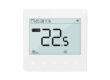
-800x400.jpg "HT20-白色-采暖(单热)")
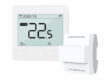
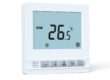
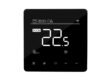
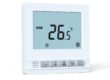
As schools increasingly prioritize student health and learning efficiency, the design of school building HVAC systems has become more critical. The Fan Coil Unit (FCU) Thermostat, a key component of air conditioning systems, precisely regulates fan coil unit operation to maintain stable indoor temperatures, enhancing comfort and energy efficiency in classrooms, laboratories, and common areas.
.jpg)
Unique HVAC Requirements in School Buildings
School buildings have characteristics that create unique challenges for temperature control:
High occupant density: Classrooms, libraries, and auditoriums often accommodate large numbers of students and staff, requiring effective air circulation and stable temperature and humidity control.
Distinct functional zones: Different areas such as classrooms, laboratories, offices, and cafeterias have varying comfort and temperature requirements, necessitating flexible zoning control.
Energy efficiency and sustainability: HVAC systems in schools operate continuously, making energy savings and reduced carbon emissions important goals.
In this context, FCU thermostats play a key role in improving comfort and reducing energy consumption.
Key Features of Fan Coil Unit Thermostats
Modern FCU thermostats provide intelligent functions suitable for school applications:
Precise temperature control: Adjusts fan speed and valve position to maintain stable temperatures, preventing discomfort that may affect student attention and performance.
Zonal management: Independently controls different areas to meet specific temperature needs for classrooms, laboratories, and offices.
Energy-saving mode: Optimizes fan operation and water flow to reduce energy consumption, ideal for long-term operation in schools.
Remote monitoring and management: Networked thermostats enable centralized monitoring and remote adjustments, improving operational efficiency.
Advantages of Using FCU Thermostats in Schools
1. Enhanced Comfort
By automatically regulating indoor temperature, FCU thermostats ensure that students and staff experience a stable and comfortable environment, supporting learning and productivity.
2. Energy Savings and Reduced Operating Costs
Intelligent zoning and load control allow thermostats to adjust fan and valve operation according to occupancy and usage patterns, preventing energy waste and lowering HVAC operating costs.
3. Simplified Management and Maintenance
Network-enabled thermostats provide real-time monitoring of temperature and equipment status, reducing the need for manual inspections and allowing remote adjustments, enhancing system reliability.
4. Support for Multi-Functional Spaces
School buildings include classrooms, laboratories, libraries, offices, and cafeterias. FCU thermostats allow flexible control across all zones, ensuring comfort tailored to each functional area.
Conclusion
In school buildings, fan coil unit thermostats provide precise control of fans and valves, achieving stable, comfortable, and energy-efficient indoor environments. They improve comfort for students and staff, optimize HVAC system energy use, and simplify management and maintenance. For modern school facilities, deploying FCU thermostats is an effective solution to enhance learning environments and operational efficiency.