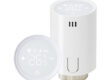
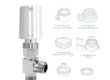
As a core component of heating systems, thermostatic radiator valves play a crucial role in automatically regulating room temperature, balancing hydraulic pressure, and saving energy. However, with increasing service life or improper operation, valves may experience malfunctions such as jamming, leakage, and temperature control failure, affecting heating efficiency and even causing energy waste. Mastering the correct repair methods can not only extend the valve’s lifespan but also avoid the additional costs of replacing the valve. Below, we will systematically explain the troubleshooting and repair steps for common thermostatic radiator valve malfunctions to help users quickly resolve practical problems.

When a thermostatic radiator valve malfunctions, the first step is to determine the type of fault through observation and testing. Common fault symptoms include: the valve cannot be turned or adjusted, the room temperature deviates significantly from the set value, continuous dripping or seepage at the valve, and localized overheating or underheating of the radiator. For example, if the valve cannot be turned at all, the valve core may be stuck due to impurities or the internal spring may be faulty; if the room temperature is consistently lower than the set value, the temperature sensing element may be aging, causing signal transmission delays; if there is seepage at the valve connection, the sealing gasket may be aging or the threads may be loose. By initially determining the direction of the fault, more targeted repair work can be carried out.
For valve jamming or difficulty in turning, disassembly and internal cleaning are usually required. After closing the main valve of the heating system, use a wrench to unscrew the connecting nut between the valve body and the radiator counterclockwise, and carefully remove the valve. Clean the inside of the valve core with a soft brush to remove impurities such as scale, rust, or dust. If necessary, soak the valve core in white vinegar for 10-15 minutes to dissolve scale. If the valve core spring is broken or deformed, replace it with a spring of the same specification. If the valve stem is bent, it can be slightly straightened with pliers, but avoid excessive force that could break it. After cleaning or replacing parts, reassemble the valve in the original order, ensuring a smooth fit between the valve stem and valve core. Finally, slowly open the main heating valve to test if the valve turns smoothly.
If the valve leaks, different measures should be taken depending on the location of the leak. If the leak is from the connection between the valve body and the pipe, it may be due to loose threads or an aged sealing gasket. In this case, try tightening the connecting nut with a wrench. If the leak persists, shut down the system, remove the valve, and replace it with new Teflon tape or a new rubber sealing gasket. If the leak originates from the top or side of the valve, it may be due to a failed temperature sensing element seal or a cracked valve body. In this case, the entire valve needs to be replaced. It is important to note that excessive tightening of the nuts during repair should be avoided to prevent damage to the valve body threads or deformation of the sealing gaskets.
Temperature control malfunction is another common problem, manifesting as a large deviation between the room temperature and the set value, or frequent valve opening and closing. This is usually due to aging or improper placement of the temperature sensing element. For built-in temperature sensing elements, if performance degradation is suspected, contact the manufacturer to replace it with the same model. For external temperature sensing elements, check if they are obstructed or near heat sources. If necessary, adjust the sensor position to a non-interference area approximately 1.5 meters above the ground in the middle of the radiator. Additionally, excessive buildup inside the valve may affect the linkage between the temperature sensing element and the valve core; in this case, the valve interior must be thoroughly cleaned.
Repairing thermostatic radiator valves is not a complex procedure, but patience and care are required. By systematically troubleshooting the cause of the fault, cleaning or replacing components accordingly, and following standardized operating and assembly procedures, most common problems can be resolved independently. Regular valve maintenance (such as checking the seals and cleaning the valve core before each heating season) can prevent malfunctions and extend the valve’s lifespan. Choosing reliable valves and mastering repair skills can not only ensure the stable operation of the heating system but also save households the cost of replacing new valves, truly achieving “small repairs, big benefits.”