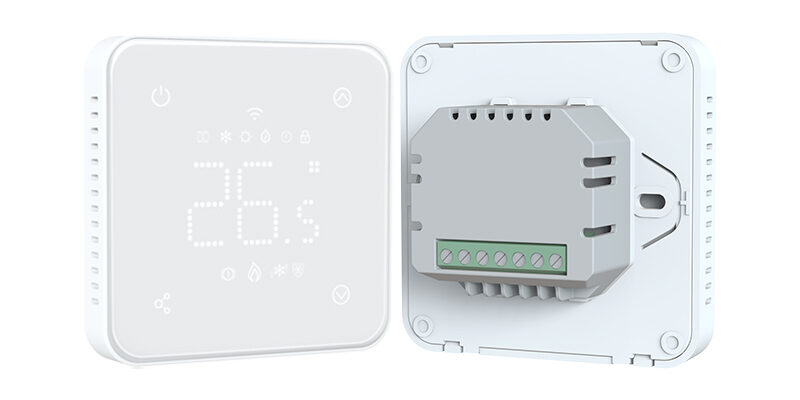
In modern commercial buildings, offices, hotels, and hospitals, fan coil systems (FCUs) are often paired with central air conditioning systems to regulate indoor temperature and maintain comfort. Fan coil thermostats, as the terminal control devices, can interact with the central system to achieve energy savings and precise temperature control. This article explains the principles, methods, and key considerations for linking fan coil thermostats with central air conditioning systems.
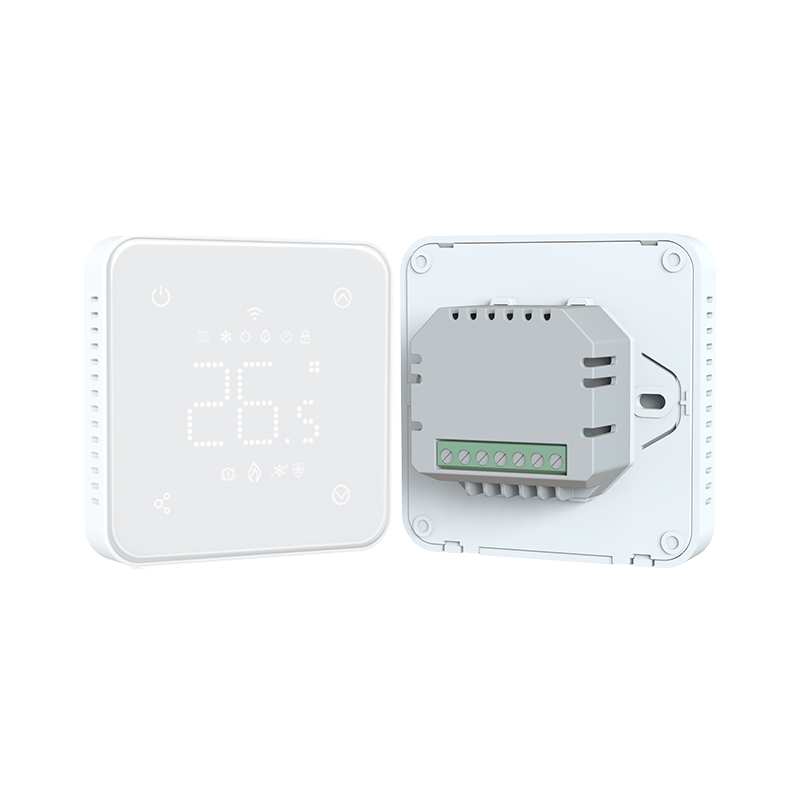
Why Link Fan Coil Thermostats with Central Air Conditioning?
A standalone fan coil system adjusts only local fan and valve operation based on room temperature, which may not optimize overall energy efficiency. When linked with a central air conditioning system, the thermostat can:
Adjust cooling or heating valve openings based on indoor temperature signals;
Provide feedback on room load to the central system, enabling optimal distribution of heating or cooling resources;
Reduce energy waste and improve overall system efficiency.
This linkage is especially important in multi-zone and multi-room buildings.
How the Linkage Works
Fan coil thermostats typically link with central air conditioning systems through the following mechanisms:
Temperature Detection and Feedback
Built-in sensors continuously monitor room temperature. When the temperature deviates from the setpoint, the thermostat generates a control signal.
Valve and Fan Control
The thermostat adjusts the electric valve opening or fan speed to regulate heating or cooling in the zone. For two-pipe or four-pipe systems, valve control allows precise cooling or heating.
Central System Signal Interaction
In Building Automation Systems (BAS/BMS), thermostats can send room load information to the central system. The central system adjusts chilled/hot water supply or air-handling unit operation based on the load, ensuring energy-efficient coordination across the building.
Types of Linkage
Analog Signal Linkage (0-10V / 4-20mA)
Thermostats output analog signals to control valve positions or provide load feedback to the central system. This method suits traditional HVAC systems.
Digital Bus Linkage (e.g., BACnet, Modbus)
Thermostats communicate via digital protocols with the BMS, enabling data sharing, centralized monitoring, and remote control, ideal for smart building projects.
Hybrid Linkage
Some complex buildings require thermostats that support both analog and digital signals to ensure compatibility with various equipment.
Key Considerations for Linkage
Equipment Compatibility
Ensure thermostats match central system valves, power interfaces, and communication signals to avoid linkage failures.
Load Balancing and Energy Strategy
Thermostat-central system linkage should follow proper load distribution strategies to prevent overcooling or overheating and optimize energy efficiency.
Maintenance and Calibration
Regularly check signal connections, valve operation, and control response to ensure accurate automatic adjustment and prevent malfunction.
Conclusion
By effectively linking fan coil thermostats with central air conditioning systems, FCUs can adjust heating and cooling supply based on actual room needs, improving comfort and optimizing energy usage. For office buildings, hotels, or hospitals, properly configured and calibrated linkage systems make indoor climate control more intelligent, energy-efficient, and cost-effective, enhancing the overall user experience.