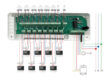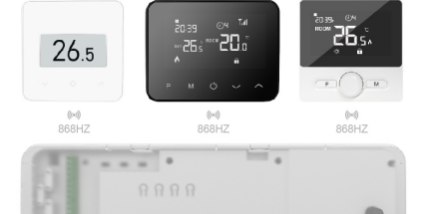
More and more underfloor heating systems are now using wireless thermostats. They eliminate the need for control wires in the walls, offer flexible installation, and have a cleaner appearance, bringing considerable convenience to both users and installers. However, some users have questions in actual use: Will wireless thermostats be unstable? Will the signal drop? Will the control be unresponsive? In fact, many so-called “wireless instability” issues are not problems with the wireless thermostat itself, but rather with the entire heating system architecture being poorly configured. The wireless thermostat is only responsible for “issuing commands”; the actual execution of these commands comes from the actuators, boiler, and circulation pump at the back end. If the back-end wiring is messy and the control logic is chaotic, even the most stable wireless signal cannot guarantee smooth overall system operation.
Key Factors for Wireless Thermostat Stability
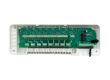
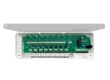
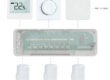
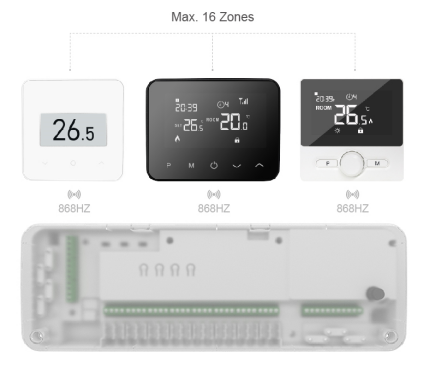
Many users mistakenly believe that as long as the wireless signal is strong, the system will definitely be stable. In reality, if the actuators, boiler, pump, and other equipment are wired separately, resulting in complex wiring, any poor contact or incorrect connection at any point can manifest as “wireless control failure.” By centralizing all critical equipment through a floor heating wiring center, the wiring relationships are clear and unambiguous, significantly reducing the risk of human error. Wireless thermostats only need to communicate with the wiring center, and the backend is centrally managed and executed, resulting in a more stable system.
Reduced Wiring Points
The more complex the system, the higher the likelihood of problems. In traditional floor heating systems, control lines, actuator lines, and power lines are scattered in multiple locations, resulting in numerous wiring points and long paths, making them more prone to loosening or aging over time. The advantage of a wiring center lies in its “single-point centralization.” Actuators, boilers, and circulation pumps are all connected from a single location, resulting in shorter lines and a clearer structure, facilitating installation and reducing potential failure points. This simplification itself ensures system stability.
Is Zone Management Clear?
In multi-room, multi-zone environments, the biggest problem with wireless thermostats is confused zone assignments: a thermostat in one room controls a different zone. This problem is often not due to wireless signal issues, but rather unclear zone wiring and allocation. The cabling center supports dual-zone capacity of 8 or 16 zones, allowing for pre-planning of control logic for each zone. Each zone corresponds to a fixed interface, with wireless thermostats one-to-one with each zone, reducing errors during installation and debugging, and ensuring greater stability and reliability during operation.
Centralized Actuator Management for More Consistent Response
After the wireless thermostat issues a command, the thermal actuator ultimately performs the switching action. If there are many actuators and their wiring is scattered, inconsistent responses can easily occur. With the cabling center, up to 5 thermal actuators can be connected to each zone, all powered and controlled by the same platform. This ensures more synchronized execution after a wireless command is issued, reducing the likelihood of slow or unresponsive circuits, resulting in a more stable overall user experience.
Smooth Boiler and Circulation Pump Interaction
The stability of the wireless thermostat is also reflected in the smoothness of system interaction. If the thermostat has issued a heating command, but the boiler or circulation pump does not respond promptly, the user will feel that the control is unresponsive. The underfloor heating wiring center provides dedicated output interfaces for the boiler and circulating pump, with the linkage logic integrated during the system design phase. When the wireless thermostat sends a demand signal, the wiring center can synchronously coordinate the operation of various key components, reducing latency and malfunctions, making wireless control more responsive.
Dedicated Wiring Center for Wireless Thermostats
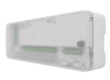
If a wireless thermostat can only “connect,” but the system itself is not designed for wireless control, then stability is naturally difficult to guarantee. Wiring centers like the HR02 are designed for seamless collaboration with wireless thermostats; their structure, interfaces, and control logic are more suitable for wireless applications. This “native matching” design approach is more reliable than forced compatibility later and is more suitable for long-term stable use.
Simple Maintenance Ensures Long-Term Stability
Stability is not only about “working well now,” but also about “lasting use.” If a system is difficult to maintain, and small problems are not easily detected and resolved, stability will naturally decline over time. A centralized wiring center makes all wiring and control relationships clear at a glance, allowing for inspection, adjustment, and upgrades to be completed in one place. This ease of maintenance is also a crucial guarantee for the long-term stable operation of wireless thermostat systems.
While wireless thermostats certainly bring greater flexibility and convenience to underfloor heating systems, their stability is never determined by individual efforts alone. A truly stable and reliable wireless thermostat system relies on a clear wiring structure, reasonable area management, and reliable device linkage. By centrally managing actuators, boilers, and circulating pumps through an underfloor heating wiring center, complex wiring is hidden within the system, allowing the wireless thermostat to focus on its core function of “control,” thus maximizing the advantages of the wireless solution. Wiring centers like the HR02, specifically designed for wireless thermostat collaboration, not only simplify the installation process but also lay the foundation for long-term stable system operation.
If you want your wireless thermostat to be worry-free, reliable, and trouble-free, choosing a suitable wiring center from the beginning is often more effective than repeatedly replacing thermostats.