
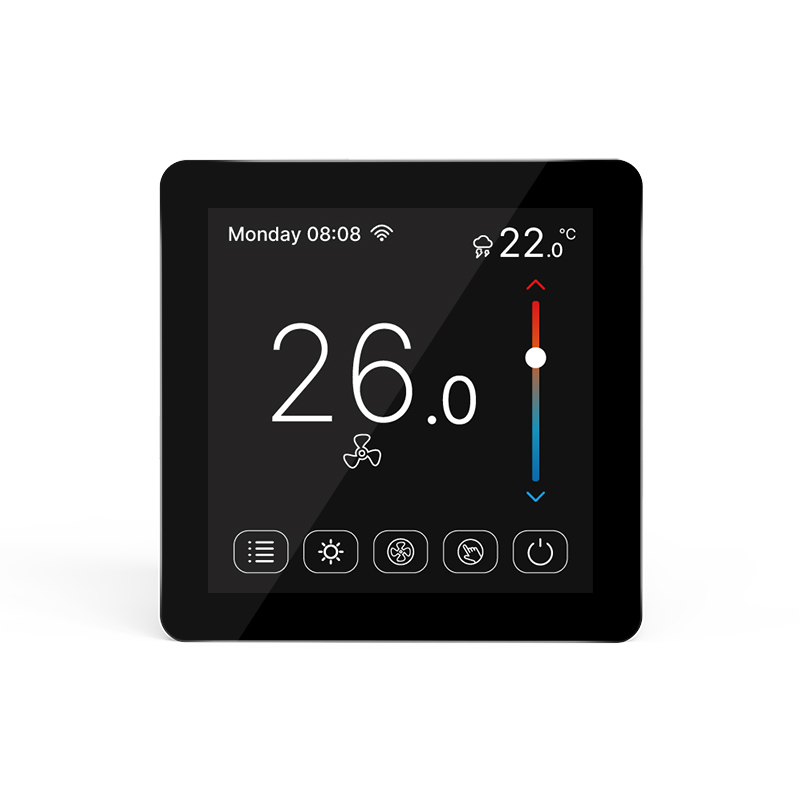
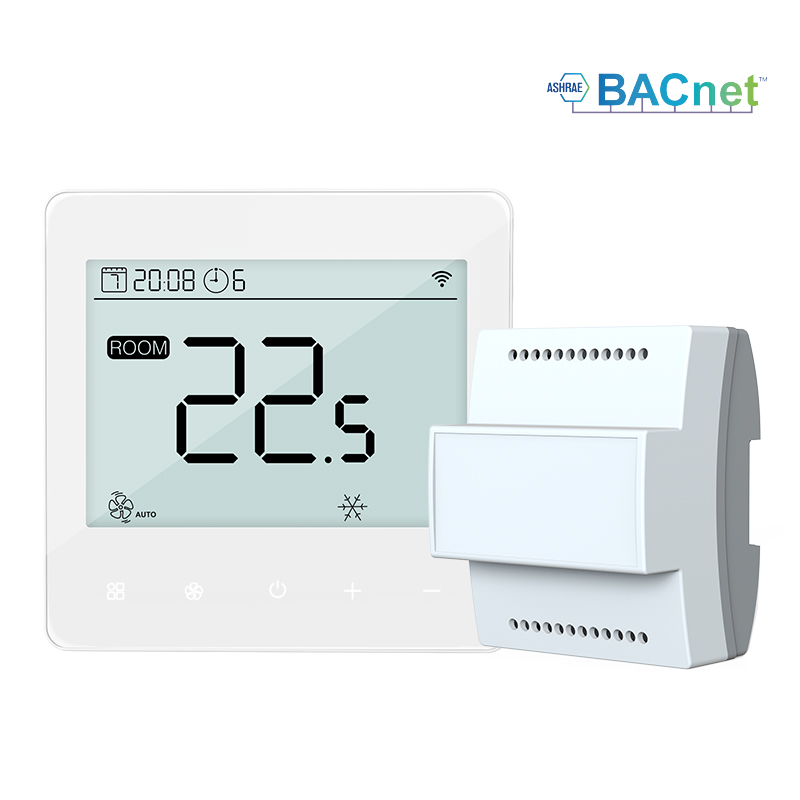
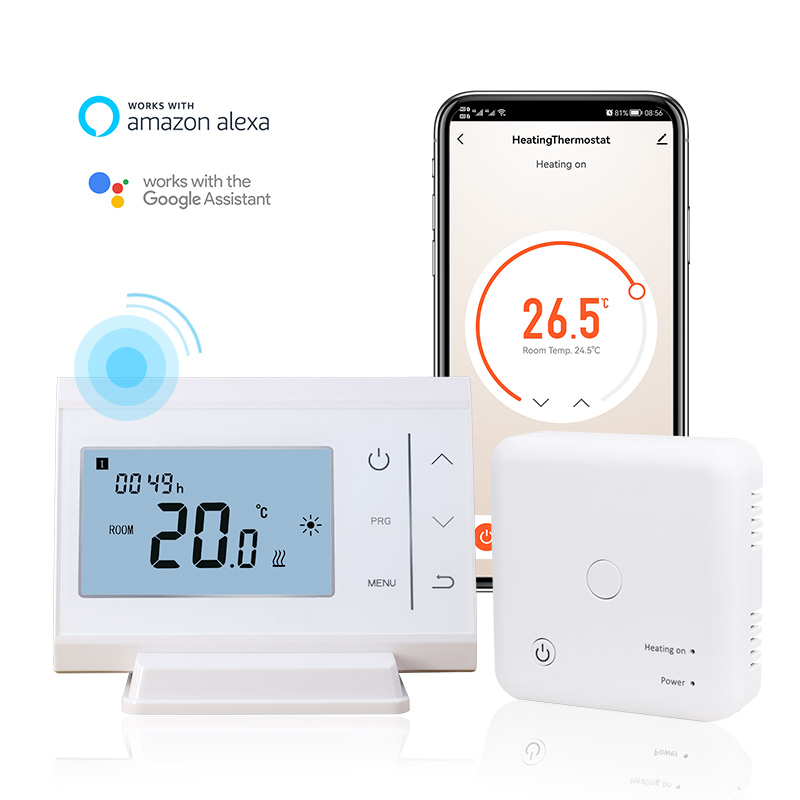
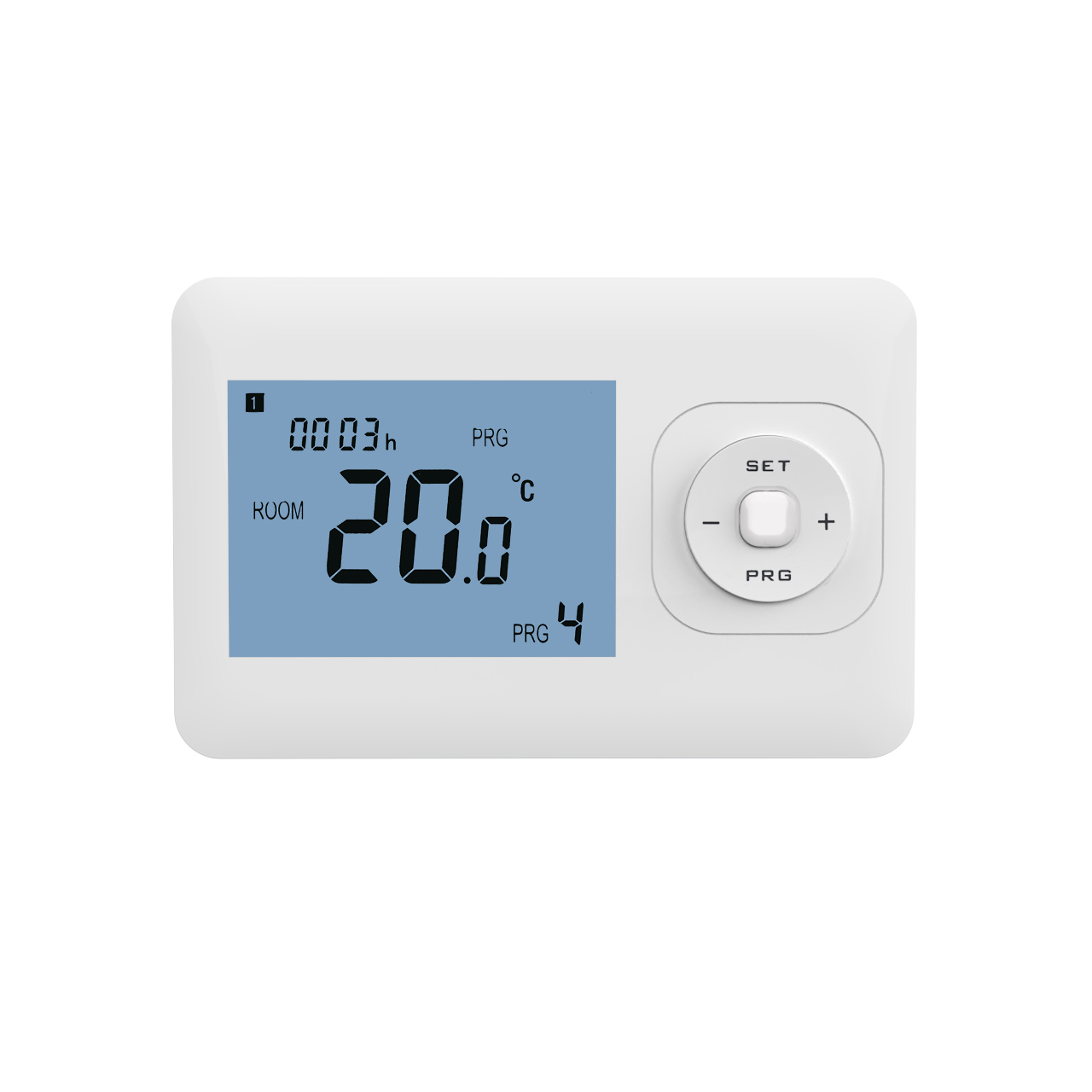
With the development of smart buildings and building automation systems, precise control of indoor environments and energy management has become increasingly important. As a key control device in HVAC systems, the ability of fan coil unit (FCU) thermostats to integrate into smart building platforms directly affects the automation level and energy optimization of a building. This article analyzes the feasibility of connecting FCU thermostats to smart building platforms from the perspective of technology, integration methods, and practical application.
Basic Function of Fan Coil Unit Thermostats
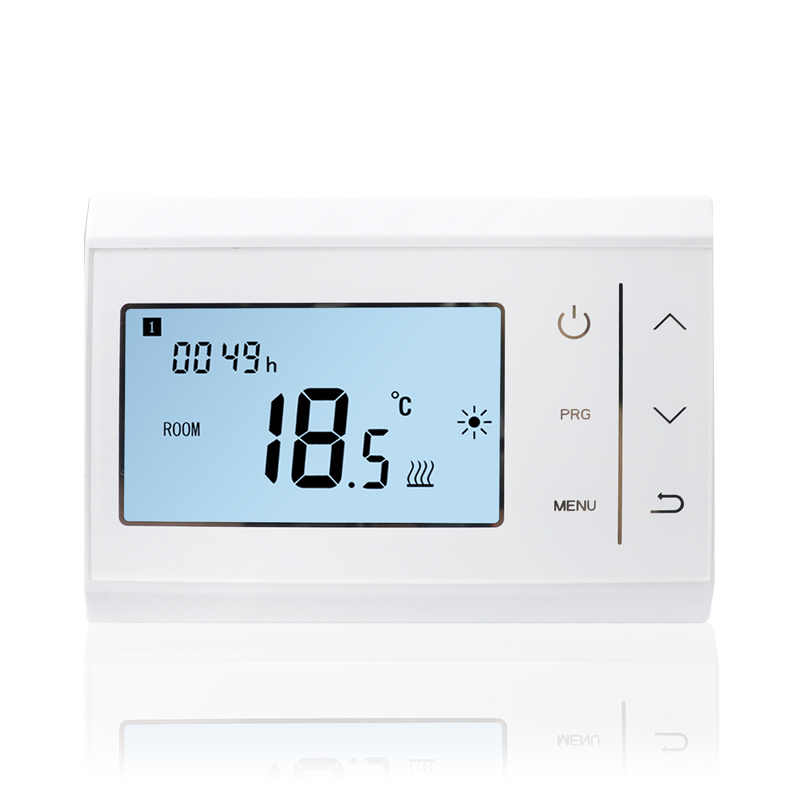
FCU thermostats are primarily used to regulate indoor temperature by controlling fan speed and valve opening, ensuring precise heating or cooling. Traditional thermostats usually operate independently, allowing users to manually set temperature and fan speed, but they lack real-time interaction with a central building management system (BMS).
With the increasing demand for intelligent control, newer thermostats have started supporting communication protocols and centralized management functions, providing the technical foundation for integration with smart building platforms.
Conditions for Integration into Smart Building Platforms
To integrate FCU thermostats with a smart building platform, the following conditions need to be met:
Support for Communication Protocols
Smart building platforms commonly use industrial-standard protocols such as Modbus, BACnet, or LonWorks. Thermostats must have compatible interfaces to upload temperature, fan status, and valve position data to the platform, while also receiving control commands.
Programmable and Remote Control Capabilities
Thermostats should allow remote temperature setting, fan mode adjustment, and scheduling. Through the platform, centralized control and strategy optimization can be implemented, such as night energy-saving modes, zone-based temperature control, and load balancing.
Reliable Data Collection and Feedback
Thermostats must collect environmental data in real time and transmit operational status back to the platform. This supports not only energy management but also alarms, diagnostics, and optimized system control.
Practical Integration Methods
In practice, FCU thermostats can connect to smart building platforms in two main ways:
Wired Bus Connection
Thermostats can connect via RS-485 bus or Ethernet interface. The platform can monitor temperature and equipment status across all zones in real time and issue centralized control commands for the entire building.
Wireless Connection
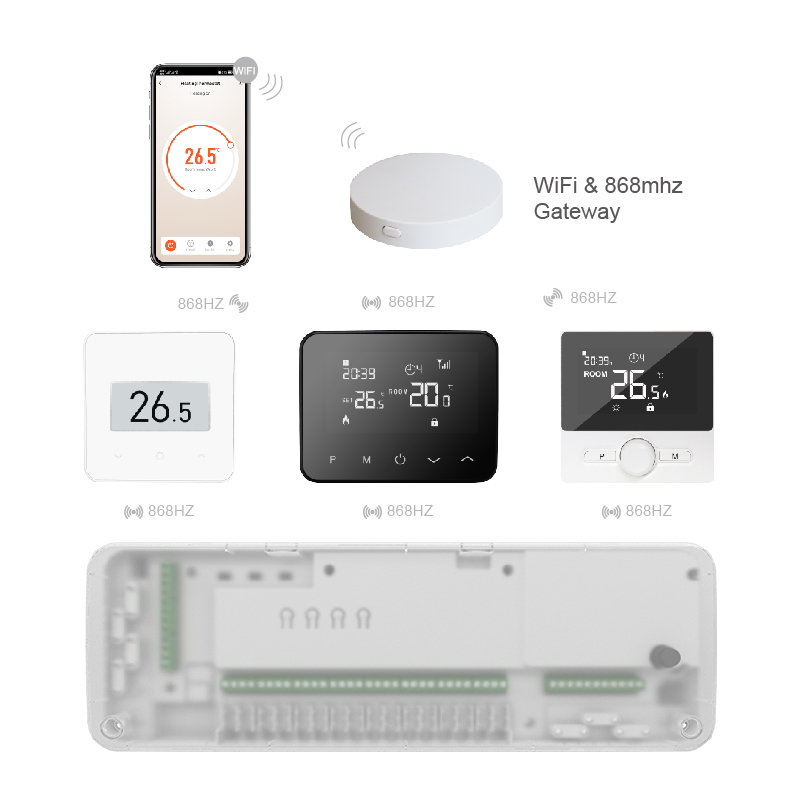
Some smart thermostats support Zigbee, Wi-Fi, or LoRa wireless communication, reducing cabling costs and making upgrades or retrofits easier. In a wireless setup, thermostats communicate with the building platform through a gateway, achieving centralized monitoring and remote control.
Advantages of Platform Integration
Integrating FCU thermostats with a smart building platform offers multiple benefits:
Centralized Control and Visualization
Managers can monitor temperature, fan status, and valve position across all zones through a visual interface and perform unified adjustments.
Energy Optimization
Data analysis and automatic control strategies enable zone-based temperature management, night-time energy-saving modes, and load optimization, reducing overall energy consumption.
Simplified Operation and Maintenance
Real-time alarms and fault diagnostics improve equipment maintenance efficiency and reduce manual inspection efforts.
Data Logging and Analysis
Historical operational data can be stored, supporting energy audits, system optimization, and long-term performance analysis.
Key Considerations and Recommendations
Choose thermostats that support standard protocols to ensure compatibility with the BMS.
Design integration schemes with attention to network topology, communication stability, and cybersecurity.
For retrofits, thermostats that lack communication capabilities can be upgraded with interface modules or replaced.
Ensure the building platform has sufficient data processing capacity to handle multiple zones and devices in real time.
Conclusion
FCU thermostats can be fully integrated into smart building platforms if they support communication protocols, remote control, and data collection functions. Integration via wired or wireless methods enables centralized management, visualization, energy optimization, and efficient maintenance. For modern buildings that prioritize energy efficiency and precise environmental control, integrating FCU thermostats into smart platforms has become a critical component of building automation, providing a reliable solution for efficient HVAC system management.