
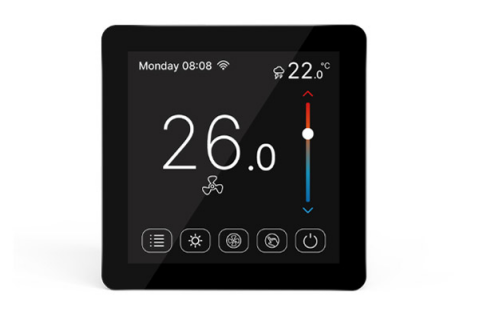
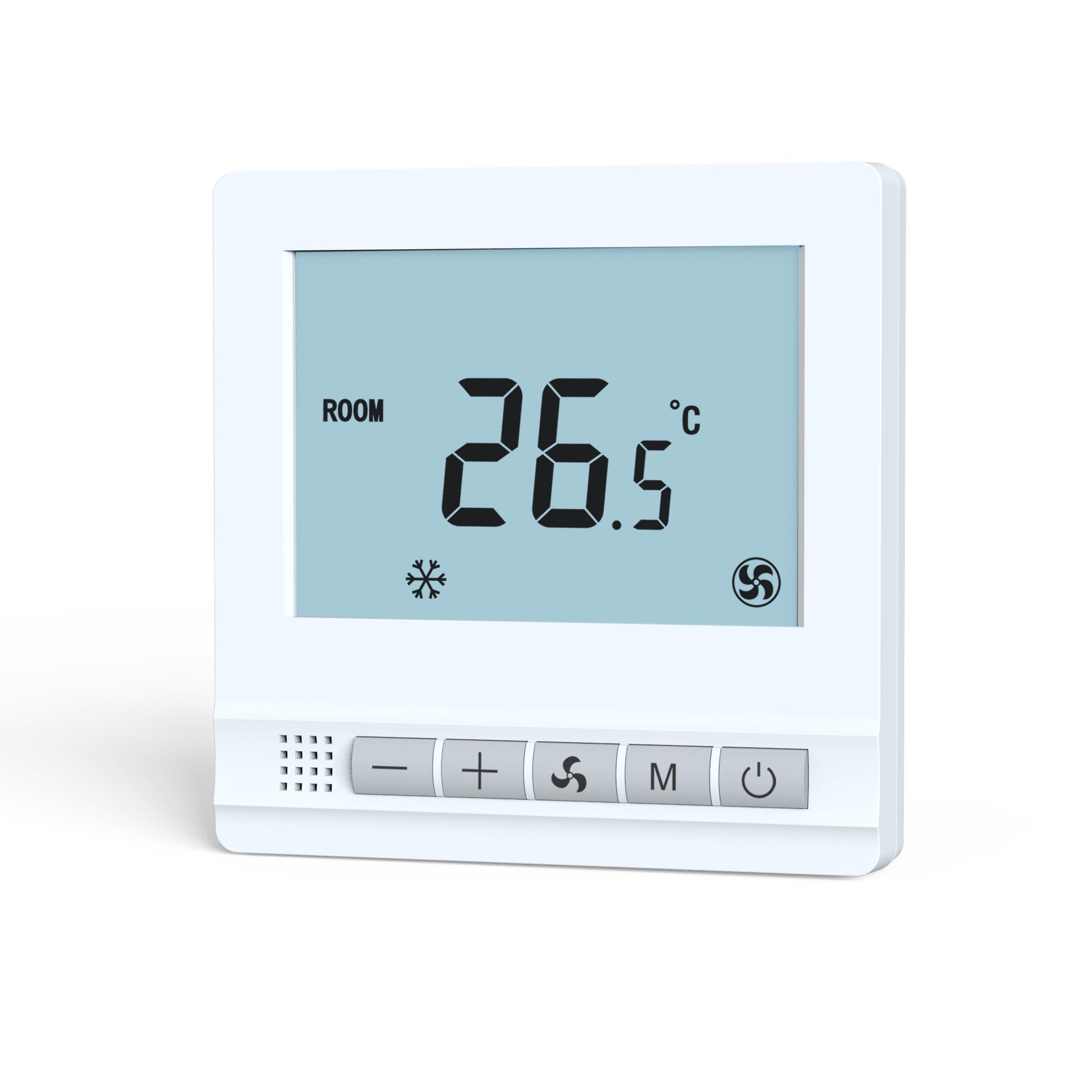
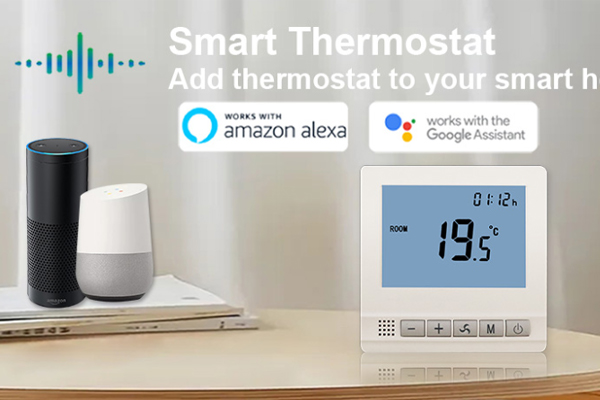

In building renovation and HVAC retrofit projects, upgrading fan coil unit (FCU) thermostats is often one of the most cost-effective improvements. Compared with replacing the entire air-conditioning system, thermostat upgrades require less construction work and deliver quick results. However, improper selection or installation can lead to unstable control, comfort issues, or even increased energy consumption. This article outlines the key points to consider when upgrading FCU thermostats in retrofit projects.
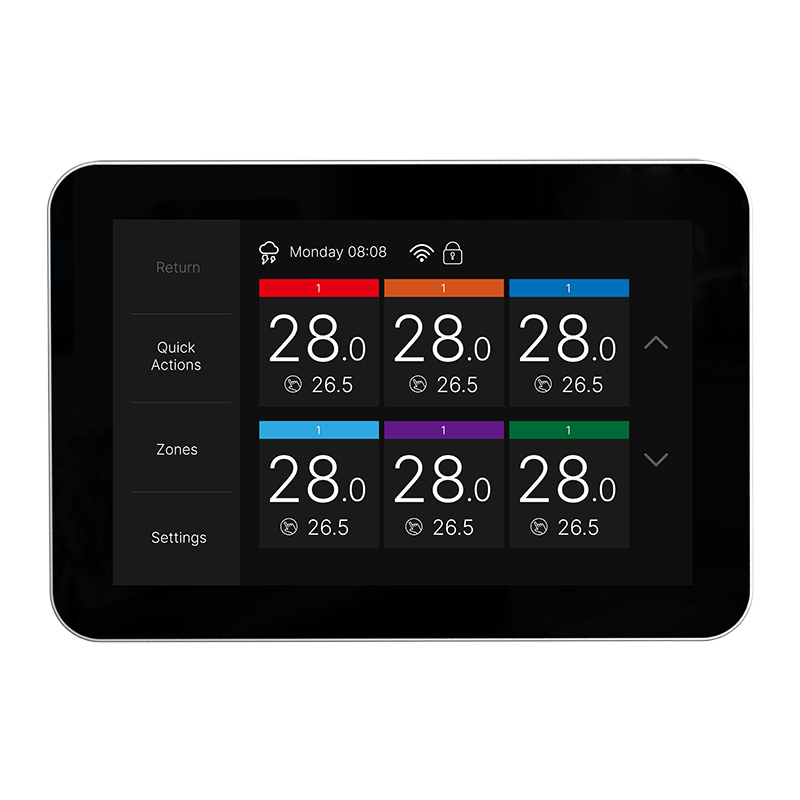
Understand the Existing System Before the Upgrade
Before selecting a new thermostat, it is essential to identify the type of existing fan coil system. Common configurations include two-pipe and four-pipe systems, which have very different control logic. A mismatched thermostat may cause heating and cooling conflicts or prevent valves from operating correctly.
It is also critical to confirm whether the fan motor is a three-speed AC motor or an EC motor, as different motor types require different control signals. This is a common oversight in retrofit projects.
Verify Power Supply and Wiring Compatibility
Older buildings often use different thermostat power supplies, such as 220V or 24V AC. When upgrading, the new thermostat must match the available power supply to avoid wiring errors or equipment damage.
Additionally, existing wiring should be evaluated to determine whether it supports the new thermostat’s functions. Communication lines, valve control wiring, and fan speed control cables may or may not be present, directly affecting whether advanced features can be implemented.
Match Valve Types With Control Signals
Fan coil systems typically use two-way or three-way valves, controlled by either on/off or analog signals. The thermostat’s output signal must be fully compatible with the valve actuator. Otherwise, problems such as valves failing to open or close properly may occur, reducing comfort and increasing energy waste.
In retrofit projects, severely aged valves should be considered for replacement at the same time to improve overall system reliability.
Align Functional Upgrades With Actual Needs
Many retrofit projects aim to introduce centralized control, remote monitoring, or energy management by upgrading thermostats. However, more features are not always better. The selected functions should match the building type and operational needs.
For example, hotels and office buildings benefit from thermostats that support networking and centralized management, while small commercial spaces or residential retrofits often prioritize simplicity and long-term stability to reduce maintenance complexity.
Optimize Installation Location and Sensor Accuracy
In older buildings, thermostats are often installed in suboptimal locations, such as near air outlets, in direct sunlight, or on exterior walls. During an upgrade, installation locations should be optimized to ensure the temperature sensor accurately reflects actual room conditions.
Sensor accuracy and response speed are also critical. High-quality thermostats reduce frequent cycling, improve comfort, and help lower overall energy consumption.
Do Not Overlook Commissioning and User Training
After installation, proper commissioning is essential. This includes testing temperature control parameters, fan speed switching logic, and valve operation to ensure stable performance in every room.
Basic training for facility managers or end users is equally important. Proper operation reduces misuse and helps extend the lifespan of the upgraded equipment.
Conclusion: Make Thermostat Upgrades Count in Retrofit Projects
In summary, upgrading fan coil unit thermostats in retrofit projects may seem simple, but it involves system compatibility, installation details, and long-term operation considerations. With careful system evaluation, correct product selection, professional installation, and thorough commissioning, thermostat upgrades can significantly enhance comfort and energy efficiency—making retrofit projects far more effective.