
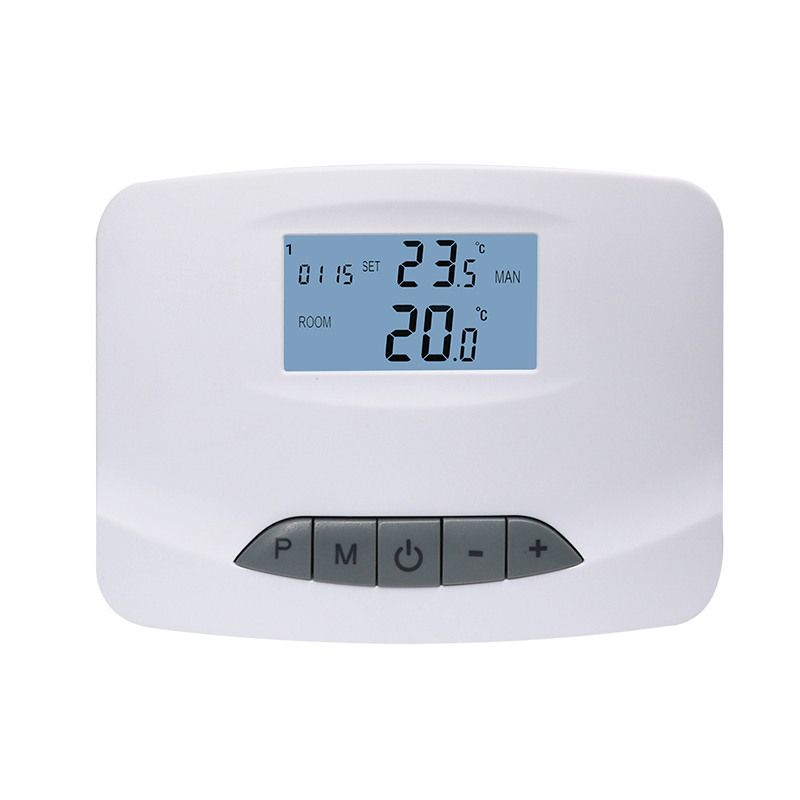
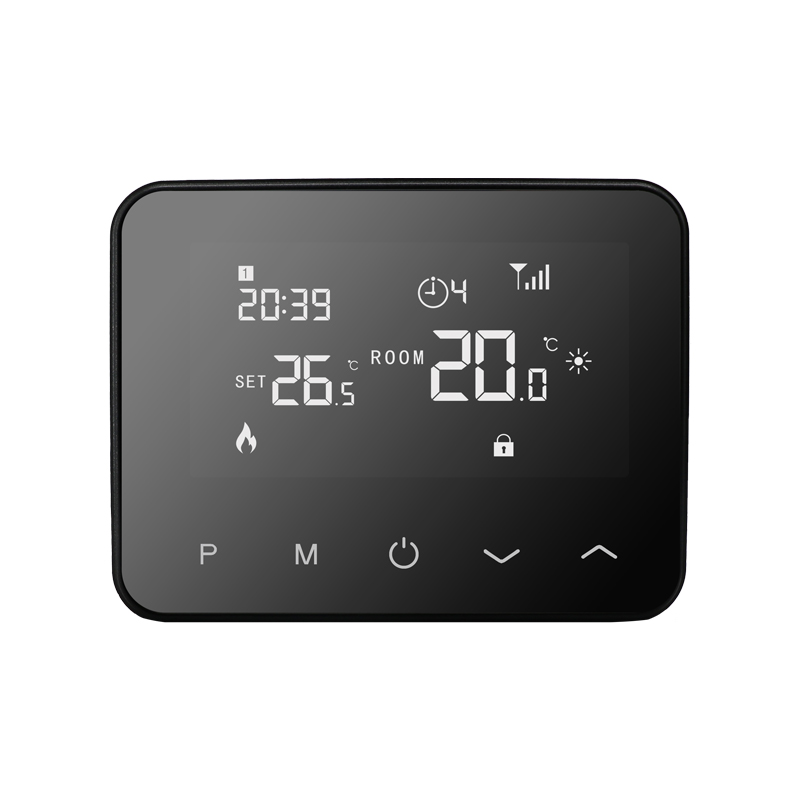
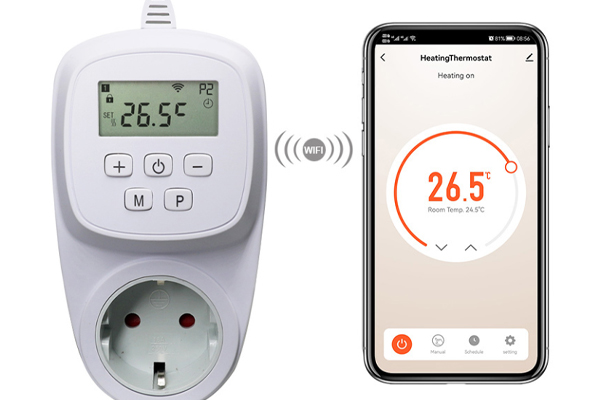
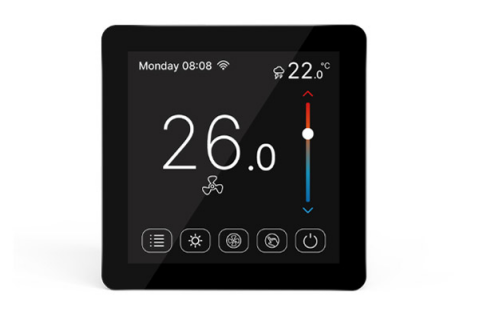
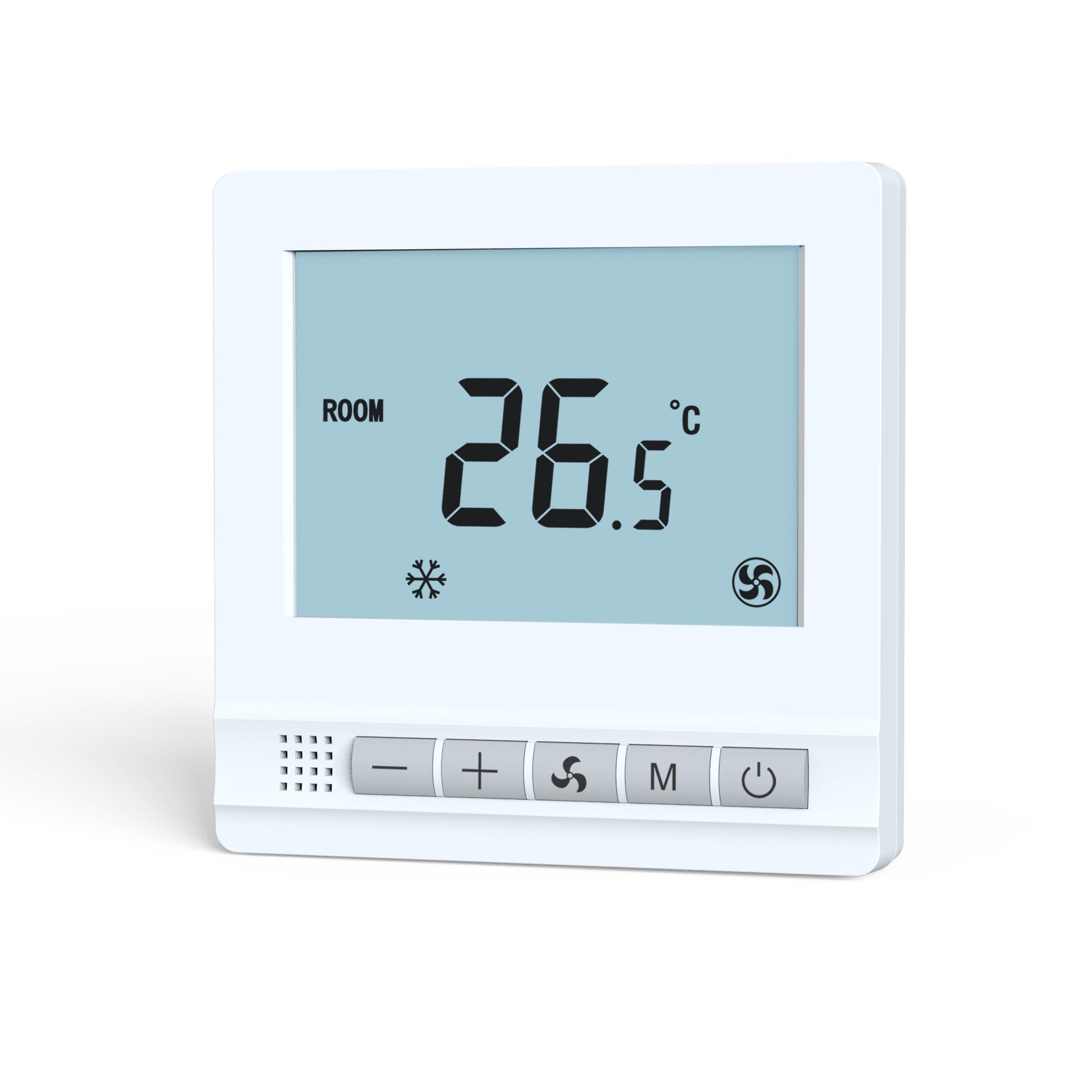

In commercial buildings, hotels, hospitals, and large residential projects, fan coil unit (FCU) systems are among the most widely used HVAC terminal solutions. During system selection and project implementation, the performance indicators of fan coil unit thermostats play a decisive role in system stability, installation efficiency, and long-term maintenance costs.
For contractors, choosing the right thermostat is not only about meeting technical requirements but also about reducing after-sales risks and improving overall project quality.
This article outlines the key FCU thermostat performance indicators that contractors care about most.

Temperature Control Accuracy and Stability
Temperature control accuracy is the most fundamental performance indicator of an FCU thermostat. However, contractors focus more on real-world operating stability than on nominal specifications alone. Poor control accuracy often leads to noticeable temperature fluctuations, frequent customer complaints, and excessive fan or valve cycling.
High-quality FCU thermostats provide stable temperature sensing and well-optimized control algorithms, maintaining room temperature close to the setpoint under varying load conditions while balancing comfort and energy efficiency.
System Compatibility and Adaptability
In real projects, fan coil systems vary widely, including two-pipe and four-pipe configurations, different valve types, and various fan motor options. As a result, system compatibility is a top priority for contractors during thermostat selection.
Thermostats that support multiple control modes, valve types, motor configurations, and power supply options significantly reduce selection complexity and minimize the risk of rework caused by incompatibility.
Output Capacity and Load Handling Capability
The relay rating and output design of a thermostat directly affect its ability to control fans and motorized valves reliably. Insufficient output capacity can lead to contact damage or control failure during long-term operation.
Contractors generally prefer thermostats with robust output capacity and proven durability, especially for projects involving high-frequency operation and long daily runtimes.
Communication and Centralized Control Support
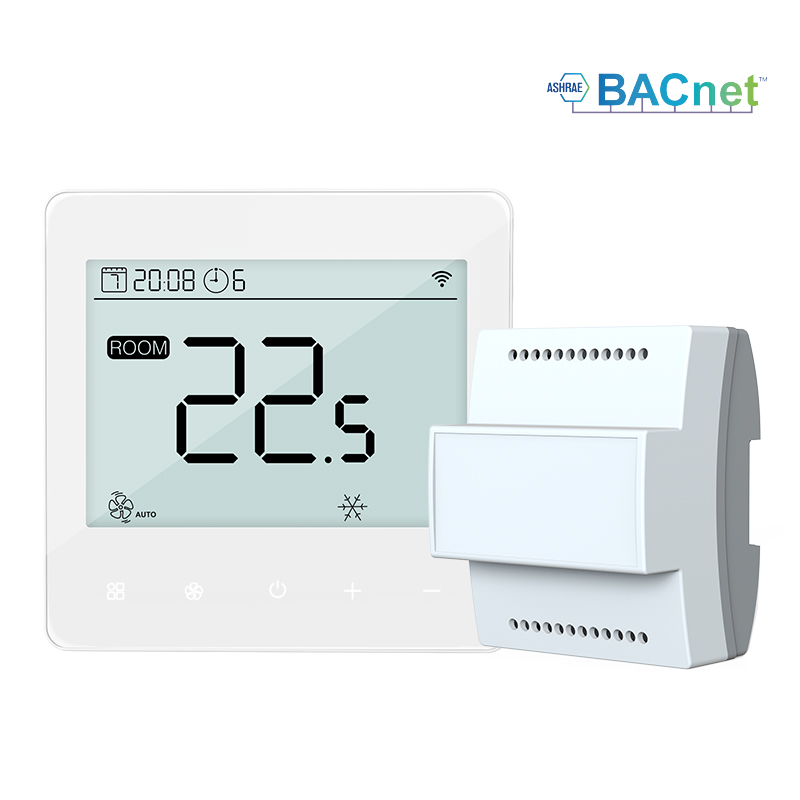
With the rapid development of intelligent buildings, more projects require FCU thermostats to support communication and integration with building management systems (BMS). Centralized control enables unified scheduling, temperature management, and energy monitoring.
From a contractor’s perspective, thermostats that support standard communication protocols and offer easy commissioning are far more practical for complex projects and add value to the overall system solution.
Ease of Installation and Construction Friendliness
In large-scale projects, installation efficiency directly impacts project schedules and labor costs. The physical design of the thermostat, wiring layout, and mounting dimensions are therefore critical considerations for contractors.
Clear terminal labeling, well-organized wiring terminals, and standard mounting box compatibility help reduce installation time and minimize on-site errors.
Reliability and Long-Term Performance
Contractors are concerned not only with whether a thermostat works initially but also with how well it performs over time. FCU thermostats must withstand frequent operation, electrical interference, and varying environmental conditions.
Products with stable electronic components, solid protective design, and mature control logic help reduce long-term maintenance and replacement costs.
After-Sales Support and Technical Services
Beyond product specifications, manufacturer support plays an important role in project success. Comprehensive technical documentation, responsive technical assistance, and stable supply capacity are key factors contractors consider when selecting thermostat suppliers.
Conclusion: Selecting Thermostats with Engineering Priorities in Mind
In summary, the FCU thermostat performance indicators most valued by contractors focus on stability, compatibility, installation efficiency, and long-term reliability. By evaluating these factors from a practical engineering perspective, contractors can reduce project risks, improve system performance, and deliver higher-quality HVAC solutions.