With the development of smart homes, plug-in thermostats have become an essential tool for household energy management. They not only provide precise temperature control but also help optimize electricity usage, allowing users to maintain comfort while reducing energy costs. This article explains how plug-in thermostats optimize energy management through their working principles, energy-saving functions, usage strategies, and precautions.
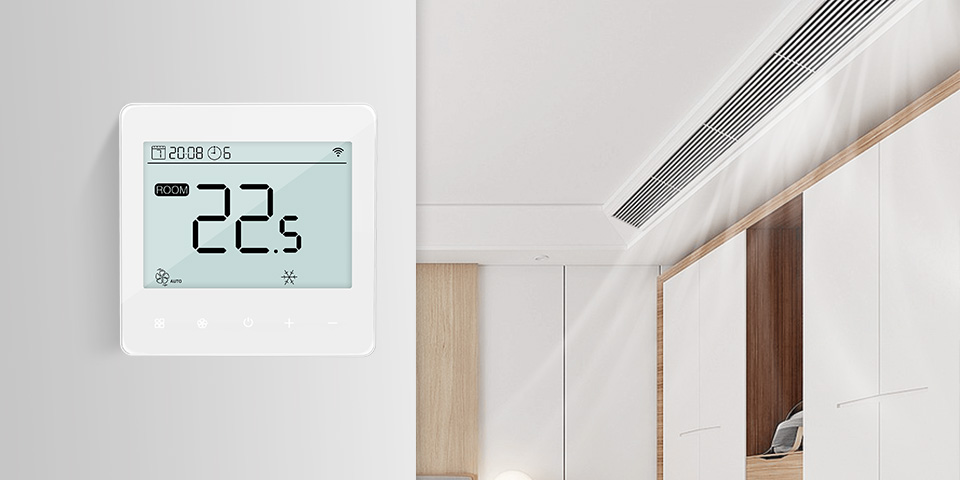
How Plug-In Thermostats Work
Plug-in thermostats use internal temperature sensors to monitor the environment in real time and automatically control connected appliances. For example, when connected to an electric heater or fan coil, the thermostat will activate heating if the room temperature falls below the set value and turn off power once the target temperature is reached. Key advantages include:
Precise temperature control: Sensor feedback allows fine adjustments to avoid energy waste.
Automatic switching: The thermostat decides when to supply power, reducing human error.
Accurate temperature control enhances comfort while preventing unnecessary energy consumption from devices running continuously.
Key Energy-Saving Functions
Modern plug-in thermostats offer several smart features that directly optimize energy usage:
Scheduled on/off: Users can set daily or weekly schedules to prevent appliances from consuming electricity unnecessarily.
Temperature step adjustment: Adjust heating power according to daytime, nighttime, or different rooms to reduce energy waste.
Energy-saving mode: Some models automatically reduce heating output when the temperature is within a comfortable range.
Remote control and smart home integration: Users can adjust settings via smartphone or smart home systems, managing energy use in real time.
Using these features together can significantly reduce household electricity bills without compromising comfort.
Usage Strategies for Optimal Energy Management
To maximize energy-saving benefits, users should adopt the following strategies:
Set reasonable temperatures: Maintain indoor temperatures within comfortable ranges (26–28°C in summer, 18–22°C in winter) to avoid energy waste.
Use scheduling features: Set the thermostat to turn off at night or when away from home.
Zone control: In multi-room systems, use multiple plug-in thermostats to control different areas, avoiding unnecessary whole-house heating.
Regular device checks: Ensure sensors are responsive and relays function correctly for optimal performance.
Implementing these strategies allows plug-in thermostats to deliver real energy savings in everyday use.
Precautions
Load compatibility: Make sure the thermostat’s rated current matches the connected appliance to prevent overload.
Proper installation: Place the thermostat where room temperature is stable and away from direct heat or cold airflow for accurate readings.
Safe use: Avoid disassembling or modifying the device; follow the user manual to ensure household electrical safety.
Following these precautions ensures the thermostat not only improves comfort but also optimizes energy management safely.
Conclusion
Plug-in thermostats optimize energy management through precise temperature control, scheduling, step adjustments, and remote control. By setting appropriate temperatures, using schedules, implementing zone control, and maintaining devices properly, users can enjoy a comfortable home environment while reducing electricity consumption. When used correctly, plug-in thermostats provide both energy savings and a smarter, more comfortable living experience.