




When winter arrives and indoor heating systems are turned on, the dry air often makes people uncomfortable, making humidifiers a necessity for many households. However, did you know that the radiator thermostatic valve—this small component installed on the radiator—while not directly regulating humidity, can indirectly improve the indoor environment and even influence humidity balance through precise temperature control? This article will reveal the “hidden skills” of the radiator thermostatic valve and analyze its subtle relationship with indoor humidity.
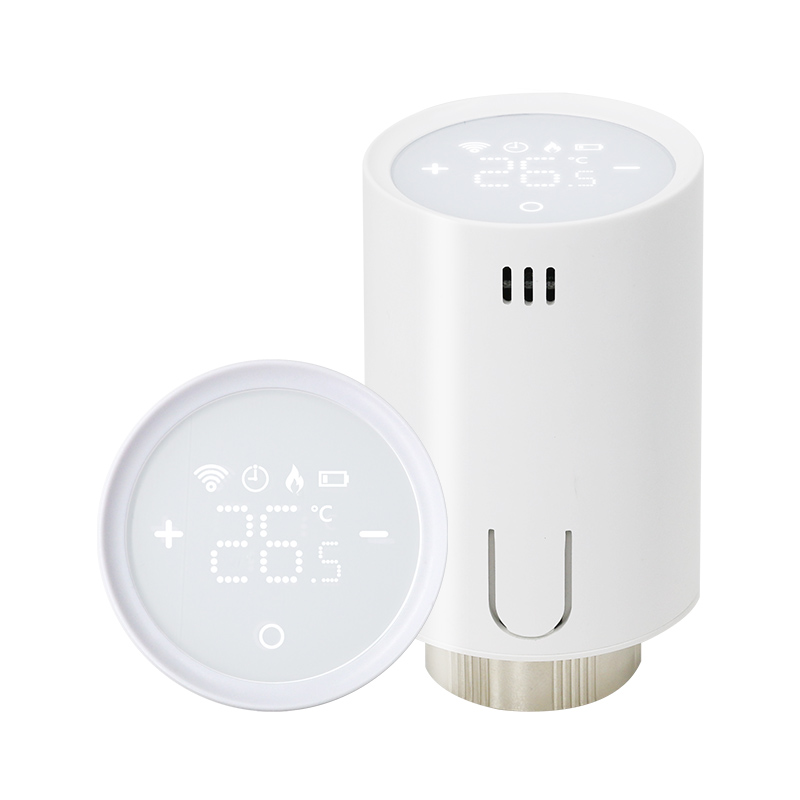
The Core Function of the Radiator Thermostatic Valve: Precise Temperature Control, Energy Saving and Comfort
The radiator thermostatic valve (TRV) is a self-regulating proportional control valve. Its core principle is to sense the ambient temperature through a built-in temperature sensor and automatically adjust the hot water flow to maintain a constant room temperature. For example, when the room temperature is higher than the set value, the temperature sensor expands, pushing the valve core to close, reducing the amount of hot water entering the radiator; when the room temperature drops, the temperature sensor contracts, opening the valve to replenish heat. This process requires no external energy, driven only by temperature changes, with a proportional range typically between 0.5℃ and 2.0℃, ensuring minimal temperature fluctuations.
- Significant Energy Savings: According to experimental data, heating systems equipped with TRV can save 20%-30% on energy. It automatically reduces hot water supply by utilizing indoor “free heat sources” (such as sunlight, appliance heat dissipation, and body heat), avoiding energy waste caused by overheating. For example, on sunny afternoons, TRV will reduce valve operation, minimizing radiator workload, maintaining a comfortable temperature while lowering energy consumption.
- Improved Hydraulic Balance: TRV also alleviates the “hydraulic imbalance” problem in heating systems. In traditional systems, it’s common for rooms closer to the heat source to be overheated and rooms further away to be undercooled. TRV dynamically adjusts the flow rate in each branch, resulting in more even heat distribution, reducing vertical imbalance (temperature difference between floors) and horizontal imbalance (temperature difference between different rooms on the same floor), thus improving overall comfort.
The “Indirect Relationship” Between Radiator Thermostatic Valves and Humidity: How Does Temperature Control Affect Humidity?
While TRV cannot directly regulate humidity, its temperature control function has a significant impact on indoor humidity balance. Humidity is closely related to temperature: when the temperature rises, the air’s ability to hold water vapor increases, and relative humidity decreases; when the temperature falls, the air’s ability to hold water vapor decreases, and relative humidity increases. Therefore, TRV indirectly reduces large fluctuations in humidity by stabilizing room temperature.
- Avoiding excessive dryness: In traditional heating systems, sustained high temperatures can lead to excessively dry air (relative humidity may fall below 30%), causing problems such as dry skin and respiratory discomfort. TRV, through precise temperature control, avoids excessively high room temperatures, thereby reducing the decrease in humidity caused by rising temperatures. For example, setting the room temperature at 20℃ instead of 25℃ can significantly reduce the feeling of dryness.
- More efficient when used with humidifiers: If indoor humidity is still insufficient, TRV’s stable temperature control creates a more ideal working environment for humidifiers. Humidifiers can maintain the target humidity more accurately under constant temperature conditions, avoiding repeated humidity adjustments due to temperature fluctuations. For example, in a TRV-controlled 20℃ environment, the humidifier only needs to add a small amount of water to maintain a comfortable humidity level of 40%-60%.
How to maximize the benefits of radiator thermostatic valves? Installation and Usage Guide
- Correct Installation Location: The TRV must be installed horizontally at the radiator inlet, avoiding obstruction by curtains, radiator covers, etc., to ensure the thermostat accurately senses room temperature. Before installation, clean the pipes to prevent welding slag from clogging the valve body and install a filter to extend its lifespan.
- Appropriate Temperature Setting: Adjust the TRV handle scale according to your needs (typically 8℃-28℃). An initial setting of scale 5 (approximately 20℃) is recommended, followed by fine-tuning based on your comfort. Avoid setting the temperature too high, as this wastes energy and exacerbates air dryness.
- Selecting the Compatible Model: Select the TRV model according to your radiator type. For example, bottom-inlet/bottom-outlet radiators require an H-type TRV with a standard interface spacing of 50mm, supporting full-water maintenance for radiators with bypasses; single-pipe systems require a three-way valve to balance inlet and outlet water resistance.
Although small, the thermostat radiator valve is an indispensable “smart hub” in the heating system. It achieves a triple goal of energy saving, comfort, and hydraulic balance through precise temperature control, and indirectly improves the humidity environment by stabilizing room temperature, making winter life healthier. In the future, with the development of smart homes, TRV may be linked with humidity sensors to achieve coordinated regulation of temperature and humidity, creating a more livable microclimate for the home. Choosing TRV is not only choosing an energy-saving method, but also choosing a more scientific and comfortable lifestyle.