

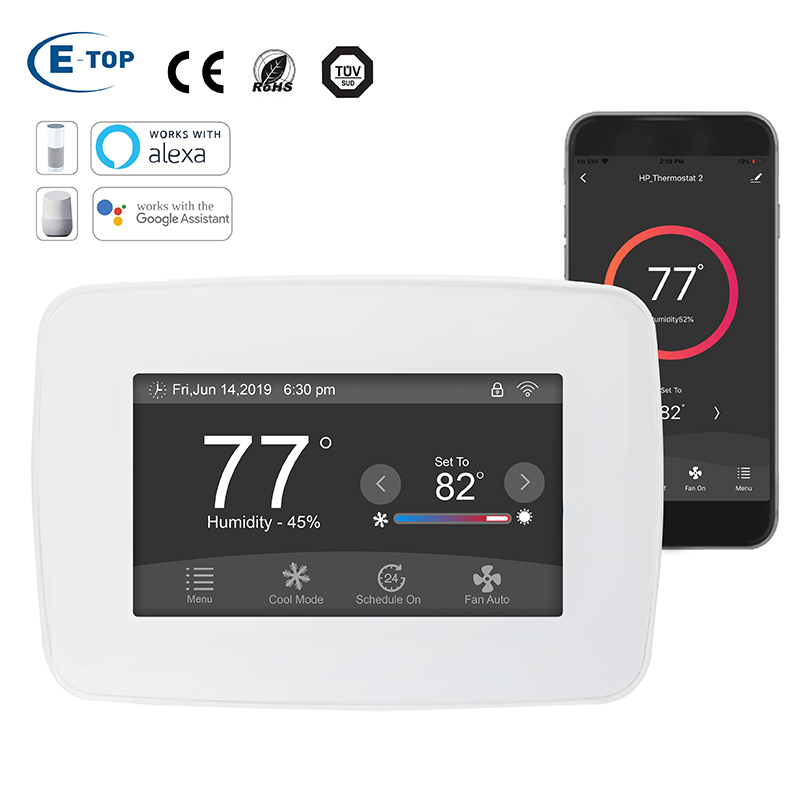
In traditional understanding, radiator thermostatic valves are often considered “accessories” of boiler heating systems—when the boiler supplies hot water to the radiator, the thermostatic valve senses the room temperature and adjusts the water flow to achieve precise temperature control. But does this system become completely ineffective without a boiler? The answer is no. With the iteration of independent heating technology and the upgrading of user needs, radiator thermostatic valves are breaking through “boiler dependence,” demonstrating unique energy-saving value and applicability in boiler-free scenarios.
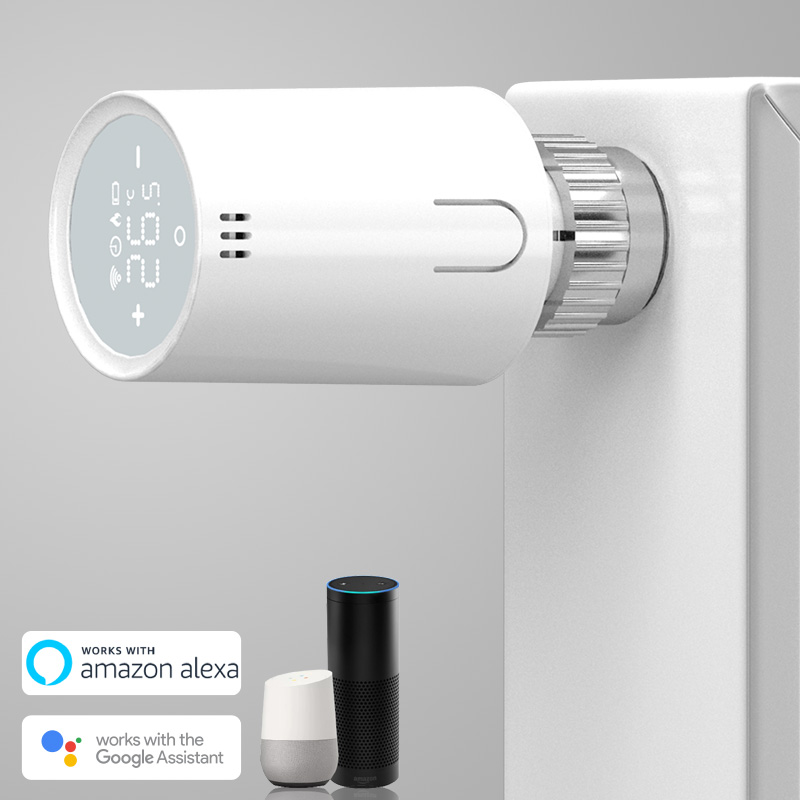
The “Soil” for Boiler-Free Scenarios: Demand Drives Technological Adaptation
Boiler-free heating scenarios are not a pipe dream, but a product of real-world needs. For example, in rural self-built houses, renovations of old residential areas, or temporary heating needs, users may be unable to install a boiler due to cost, space, or approval restrictions, and instead choose independent heat sources such as electric heaters, air source heat pumps, or solar collectors. While these devices can provide heat, they have two major drawbacks: first, they cannot control the water flow through a circulating pump like a boiler, resulting in radiators that are “hot and cold”; second, they lack the ability to control individual room temperature, requiring users to manually turn the devices on and off, which is neither comfortable nor energy-efficient. At this point, the self-regulating characteristic of the radiator thermostatic valve becomes crucial. Its core component, the temperature-sensing element, requires no external energy; it simply senses changes in room temperature to drive the valve core, regulating the hot water flow. Even if the heat source (such as an electric heater) cannot precisely control the water temperature, the thermostatic valve can still maintain a stable room temperature through “passive regulation,” avoiding overheating or underheating.
Technological Breakthrough: From “Boiler Supporting Role” to “Independent Protagonist”
To adapt to boiler-free scenarios, radiator thermostatic valves have undergone targeted optimization in design and function. For example, the Danfoss RA2000 series uses gas temperature-sensing element technology, which has a higher coefficient of thermal expansion and a response speed 30% faster than traditional liquid temperature-sensing elements. This allows for rapid adjustment of the valve opening when heat source output fluctuates, reducing room temperature fluctuations. Furthermore, some models support a “preset resistance” function, allowing users to manually set the initial valve opening by rotating the adjustment ring on the valve body. This compensates for differences in water flow resistance caused by the absence of a circulation pump, ensuring uniform heat dissipation from the radiator.
In terms of installation, the H-type thermostatic radiator valve is specifically designed for bottom-inlet, bottom-outlet radiators. With a standard interface spacing of 50mm, it can directly replace traditional manual valves without requiring pipe modifications. Its built-in liquid temperature-sensing element can adapt to operating temperatures from -10℃ to 55℃, ensuring stable temperature control even when heat source equipment (such as solar collectors) operates in low-temperature environments.
Energy-Saving Logic: No Boiler ≠ Low Efficiency
In boiler-free scenarios, the energy-saving value of thermostatic radiator valves is even more pronounced. Taking rural self-built houses as an example, if electric heaters are used for direct heating, users often turn the power to maximum to quickly raise the temperature, resulting in indoor temperatures far exceeding demand and wasting energy. However, after installing a thermostatic valve, users can set a target temperature (e.g., 20℃). When the room temperature approaches the set value, the valve automatically closes, reducing hot water inflow and allowing the electric heater to maintain the temperature at a lower power, reducing energy consumption by 20%-30%.
Furthermore, the thermostatic valve’s “free heat utilization” function is particularly important in boiler-free scenarios. For example, heat generated by sunlight, human activity, or cooking (collectively referred to as “free heat”) can be sensed by the thermostatic valve, causing it to close slightly and reducing the operating time of the heat source equipment. According to research by the European Building Energy Standard (EPBD), radiator system efficiency can be improved by 88% simply through individual room temperature control; this figure also applies to boiler-free scenarios.
Application Boundaries: Which Scenarios are More Suitable for “Boiler-Free” Layouts?
While thermostatic valves for radiators have potential in boiler-free scenarios, their applicability is still limited by the type of heat source and the scale of the system. For example, solar collectors are greatly affected by weather, resulting in frequent water temperature fluctuations, requiring the selection of gas thermostatic valve models with fast response times; while air source heat pumps output stable water temperatures (typically 40℃-50℃), and liquid thermostatic valves are sufficient. Furthermore, small detached houses (such as single-story villas) have shorter pipes and lower resistance, making it easier to achieve hydraulic balance by adjusting the initial valve opening; however, large buildings (such as multi-story apartments) without a circulation pump cannot solve vertical imbalance problems with thermostatic valves alone, still requiring a boiler or specialized hydraulic balancing equipment.
The absence of a boiler is not a constraint for radiator thermostatic valves, but rather a catalyst for technological iteration. From gas temperature bulbs to preset resistance functions, from independent heat source adaptation to free heat utilization, thermostatic valves are proving their value in more scenarios through continuous innovation. For users who pursue comfort, energy saving, and flexibility, choosing a radiator thermostatic valve adapted to boiler-free scenarios may be the key to unlocking a new era of independent heating.