

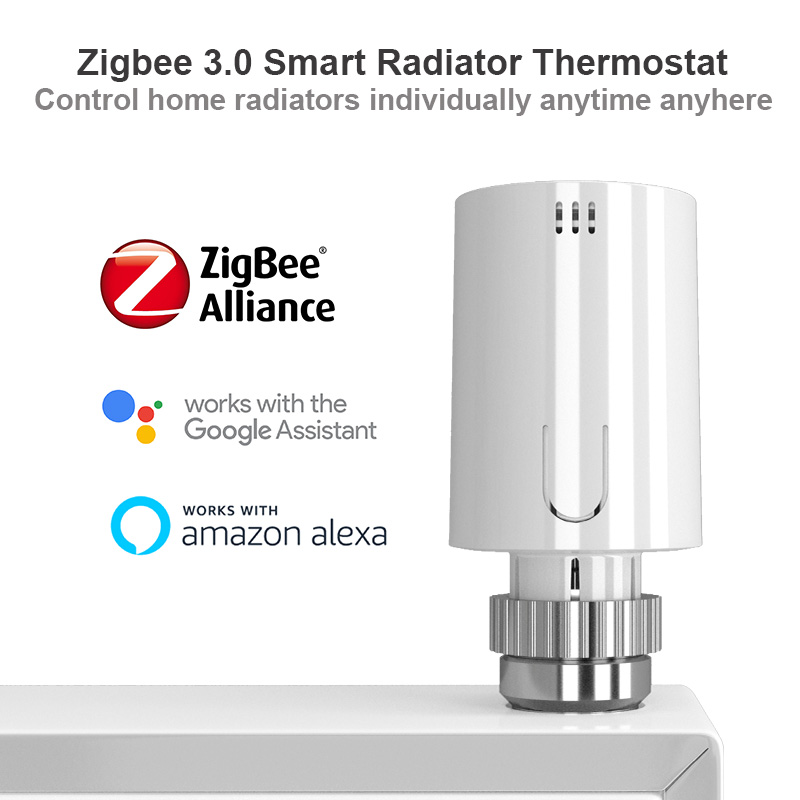
In the cold winter, radiator thermostatic valves act as the “smart brain” of home heating, accurately sensing changes in room temperature and automatically adjusting the hot water flow to maintain a comfortable indoor temperature. The core of this intelligent control is the temperature sensor hidden within the valve body. The accuracy of the sensor directly determines the sensitivity and energy-saving effect of temperature control. So, just how accurate are the sensors in radiator thermostatic valves? What are the underlying technological principles? This article will provide an in-depth analysis.
Sensor Accuracy: An Evolution from “Extensive” to “Refined”
Early radiator thermostatic valves often used paraffin or gas as the temperature-sensing medium, driving the valve core movement through the thermal expansion and contraction of the thermostatic bulb. These sensors were low-cost and simple to manufacture, but their accuracy was limited, with temperature fluctuations typically between 1.5℃ and 2.0℃, making them susceptible to ambient temperature interference, resulting in fluctuating room temperatures. With technological advancements, liquid temperature-sensing media (such as methanol and toluene) are gradually becoming mainstream. Their higher coefficient of thermal expansion and stronger thermal conductivity, combined with precision-machined valve body structures, can reduce temperature fluctuations to 0.5℃-1.0℃, significantly improving temperature control stability.
Modern intelligent thermostatic valves go a step further, employing digital temperature sensors (such as PT100 platinum resistance thermometers and NTC thermistors). These sensors utilize the characteristic of semiconductor material resistance changing with temperature to achieve high-precision temperature measurement. These sensors can achieve a resolution of 0.01℃, and when paired with a 16-bit high-precision ADC (analog-to-digital converter), they can accurately capture minute temperature changes of 0.0078℃, providing reliable data support for intelligent algorithms.
Five Key Factors Affecting Sensor Accuracy
Sensor accuracy is not determined by a single parameter, but rather by the combined effects of multiple factors, including environment, materials, and manufacturing processes:
- Temperature-sensing medium characteristics: Liquid media have a much higher coefficient of thermal expansion than paraffin or gases, resulting in faster response and higher accuracy. For example, methanol’s volume expansion rate in the 0℃-100℃ range is more than three times that of paraffin, allowing it to more sensitively reflect temperature changes.
- Valve Body Structure Design: Mechanical parameters such as the transmission ratio between the temperature sensor and the valve core, and the spring constant, directly affect the linearity of the temperature-flow conversion. High-quality valve bodies, through optimized flow channel design, can reduce the interference of hydraulic resistance on temperature control.
- Electronic Component Performance: Electronic parameters such as the ADC bit depth and amplifier noise level of the digital sensor determine its theoretical resolution and actual effective accuracy. For example, a 16-bit ADC has a quantization step size of only 0.003℃, but requires low-noise circuitry to achieve its full performance.
- Environmental Adaptability: Environmental factors such as humidity, air pressure, and electromagnetic interference can affect sensor stability. High-end models, with IP65 protection and electromagnetic shielding design, ensure an accuracy of ±0.5℃ even in complex environments.
- Calibration and Compensation Technology: Laser calibration and temperature drift compensation algorithms before shipment can correct systematic deviations such as sensor zero-point offset and gain error. Some intelligent valve bodies also support self-learning functions, dynamically optimizing temperature control strategies based on user habits.
The Practical Application Value of High-Precision Sensors
Improved sensor accuracy directly translates into a dual upgrade in user experience and energy efficiency:
- Enhanced Comfort: A temperature control accuracy of 0.5℃ avoids the cycle of “overcooling-overheating,” keeping room temperature fluctuations within the human perception threshold, making it especially suitable for the elderly, children, and other sensitive groups.
- Significant Energy Saving: According to actual measurement data, households using high-precision thermostatic valves can reduce heating energy consumption by 15%-30%. Through time-sharing and zone-based control, it avoids the waste of “overheating unoccupied rooms.”
- Enhanced System Compatibility: Digital sensors support smart home protocols such as Modbus and KNX, and can be linked with boilers, circulating pumps, and fresh air systems to build a whole-house intelligent energy management system.
Future Trends: The Leap from “Precision” to “Intelligence”
With the development of IoT technology, radiator thermostatic valves are evolving from single temperature control devices into intelligent terminals. Future sensors will integrate more functions:
- Self-Diagnostic Technology: By monitoring parameters such as current and voltage, real-time detection of valve jamming and temperature bulb leakage can provide early warnings of maintenance needs.
- AI Algorithm Optimization: Temperature control models are trained based on user behavior data to achieve “predictive” adjustment. For example, the living room can be automatically preheated before the user leaves work, avoiding waiting time.
- Wireless Communication Upgrade: Expansion from Wi-Fi and Zigbee to low-power wide-area networks such as 5G and LoRa supports remote batch management, reducing property maintenance costs.
In the trend of smart homes and building energy conservation, the sensor accuracy of radiator thermostatic valves has become a core indicator of product competitiveness. From mechanical temperature bulbs to digital intelligent sensors, from “extensive adjustment” to “precise temperature control,” this small component is driving the entire heating industry towards greater efficiency and comfort. For consumers, choosing a thermostatic valve equipped with a high-precision sensor is not only an investment in winter warmth but also a strategic move towards a smarter future.