






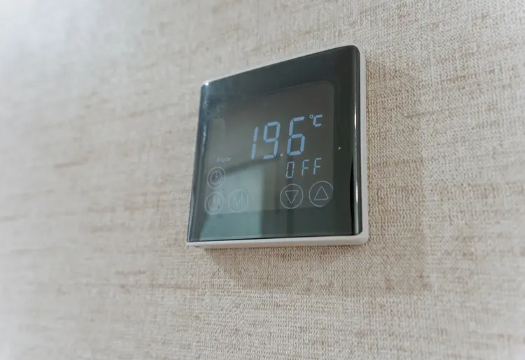
Common Causes of Electric Underfloor Heating Thermostat Fault Alarms
During the use of electric underfloor heating systems in residential settings, a thermostat fault alarm can often cause confusion and concern for users. However, an alarm does not necessarily indicate a complete system failure. In most cases, it is the thermostat’s way of signaling abnormal operating conditions. Understanding the common causes behind electric underfloor heating…
Artikel lesen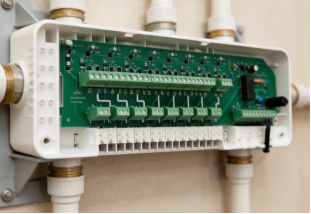
Which is more expensive, electric or water-based underfloor heating?
As people’s demands for living comfort and quality of life continue to rise, underfloor heating has gradually become an important choice for modern residential heating. Among them, electric and water-based underfloor heating are currently the two most widely used forms. They differ significantly in heating principles, system structure, installation methods, and post-installation user experience, making…
Artikel lesen
What temperature setting is most comfortable for a boiler thermostat?
When winter cold waves hit, the temperature setting of the boiler thermostat directly affects home comfort and energy consumption. Many users often find themselves in a dilemma: “too high, they worry about spending money; too low, they worry about getting cold.” In reality, setting the temperature reasonably requires a comprehensive scientific consideration of the heating…
Artikel lesen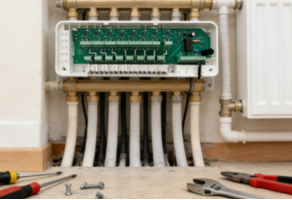
Common Misconceptions in Selecting Underfloor Heating Control Boxes
In the design and installation of underfloor heating systems, the control box is often considered an “invisible yet crucial” device. Compared to underfloor heating pipes, manifolds, or thermostats, the control box does not directly generate heat or affect the appearance of the space, but it undertakes the important tasks of signal centralization, zone control, actuator…
Artikel lesen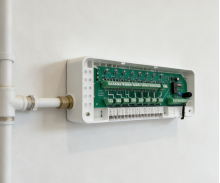
Can a control box control both electric and water-based underfloor heating?
With the increasing prevalence of underfloor heating systems in residential and commercial spaces, users have higher demands for the control methods of these systems. Whether it’s comfort, energy management, or system stability, the design of the control layer is becoming increasingly important. Against this backdrop, the underfloor heating control box, as the core device connecting…
Artikel lesen
Is a 3A Maximum Current Sufficient for a 220V Thermostat?
When selecting a 220V thermostat, the maximum current parameter is often a key concern for users. A nominal maximum current of 3A means that the thermostat’s design has a clearly defined load capacity. Understanding the meaning of this parameter and its role in practical use helps determine whether the 3A current specification can meet daily…
Artikel lesen