
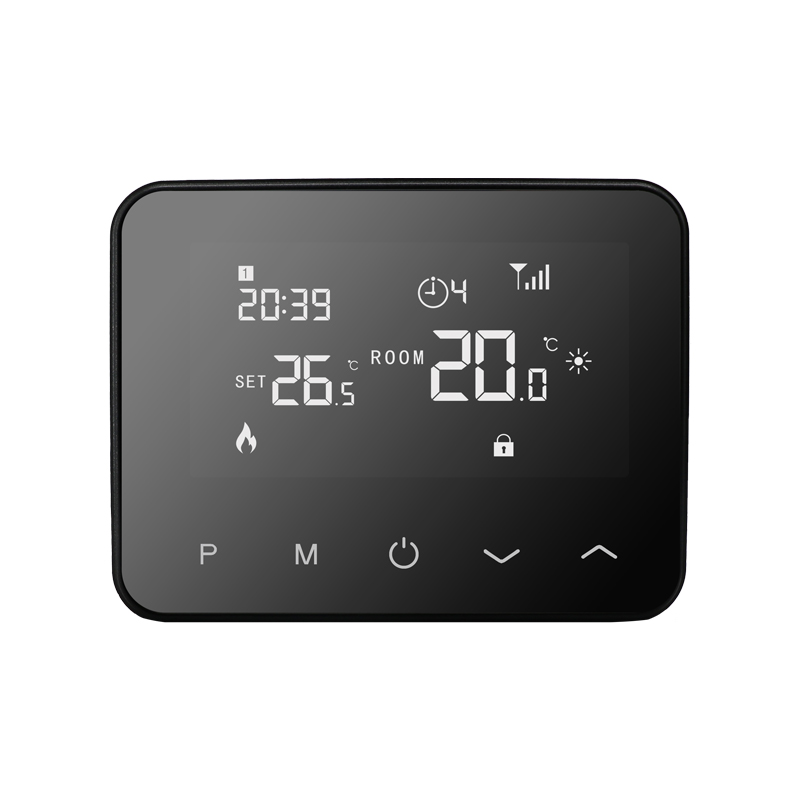
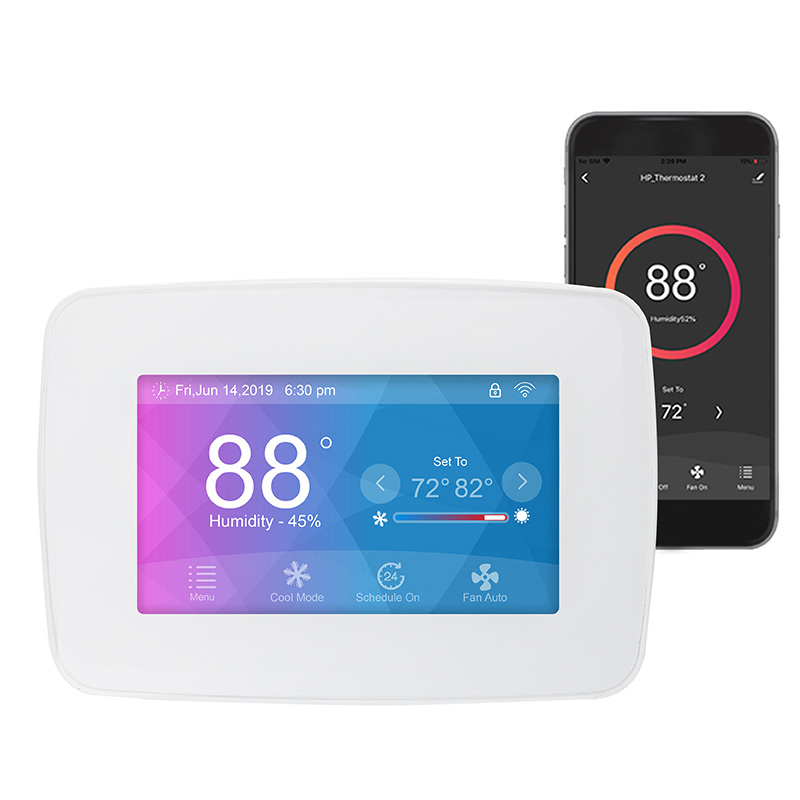
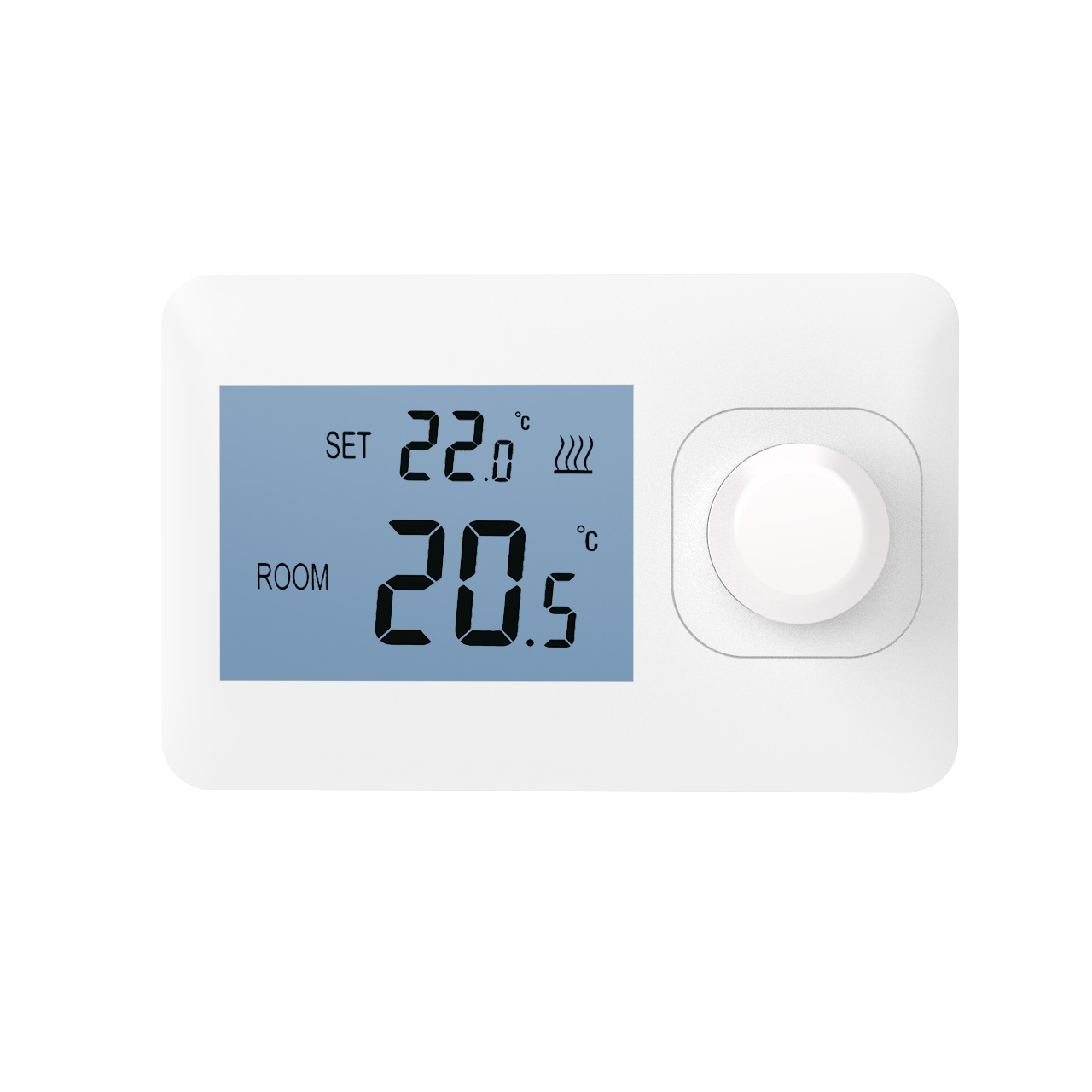
In fan coil unit (FCU) systems, the fan coil thermostat plays a crucial role in regulating indoor temperature and ensuring occupant comfort. Among various system configurations, 2-pipe and 4-pipe fan coil systems are the most commonly used. Their structural differences directly affect thermostat functions, control logic, and application scenarios. Understanding these differences helps users make informed decisions when designing HVAC systems or selecting suitable thermostats.
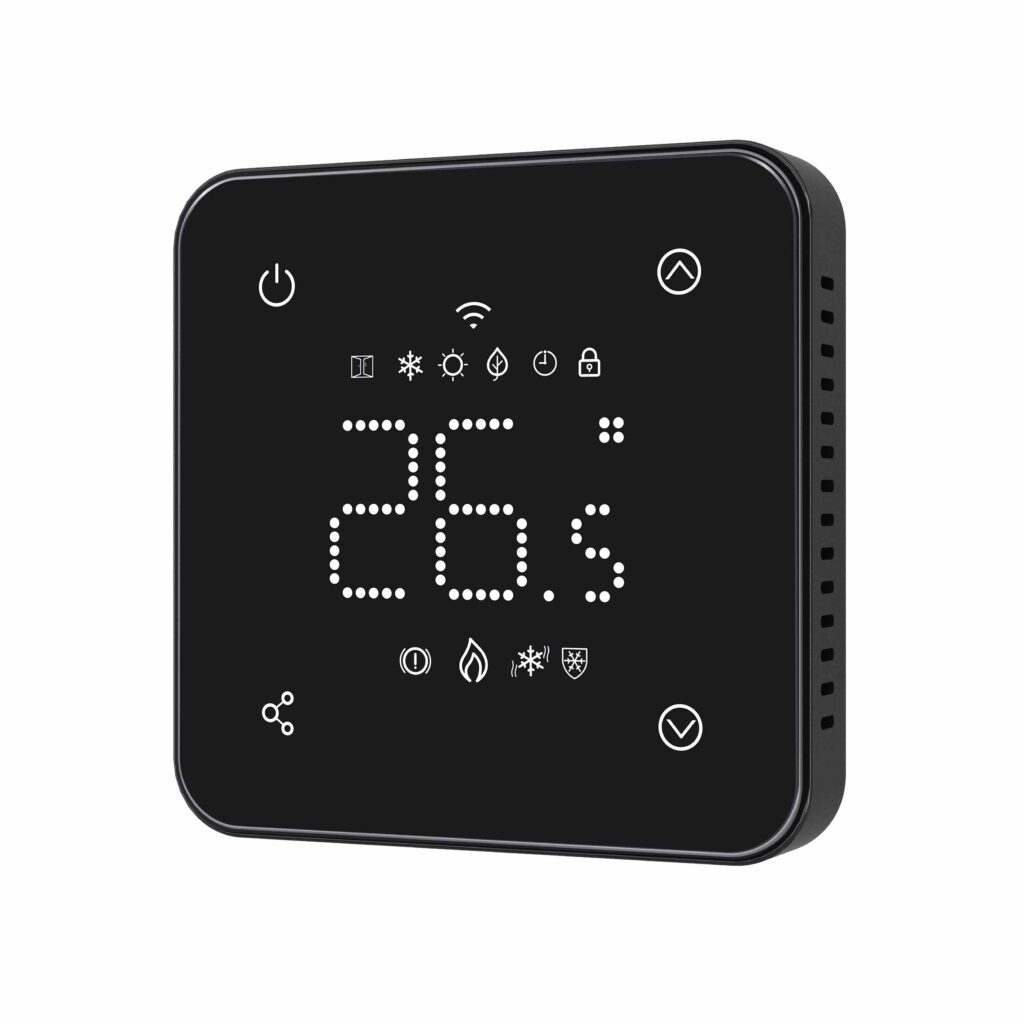
Features of 2-Pipe Fan Coil Systems
A 2-pipe fan coil system is one of the most widely used HVAC configurations. It consists of one supply pipe and one return pipe, through which either chilled water or hot water is delivered from a central plant.
In a 2-pipe system, the fan coil unit can operate in either cooling or heating mode at a given time, but not both simultaneously. Seasonal changeover between cooling and heating is handled by the central system rather than the room thermostat. The thermostat’s primary function is to monitor room temperature and control fan speed to maintain the desired setpoint.
Because of its relatively simple control logic, a 2-pipe fan coil thermostat usually has a straightforward design. Installation and maintenance costs are lower, making this system suitable for residential buildings, apartments, and small offices where temperature control requirements are moderate and predictable.
Features of 4-Pipe Fan Coil Systems
A 4-pipe fan coil system is more advanced and flexible. It includes two chilled water pipes and two hot water pipes, allowing cooling and heating to be available at the same time. Each fan coil unit can independently select cooling or heating based on room demand.
As a result, 4-pipe fan coil thermostats typically support more sophisticated control functions. They can manage separate chilled water and hot water valves, enabling precise temperature regulation and faster response to changes in indoor conditions. This independent control significantly improves thermal comfort for occupants.
Due to higher system complexity and cost, 4-pipe systems are commonly used in hotels, hospitals, high-end office buildings, and other commercial facilities where comfort, zoning flexibility, and operational efficiency are critical.
Key Differences in Thermostat Control Logic
From the thermostat perspective, the main difference between 2-pipe and 4-pipe systems lies in what is being controlled and how.
A 2-pipe fan coil thermostat generally controls a single valve or relies mainly on fan speed modulation to regulate room temperature. Its functionality is relatively basic and focused on maintaining comfort within predefined system conditions.
In contrast, a 4-pipe fan coil thermostat must control both heating and cooling valves. It often includes automatic mode selection, advanced algorithms, and multiple control outputs. This makes the thermostat more intelligent but also places higher requirements on its hardware performance and software reliability.
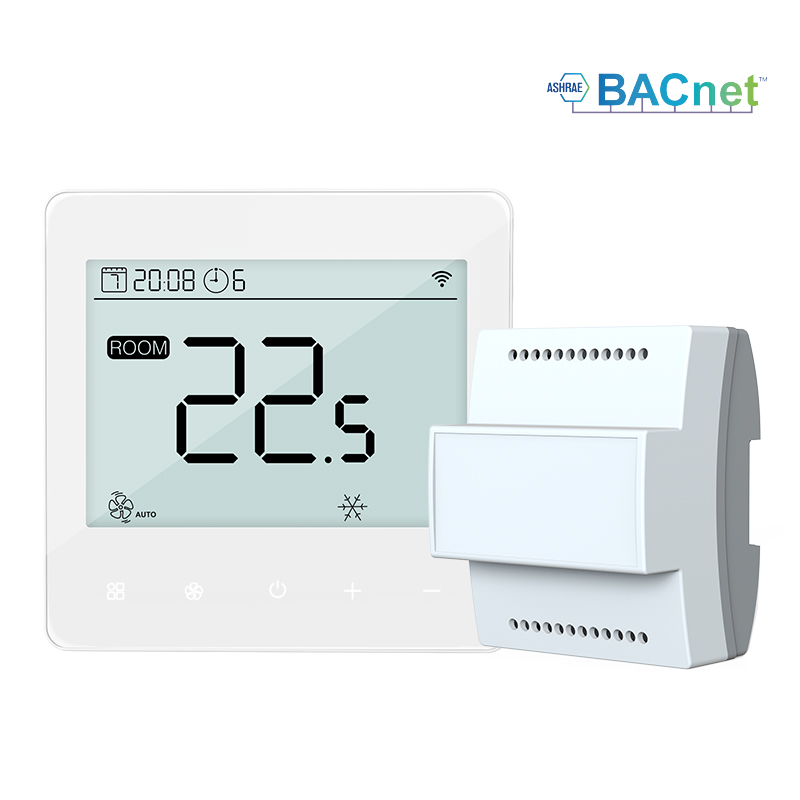
Additionally, 4-pipe thermostats are more commonly integrated with Building Management Systems (BMS) via communication protocols such as Modbus or BACnet. This allows centralized monitoring, remote control, and energy management at the building level.
Application Scenarios and Selection Recommendations
When choosing between 2-pipe and 4-pipe systems, project requirements and budget constraints should be carefully evaluated. A 2-pipe system is suitable for buildings with clear seasonal usage patterns, offering advantages such as lower initial investment and simplified maintenance.
A 4-pipe system, on the other hand, is ideal for buildings with diverse thermal demands across different zones or times of day. It provides superior comfort and operational flexibility, making it the preferred choice for premium commercial projects.
When selecting a fan coil thermostat, it is essential to confirm compatibility with the system type. Using a mismatched thermostat may result in poor temperature control, inefficient operation, or even system malfunction.
Conclusion
The difference between 2-pipe and 4-pipe fan coil unit thermostats lies primarily in system structure, control capability, and application environment. A 2-pipe system offers simplicity and cost efficiency, while a 4-pipe system delivers greater flexibility and enhanced comfort. By understanding these differences and choosing the appropriate thermostat, building owners and system designers can achieve an optimal balance between performance, comfort, and energy efficiency.