

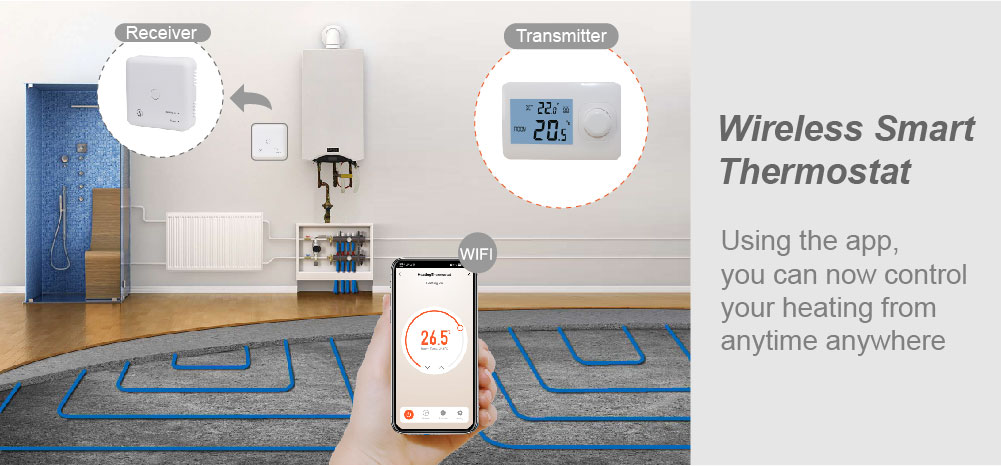
In the cold winter, home heating is a necessity, but high heating costs and uneven indoor temperatures leave many families facing a dilemma: “warmth or money?” In traditional heating systems, users are often forced to open windows to dissipate heat due to the inability to accurately control room temperature, or experience uneven heating between floors due to unbalanced water flow in the risers. These seemingly minor wastes actually accumulate into significant energy consumption. The emergence of thermostatic radiator valves is redefining the energy-saving logic of home heating in a subtle and efficient way.
Precise Temperature Control: A Leap from “Passive Energy Consumption” to “Active Energy Saving”
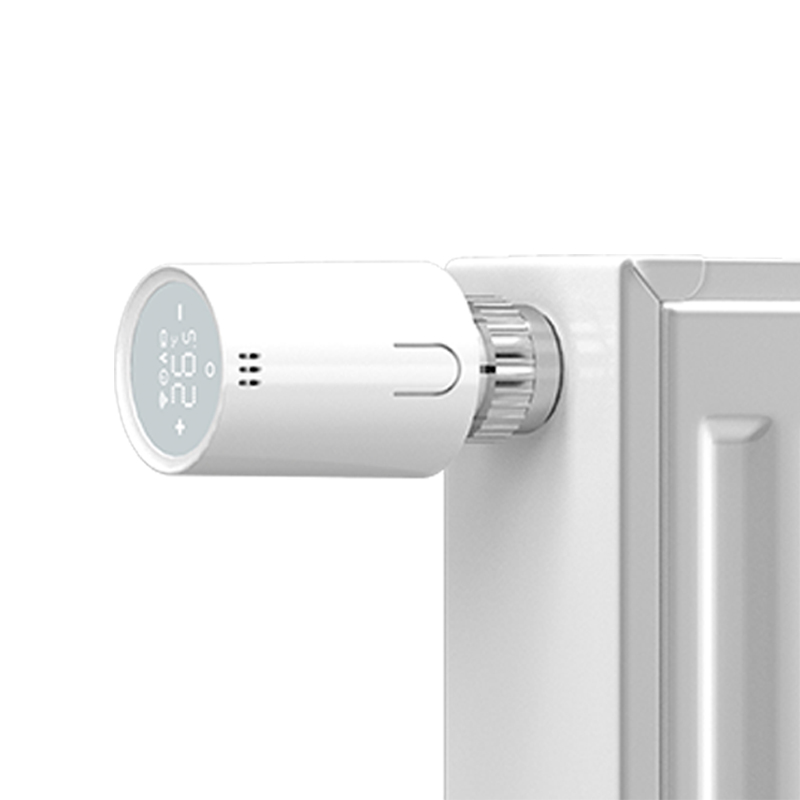
The core of the thermostatic radiator valve lies in its “self-regulating” capability. Through a built-in temperature sensor, it monitors the indoor temperature in real time. When the room temperature is higher than the set value, the sensor expands, pushing the valve stem to close the valve and reduce the hot water flow; when the room temperature drops, the sensor contracts, automatically opening the valve to increase heat supply. This process requires no manual intervention or external energy; it achieves “on-demand heating” solely based on changes in ambient temperature.
Taking a real-world scenario as an example, if a user sets the room temperature to 20℃, when sunlight shines through the window, the thermostatic valve will immediately sense the temperature rise and automatically reduce the hot water supply from the radiators to avoid overheating. Conversely, when the temperature drops in the evening, the valve will open wider to replenish heat. This dynamic adjustment capability keeps the indoor temperature stable within the set range, completely eliminating the energy waste caused by opening windows to dissipate heat when the room temperature is too high, a problem common in traditional systems. According to a report by the European Building Automation and Control Association (EU.bac), homes with thermostatic valves can achieve an average energy saving of 20%-30%, and in sunny south-facing rooms, the energy saving effect can even exceed 35%.
Free Heat Utilization: Uncovering the Overlooked “Hidden Energy”
In home heating, besides radiator heating, sunlight, human activity, and the operation of household appliances all generate “free heat.” Although this heat is unstable, if used properly, it can significantly reduce the load on the heating system. In traditional systems, free heat is often considered a “safety factor” and not incorporated into the design, leading to radiators operating at full load for extended periods and resulting in energy waste.
The thermostatic radiator valve’s “intelligent sensing” capability makes it a “capturer” of free heat. When there is sufficient free heat in the room, the thermostat prioritizes utilizing this heat, automatically closing the valve; when free heat is insufficient, the valve reopens to supplement heat. For example, in a sunny living room during the day, the thermostatic valve may only require 30% of the hot water flow to maintain room temperature; while at night, the valve automatically opens to 70% to ensure stable temperature. This “free heat priority” adjustment logic shifts the heating system from “extensive heating” to “precise heat supplementation,” further reducing energy consumption.
Hydraulic Balance Optimization: Solving a “Stubborn Problem” in Heating Systems
In dual-pipe or single-pipe heating systems, uneven water flow in the risers and uneven heating between floors are common problems. In traditional systems, users often address this by manually adjusting valves or opening windows for ventilation, but these methods neither solve the problem nor prevent energy waste.
The installation of a thermostatic radiator valve can automatically balance the system’s hydraulics. In a two-pipe system, a high-resistance two-way valve ensures that the flow rate of each radiator matches the room temperature demand through proportional adjustment, avoiding “overheating at the near end and undercooling at the far end.” In a single-pipe system, a low-resistance two-way or three-way valve, combined with a bypass pipe design, allows for precise flow rate adjustment within the 0-100% range, solving the problem of vertical misalignment. For example, in the renovation of an existing single-pipe parallel flow system, after installing a thermostatic valve, upper-floor users no longer need to be affected by lower-floor users adjusting valves; each room can be independently temperature-controlled, and the overall system energy efficiency is improved by more than 15%.
Return on Investment: An “Energy-Saving Marvel” That Pays Off in Two Years
Although the unit price of a thermostatic radiator valve is only tens to hundreds of yuan, its long-term energy-saving benefits are significant. Taking a 100㎡ household as an example, if the heating season energy consumption is 3000 yuan, installing a thermostatic valve can save 600-900 yuan per year, with an investment payback period of only 2-3 years. Furthermore, the installation of thermostatic valves requires no modification to the heating network; only the existing valves need to be replaced. This results in a short construction period, low cost, and suitability for energy-saving retrofits of existing buildings.
In the European Union, the widespread adoption of thermostatic valves has already yielded significant environmental benefits. Statistics show that if all 500 million non-controlled valves were replaced with thermostatic valves, 160 terawatt-hours of energy consumption could be reduced annually, equivalent to the carbon emissions of 15 million cars. This data confirms the enormous potential of thermostatic valves in energy conservation and emission reduction.
The energy-saving logic of thermostatic radiator valves essentially shifts the heating system from “passive operation” to “active thinking.” Through precise temperature control, free heat utilization, and hydraulic balance optimization, it not only improves the comfort of home heating but also provides a feasible solution for energy conservation and emission reduction in a low-cost, high-return manner. Under the “dual carbon” goal (carbon reduction and emission reduction), the widespread adoption of thermostatic valves is not only a choice for home energy conservation but also a small but firm step towards building a green and low-carbon society. Choosing thermostatic radiator valves ensures that every degree of heat is used effectively, making winter heating both warm and economical.