
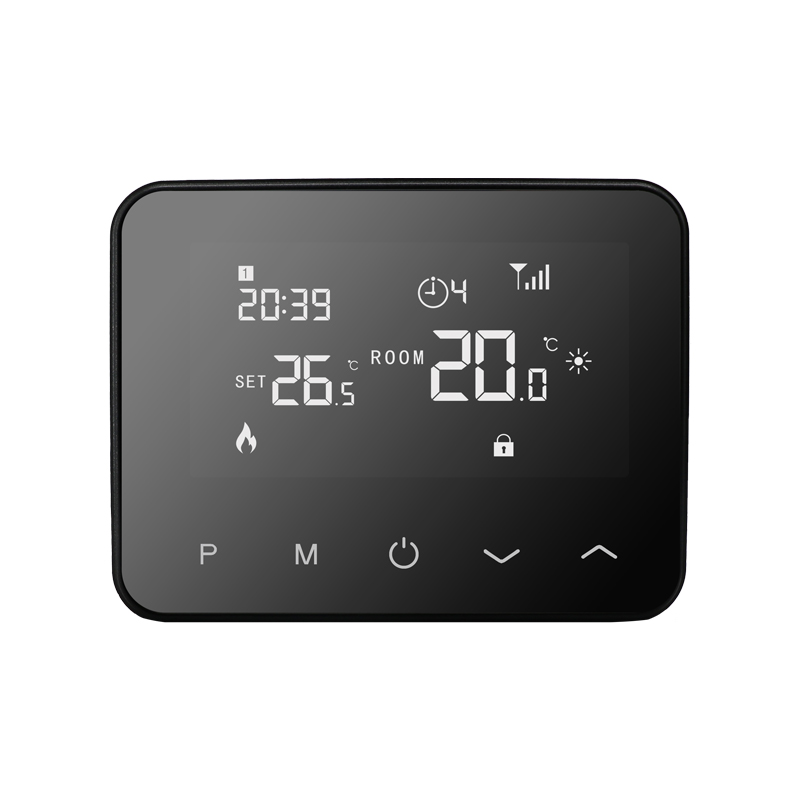
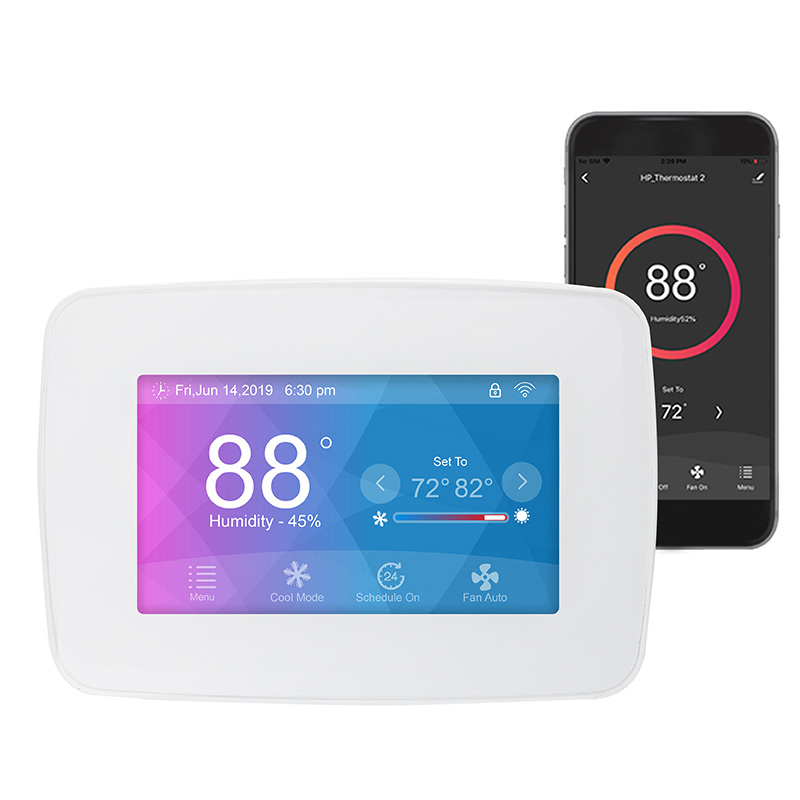
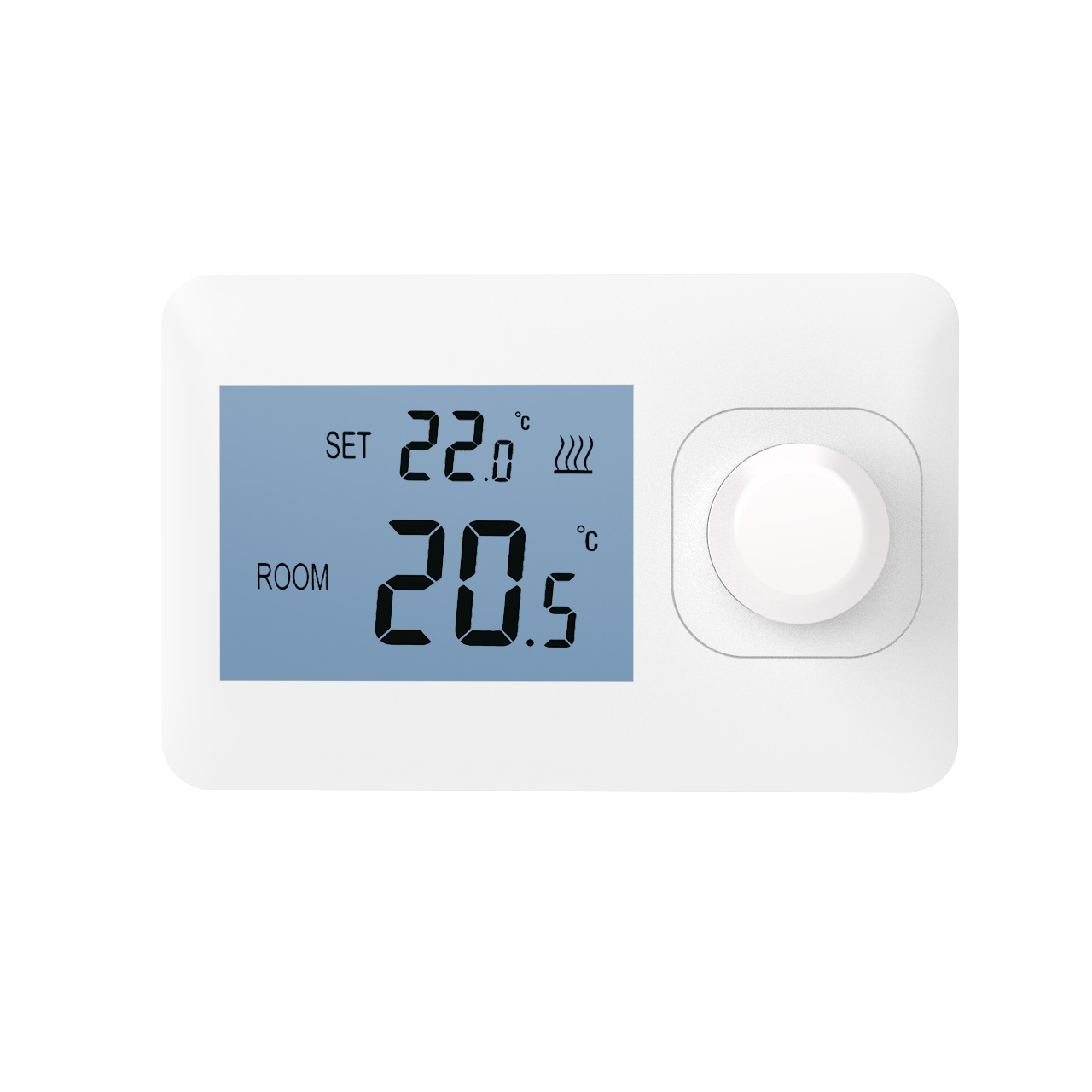
In central air conditioning systems, fan coil unit (FCU) thermostats are not only responsible for regulating indoor temperature but also play a direct role in valve control. The control logic between thermostats and valves has a significant impact on comfort levels, energy consumption, and equipment lifespan. This article provides a detailed explanation of FCU thermostat and valve control logic from both technical and practical perspectives.
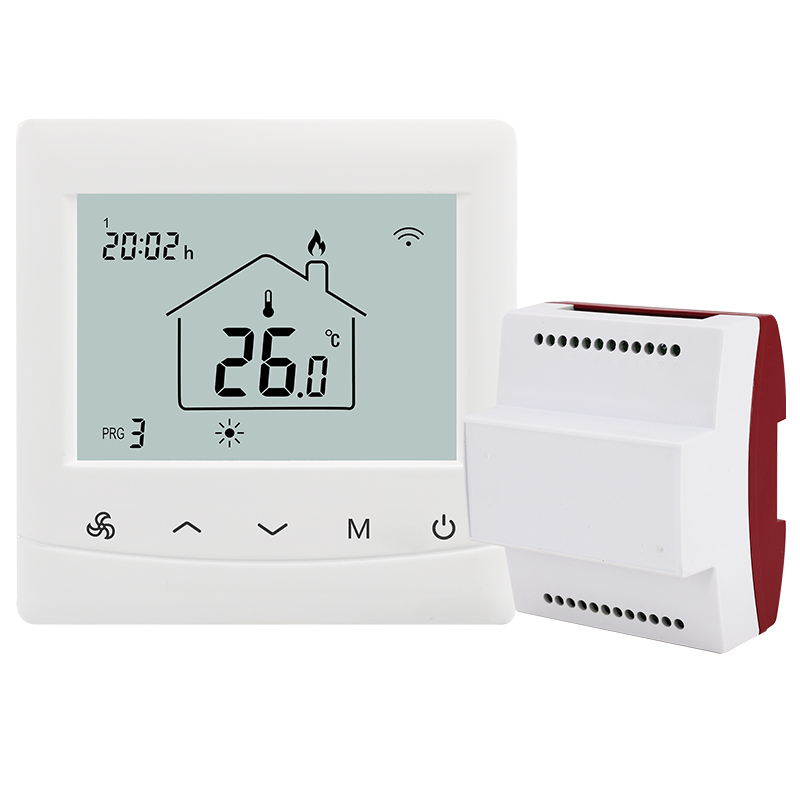
Relationship Between FCU Thermostats and Valves
In fan coil unit systems, indoor temperature is regulated by controlling the flow of chilled or hot water. Valves act as the execution components of the water system, while thermostats serve as the control units. Common control configurations include:
Two-way valves regulating water flow
Motorized or solenoid valves for on/off control
Thermostats sending control signals to drive valve operation
Based on the difference between room temperature and the setpoint, the thermostat issues commands to adjust valve status and system load.
Common Types of Valve Control Logic
1. On/Off Control Logic
This is the most basic and widely used control method. The thermostat controls the valve to fully open or fully close according to temperature deviation:
The valve opens when the room temperature exceeds (or falls below) the setpoint
The valve closes once the setpoint is reached
This logic is simple and cost-effective but may cause temperature fluctuations due to coarse water flow regulation.
2. Proportional Control Logic
In more advanced systems, thermostats can regulate valve opening proportionally:
Larger temperature deviations result in greater valve opening
As the temperature approaches the setpoint, the valve gradually closes
Proportional control provides smoother temperature regulation, improved comfort, and reduced energy consumption.
3. Coordinated Fan and Valve Control
In practical applications, thermostats usually control both the fan and the valve in a coordinated manner:
During cooling or heating start-up, the valve opens first, followed by fan operation
When stopping, the fan shuts down first, then the valve closes
This coordination prevents ineffective air delivery and avoids unnecessary energy waste in the water system.
Control Differences in Two-Pipe and Four-Pipe Systems
Two-Pipe Systems
In two-pipe systems, the same piping alternates between chilled and hot water depending on the season. Thermostats must operate according to seasonal mode selection, making control logic relatively simple but requiring proper system management.
Four-Pipe Systems
Four-pipe systems have separate chilled water and hot water lines. Thermostats must independently control different valves, resulting in more complex logic but greater temperature control flexibility and improved comfort.
Impact of Valve Control Logic on System Performance
Well-designed valve control logic offers several benefits:
Reduced frequency of valve actuation, extending actuator lifespan
Prevention of simultaneous heating and cooling, improving energy efficiency
More stable indoor temperatures and enhanced comfort
Poorly designed control logic, however, can increase energy consumption and accelerate equipment wear.
Advantages of Smart FCU Thermostats in Valve Control
With the development of building automation, smart FCU thermostats are increasingly adopted and offer clear advantages in valve control:
Compatibility with multiple valve types and control modes
Adjustable delay, deadband, and anti-short-cycling functions
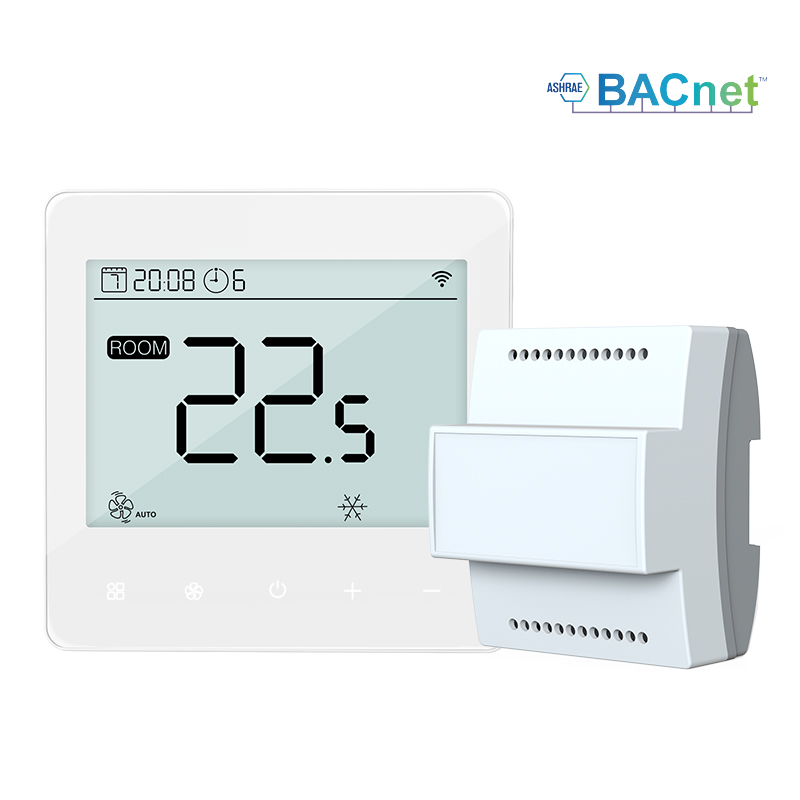
Support for communication protocols such as Modbus and BACnet for centralized monitoring
Smart control ensures smoother, more predictable valve operation and contributes to long-term system reliability.
Conclusion
The control logic between fan coil unit thermostats and valves is a critical element of HVAC system performance. By selecting appropriate control strategies, matching compatible valve types, and leveraging advanced features of smart thermostats, building operators can significantly improve comfort, reduce energy consumption, and extend equipment lifespan. Optimizing thermostat and valve control logic is a fundamental step toward efficient and reliable HVAC systems in modern buildings.