


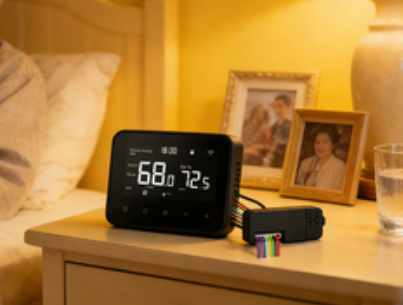
In the depths of winter, when the north wind howls outside, the comfort of a warm, cozy home often comes from a reliable heating system. However, many families, while enjoying the warmth, overlook a hidden risk—frozen pipes. If the heating system shuts down due to low temperatures, the destructive force of expanding frozen water can cause metal pipes to burst, resulting in repair costs easily exceeding a thousand yuan. At this time, a seemingly inconspicuous thermostatic valve for radiators quietly plays the role of an “anti-freeze guardian,” using smart technology to protect the safety of home heating.
Anti-freeze Core: Precise Temperature Control Cuts Off the Risk of Freezing
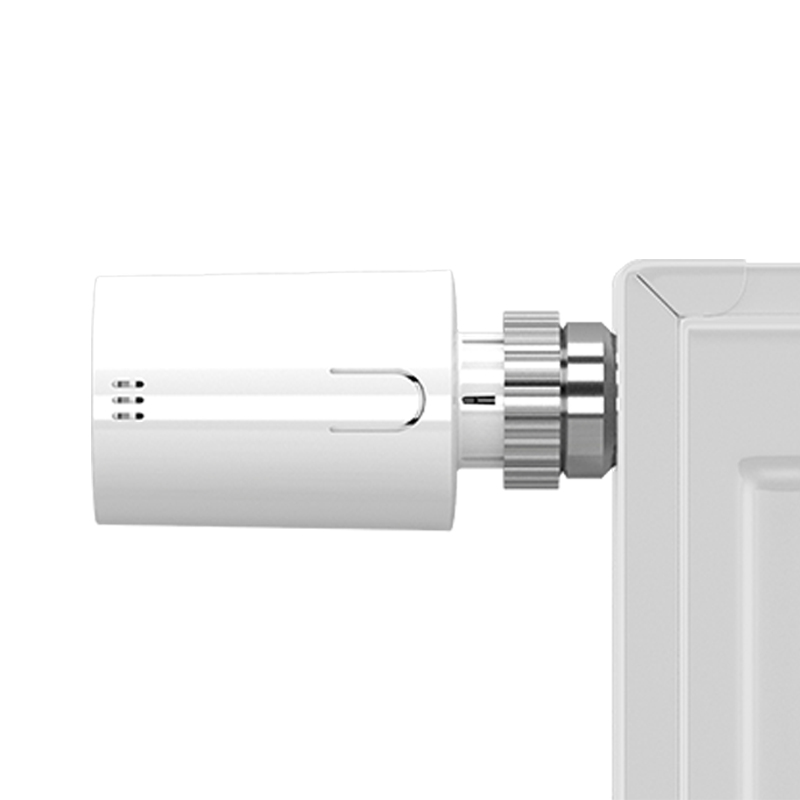
The anti-freeze function of a thermostatic radiator valve does not directly heat the pipes, but rather achieves “active defense” through precise control of water flow. When the indoor temperature approaches freezing, the thermostatic valve’s temperature bulb senses the environmental change and automatically opens the valve core. This action ensures that hot water is always circulating within the radiator, preventing freezing even if the heating system is briefly interrupted. For example, during the coldest hours at night, if the user does not adjust the temperature, the thermostatic valve will automatically maintain a basic flow rate to prevent the pipes from freezing and bursting due to complete stagnation.
More intelligent thermostatic valves also feature an “anti-freeze setting” mode. Users can adjust the valve to the lowest setting (typically corresponding to 5-8℃), at which point the valve maintains system operation with a very small flow rate. This design saves energy and ensures that the water temperature in the pipes remains above freezing. Real-world testing data shows that in extreme environments of -10℃, thermostatic valves equipped with anti-freeze functionality can reduce the risk of pipe freezing and cracking by more than 90%.
Materials and Structure: Dual Protection Against Extreme Cold
The reliability of anti-freeze performance relies heavily on the materials and structural design of the thermostatic valve. Mainstream products use a nickel-plated brass valve body, a material that is not only corrosion-resistant but can also withstand temperatures as low as -20℃ without deformation. The valve stem and spring are made of stainless steel to prevent malfunction due to low-temperature embrittlement. The temperature sensing element uses a liquid medium (such as methanol or toluene), whose coefficient of thermal expansion is precisely calibrated, ensuring stable operation even within a wide temperature range of -10℃ to 55℃.
Structurally, the built-in temperature bulb design further enhances the anti-freeze effect. The thermostat bulb, in direct contact with the water flow, can detect temperature changes more quickly and actuate the valve core. Some high-end models are also equipped with a bimetallic strip auxiliary sensing device. When the liquid temperature sensing element fails, the metal strip deforms to trigger mechanical protection, forming a double antifreeze barrier.
Installation and Use: Details Determine Antifreeze Success
Even the most advanced antifreeze technology requires proper installation and use to achieve its maximum effectiveness. During installation, the thermostat valve must be fixed horizontally at the radiator inlet to avoid sensing errors caused by tilting. If the radiator is obstructed by curtains or furniture, an external thermostat bulb should be selected, extending the sensing head to a well-ventilated area via a capillary tube to ensure accurate temperature data.
In daily use, users do not need to frequently adjust the valve. Before winter arrives, setting the temperature to 15-18℃ is sufficient for basic antifreeze needs. If going away for an extended period, the valve can be set to the antifreeze setting (usually level 1), at which point the system will operate at minimum flow, saving energy and preventing freezing and cracking. It is important to note that a filter must be installed at the front end of the thermostat valve to prevent welding slag or impurities from clogging the valve core and affecting the antifreeze function.
From Freeze Protection to Energy Saving: The Added Value of Thermostatic Valves
Freeze protection is just the basic function of thermostatic valves; their true value lies in energy saving through intelligent temperature control. When the indoor temperature reaches the set value, the valve automatically closes, reducing the hot water flow. According to calculations by the German Building Technology Institute, households using thermostatic valves can reduce heating energy consumption by 15-30%. This energy-saving effect is particularly significant in individual metering systems—users do not need to pay extra for overheating, truly achieving “heating on demand.”
Furthermore, thermostatic valves can improve the hydraulic balance of the heating system. In multi-story buildings, it can solve the vertical imbalance problem of “overheating on the top floor and undercooling on the bottom floor” by automatically adjusting the flow rate. This balanced heating not only improves comfort but also indirectly reduces energy waste caused by localized overheating.
A cold winter is not terrible; it’s the cracked radiators that are worrying. Thermostatic radiator valves use technology to eliminate the risk of freezing, allowing home heating systems to operate stably even in extreme weather conditions. From precise temperature control to guaranteed material quality, from intelligent design to energy efficiency, this small valve is acting as an “invisible guardian,” bringing warmth and peace of mind to countless households. Choosing a reliable thermostatic valve is not only about insuring your heating system, but also about building a solid defense for your family’s well-being.