
In today’s pursuit of home comfort and energy efficiency, underfloor heating systems have become the preferred choice for many families during home renovations due to their advantages such as even heat distribution and space saving. Radiator thermostatic valves, as a powerful tool for improving heating comfort and energy efficiency, have long been renowned in radiator systems. So, can radiator thermostatic valves be applied to underfloor heating systems to bring the same convenience and energy-saving benefits to underfloor heating users?
The Working Principle and Advantages of Radiator Thermostatic Valves
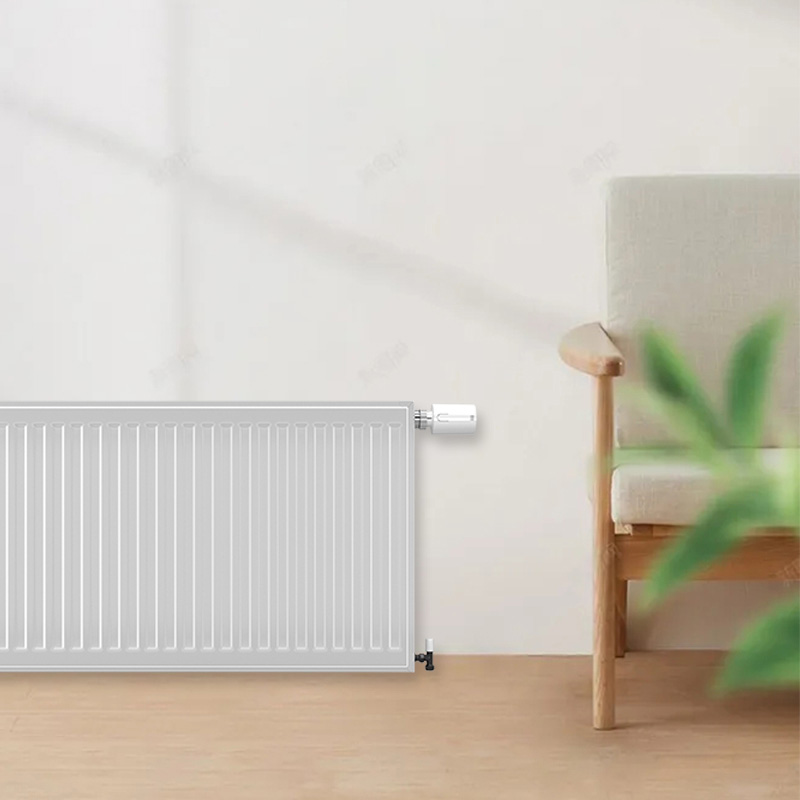
A radiator thermostatic valve is a proportional regulating control valve that operates without external energy input. Its core component is a thermostatic bulb. The bulb is filled with a temperature-sensitive substance. When the indoor temperature rises, the bulb expands, causing the valve to close slightly, reducing the water flow to the radiator; when the room temperature drops, the bulb cools and contracts, causing the valve to open wider, increasing the water flow to the radiator. Through this automatic regulation, the radiator thermostatic valve can accurately control the indoor temperature, preventing overheating or undercooling, while effectively utilizing “free heat” (such as sunlight and heat generated by human activity), reducing energy consumption.
Characteristics and Requirements of Underfloor Heating Systems
Underfloor heating systems circulate hot water through pipes under the floor, evenly distributing heat throughout the room to achieve a comfortable “warm feet, cool head” experience. Compared to radiator systems, underfloor heating systems require more precise control over water temperature and flow rate. The supply water temperature for underfloor heating is typically lower (generally 35-45℃), and a stable flow rate needs to be maintained to ensure uniform floor temperature and avoid localized overheating or undercooling. Furthermore, underfloor heating systems have relatively low water resistance, placing higher demands on the adjustment performance of valves.
Challenges of Applying Thermostatic Valves to Underfloor Heating Systems
While thermostatic valves perform excellently in radiator systems, their direct application in underfloor heating systems faces several challenges. First, underfloor heating systems have lower supply water temperatures, while some thermostatic valves are designed for radiator systems with higher supply water temperatures. In low-temperature environments, the temperature sensitivity of the thermostat may decrease, leading to inaccurate valve adjustment. Second, underfloor heating systems require extremely stable water flow, and the adjustment process of thermostatic valves may cause fluctuations in water flow, affecting the even heat dissipation effect of the underfloor heating system. Furthermore, the complex piping layout of underfloor heating systems means that installing radiator thermostatic valves may require additional piping modifications, increasing construction difficulty and cost.
Solution: The Rise of Dedicated Underfloor Heating Thermostatic Valves
Faced with the challenges of applying radiator thermostatic valves to underfloor heating systems, thermostatic valves specifically designed for underfloor heating systems have gradually emerged on the market. These dedicated underfloor heating thermostatic valves are optimized for the characteristics of underfloor heating systems, such as using more sensitive temperature bulb materials to ensure accurate temperature sensing even in low-temperature environments; optimizing valve structure to reduce water flow fluctuations during adjustment; and providing more flexible installation methods to adapt to the complex piping layout of underfloor heating systems. Through these improvements, dedicated underfloor heating thermostatic valves can better meet the needs of underfloor heating systems, achieving precise temperature control and energy-saving effects.
Practical Application Cases and Results
In practical applications, dedicated underfloor heating thermostatic valves have demonstrated significant advantages. For example, a family chose an underfloor heating system during renovation and installed a dedicated underfloor heating thermostatic valve. By setting the room temperature appropriately, the family achieved a comfortable indoor environment in winter, while energy consumption was reduced by approximately 20% compared to when no thermostatic valve was installed. Furthermore, the even heat distribution of underfloor heating has been significantly improved, avoiding the localized overheating or undercooling problems common in traditional underfloor heating systems.
While radiator thermostatic valves cannot be directly applied to underfloor heating systems, the emergence of dedicated underfloor heating thermostatic valves provides users with a new option for precise temperature control and energy saving. By selecting a thermostatic valve product suitable for their underfloor heating system, users can not only enjoy the comfort of underfloor heating but also effectively reduce energy consumption, saving money for their families.