






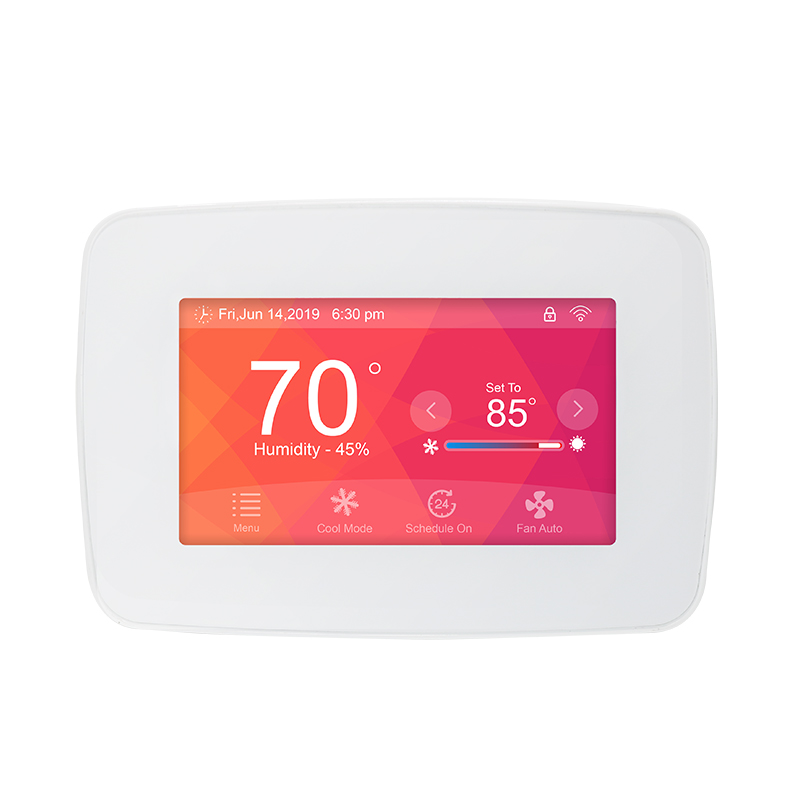
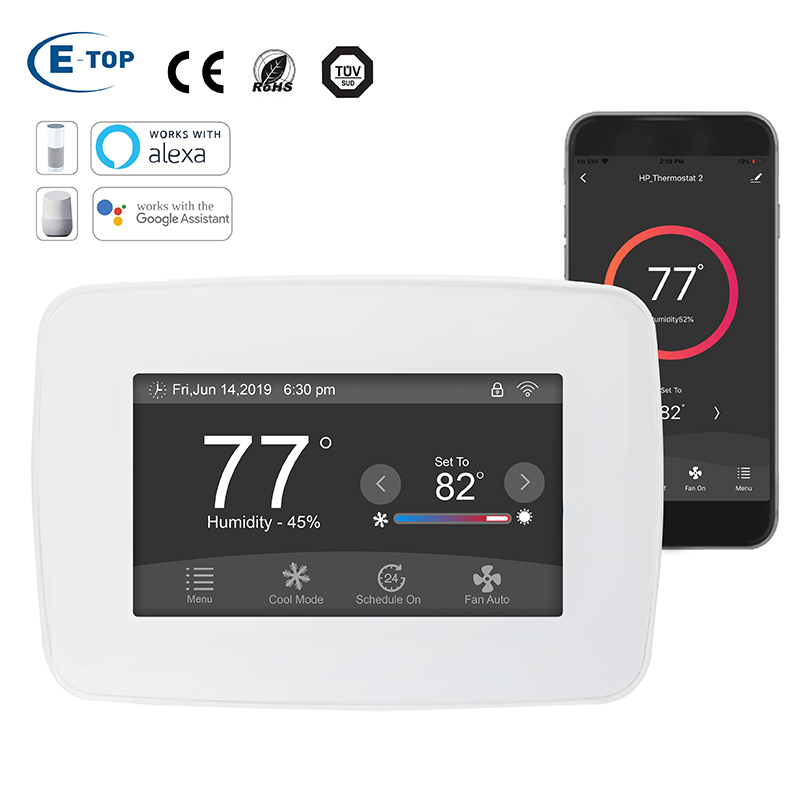
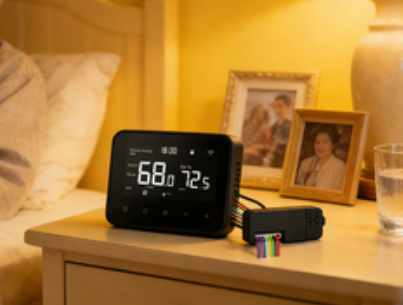
With the rise of smart buildings and green energy-saving concepts, fan coil systems (FCUs) have become widely used in commercial buildings, office towers, and hotels. As a core control device, the fan coil unit thermostat not only affects indoor comfort but also plays a key role in building energy management. This article analyzes the future development trends of FCU thermostats from the perspectives of technological upgrades, smart applications, and energy efficiency optimization.
Deep Integration with IoT and Smart Building Systems
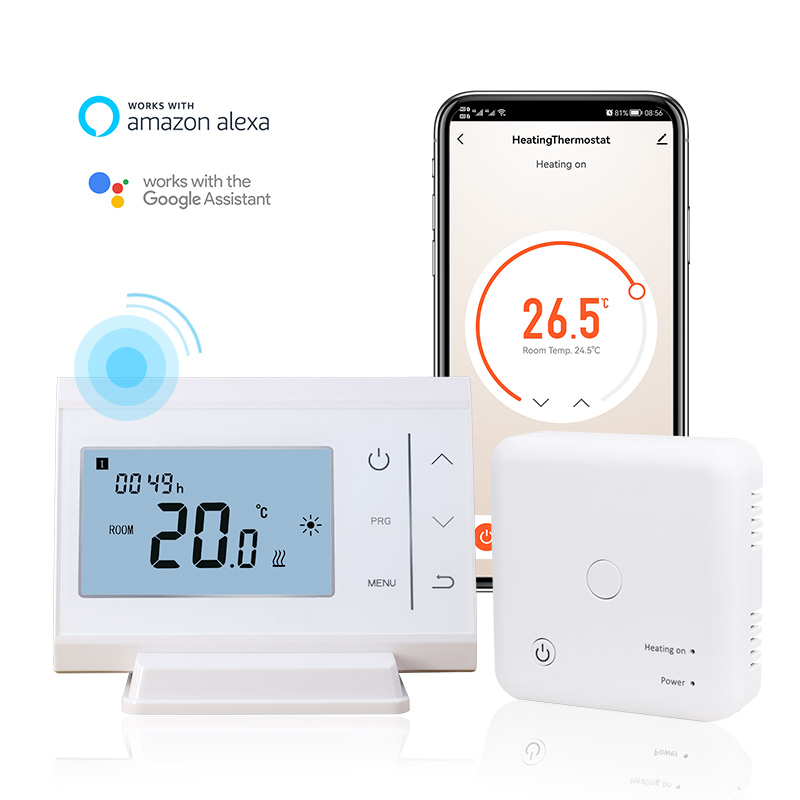
In the future, fan coil thermostats will increasingly integrate with smart building systems, enabling IoT connectivity. Connected thermostats can collect real-time data on temperature, humidity, and air quality, and communicate with central HVAC systems and building automation systems (BAS) for precise control.
Smart thermostats can automatically adjust fan speeds and valve positions while using predictive algorithms to anticipate indoor temperature changes. This not only improves comfort but also reduces energy consumption.
Energy Efficiency Driven by Green Building Standards
Green building initiatives and energy-saving policies are driving higher efficiency requirements for HVAC systems. Future FCU thermostats will emphasize energy monitoring and optimization. By collecting energy usage data from individual rooms, the thermostat can adjust operating strategies in real time, avoiding unnecessary waste.
Multi-zone control and time-based temperature regulation will become standard features, allowing buildings to maintain optimal energy efficiency under different usage scenarios. Thermostats will also optimize coordination with heating and cooling sources, further improving system efficiency.
Enhanced User-Friendly Interfaces
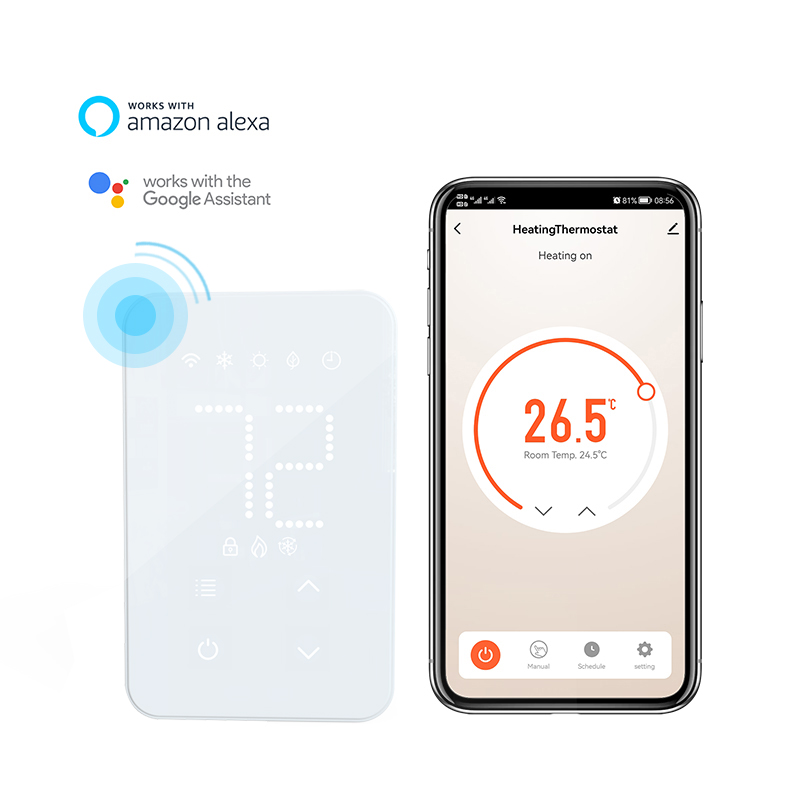
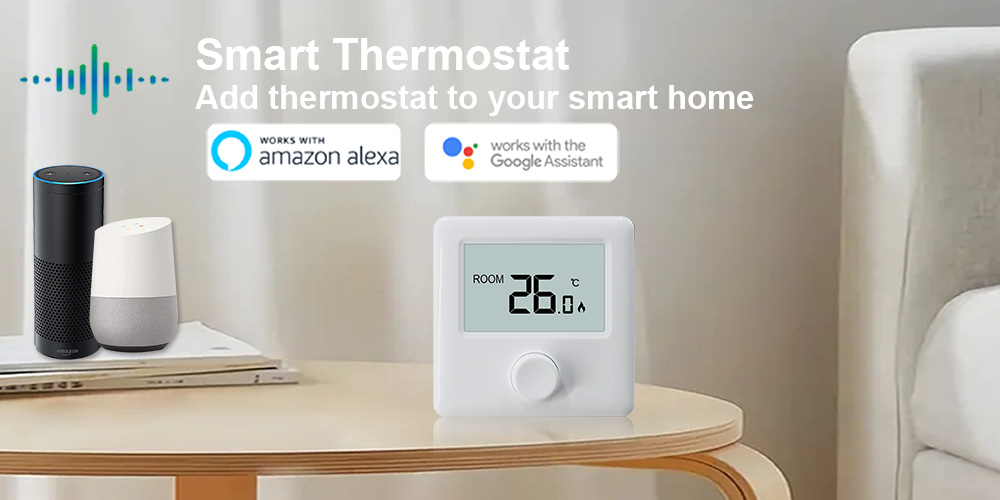
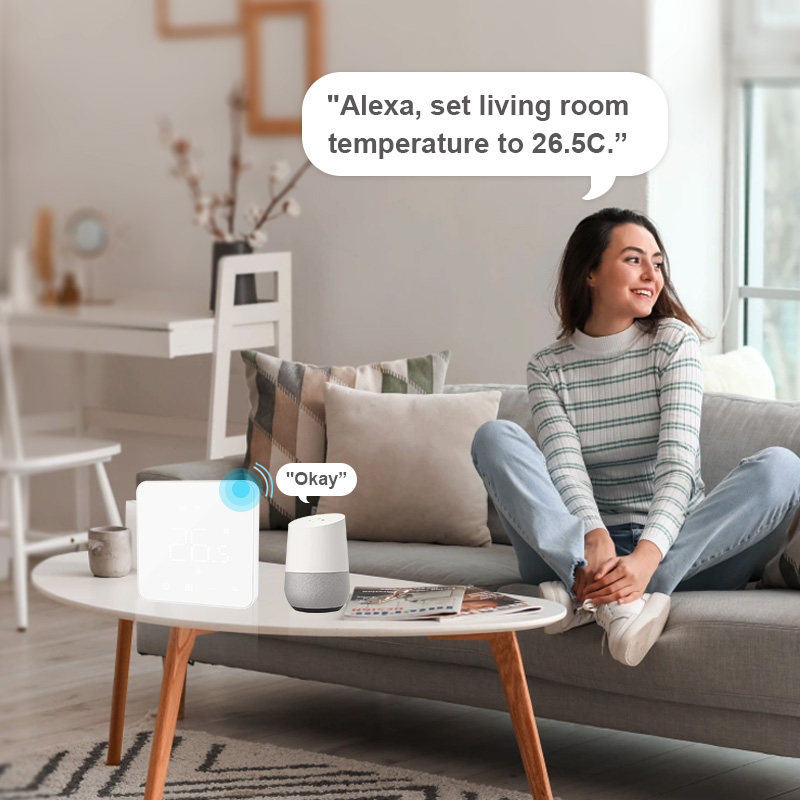
With increasing attention to user experience, FCU thermostats will feature more intuitive and intelligent interfaces. Touchscreens, mobile app controls, and even voice commands will become mainstream, allowing users to adjust temperature and fan speed easily while monitoring indoor conditions in real time.
Additionally, visual dashboards will display energy consumption trends and system alerts, helping facility managers quickly detect anomalies and improve maintenance efficiency.
Adaptive Control and Big Data Analytics
Future thermostats will leverage adaptive control algorithms and big data analytics to manage indoor temperatures more precisely. By analyzing historical data and environmental patterns, the system can predict load demands at different times and optimize fan and valve operations in advance.
This predictive capability enhances comfort while reducing energy losses caused by frequent start-stop cycles, and also extends equipment lifespan.
Modular and Scalable Design
As building functions become more diverse, future FCU thermostats will emphasize modularity and scalability. Users can add control modules as needed for multi-zone centralized control or remote management, meeting the complex requirements of large office buildings, hotels, or mixed-use complexes.
Modular designs also simplify system upgrades and maintenance, reducing long-term operational costs and improving return on investment.
Integration with Renewable Energy Systems
With the increasing use of renewable energy, FCU thermostats will integrate with solar, geothermal, and other sustainable energy sources. Thermostats can dynamically adjust operation based on available renewable energy, maximizing energy utilization.
This integration not only promotes energy savings and environmental protection but also supports green building certification standards, providing added value to building operators.
Conclusion
In summary, the future development of fan coil unit thermostats will focus on intelligence, energy efficiency, user-friendliness, and system scalability. As smart building technology advances and energy-saving requirements increase, thermostats will play an increasingly critical role in enhancing indoor comfort, optimizing energy use, and simplifying system management. For HVAC manufacturers and building project stakeholders, understanding these trends is essential to maintaining technological leadership and competitive advantage in the market.