
In hotels, apartments, student dormitories, long-term rental apartments, and medical and health care buildings, the management difficulty of air conditioning systems often increases rapidly with the number of rooms. With dozens, hundreds, or even thousands of rooms, relying on the traditional “manual adjustment of each unit” method is not only inefficient but also prone to energy consumption malfunctions and service delays. For example, some rooms may remain vacant for extended periods while still running cooling; some equipment may be set too high or too low, leading to soaring electricity bills; or guests may complain about abnormal room temperatures, but the problem cannot be identified immediately. These situations directly impact operating costs and user experience.
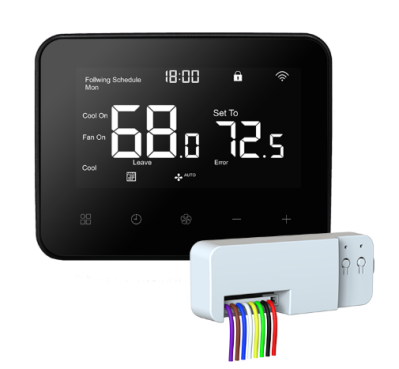
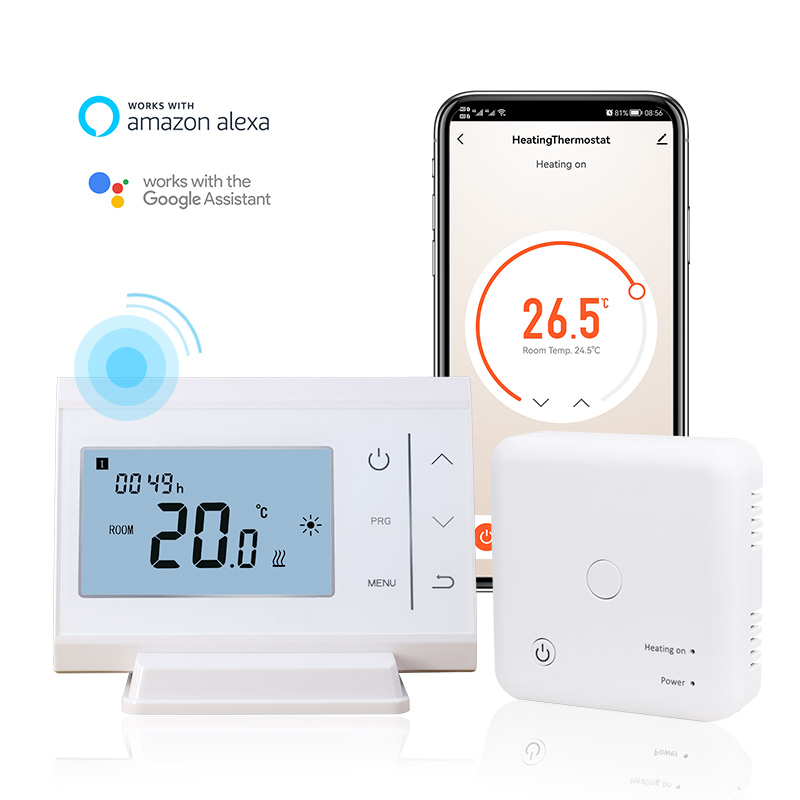
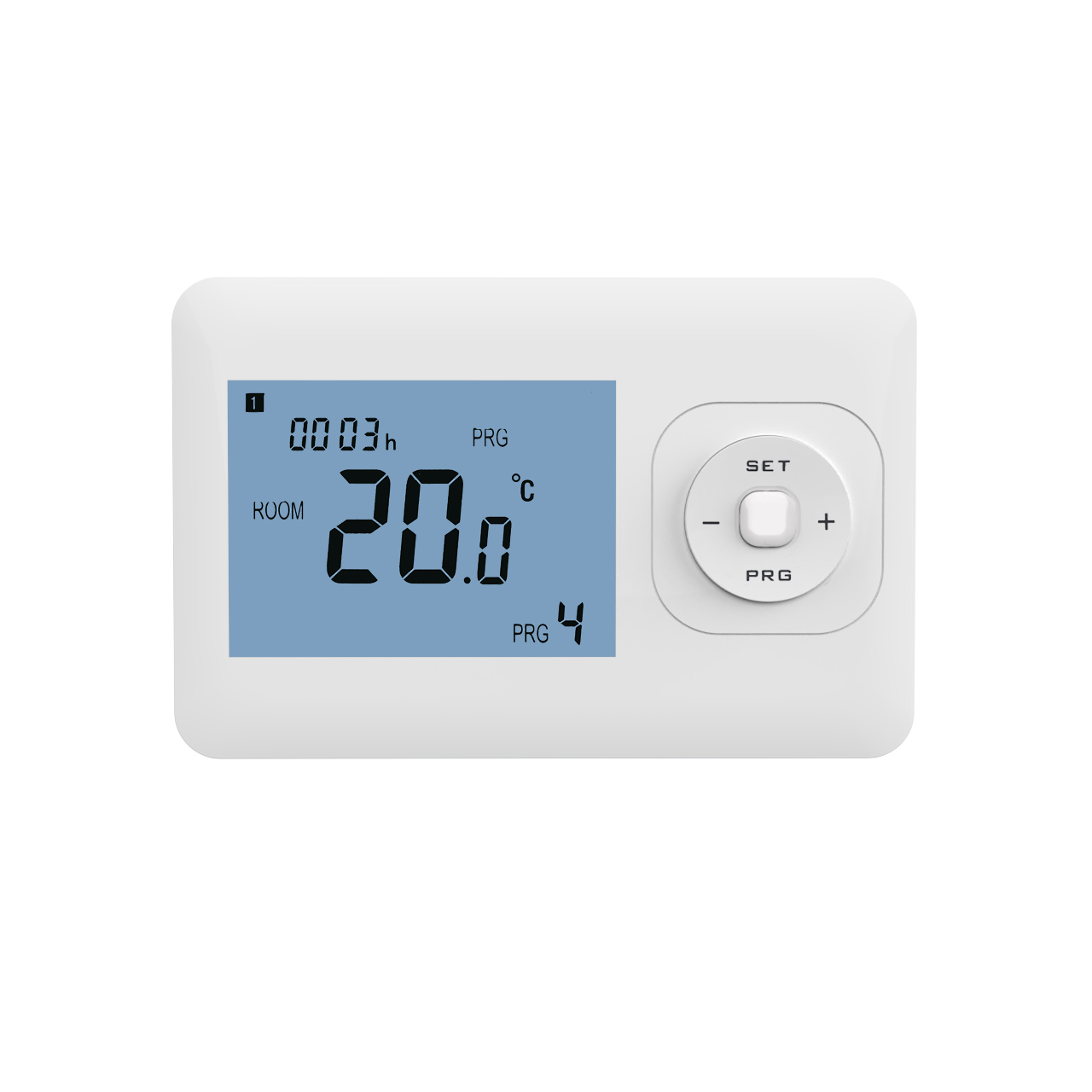
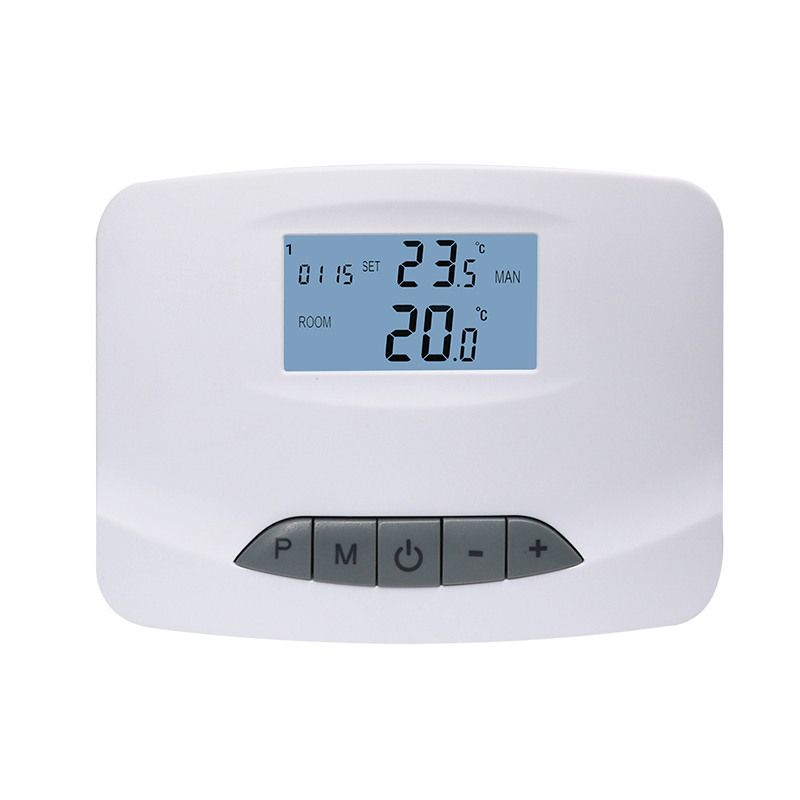
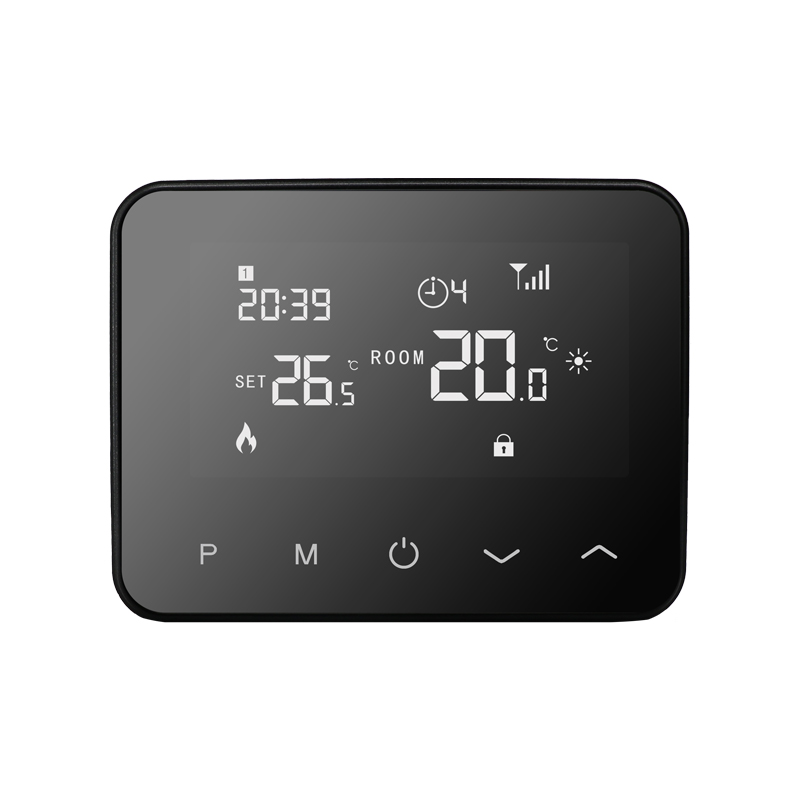
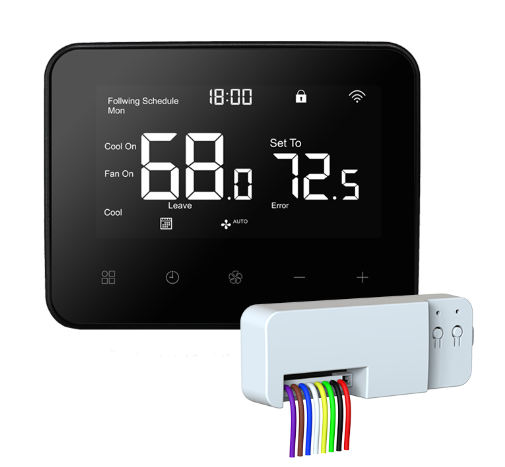
With the popularization of intelligent control technology, more and more managers are realizing that true energy saving and efficient operation and maintenance depend not only on the equipment itself but also on centralized management capabilities. Taking a heat pump PTAC thermostat that supports wireless WIFI connection and remote APP control as an example (such as product number CH7400), through network control, mobile management, and voice interconnection, it is no longer just a temperature panel for a single room but has been upgraded to an intelligent control terminal for the entire building. Each thermostat is a remotely accessible node, and when all nodes are connected, a complete multi-room centralized management system is formed. This “unified backend + individual room control” approach allows managers to view the operating status, temperature settings, and energy consumption of each room at any time, and make remote adjustments via mobile phone or computer, significantly improving operational efficiency. Below, we will analyze in detail how heat pump PTAC thermostats achieve multi-room centralized management from several aspects.
Network Infrastructure
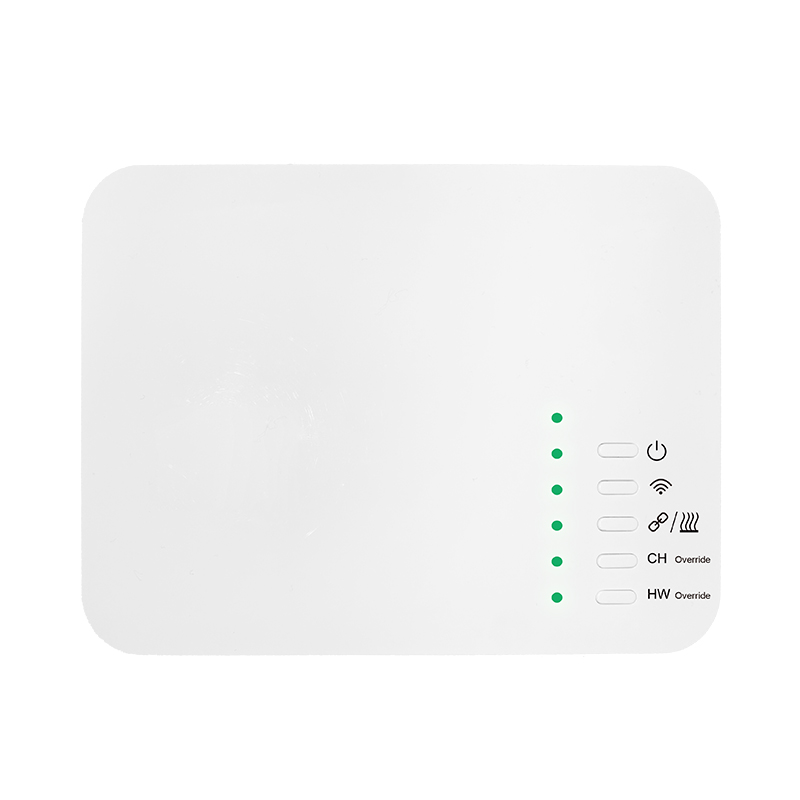
The CH7400 thermostat has a built-in wireless WIFI module, which can be directly connected to a local area network or the Internet after installation, enabling online operation. This results in: each device having an independent network address, the ability to upload operating data in real time, and the ability to receive remote control commands. When all room thermostats are connected to the same network platform, they transform from “distributed devices” into a “unified management system.” This is the technological foundation for multi-room centralized control.
Mobile App
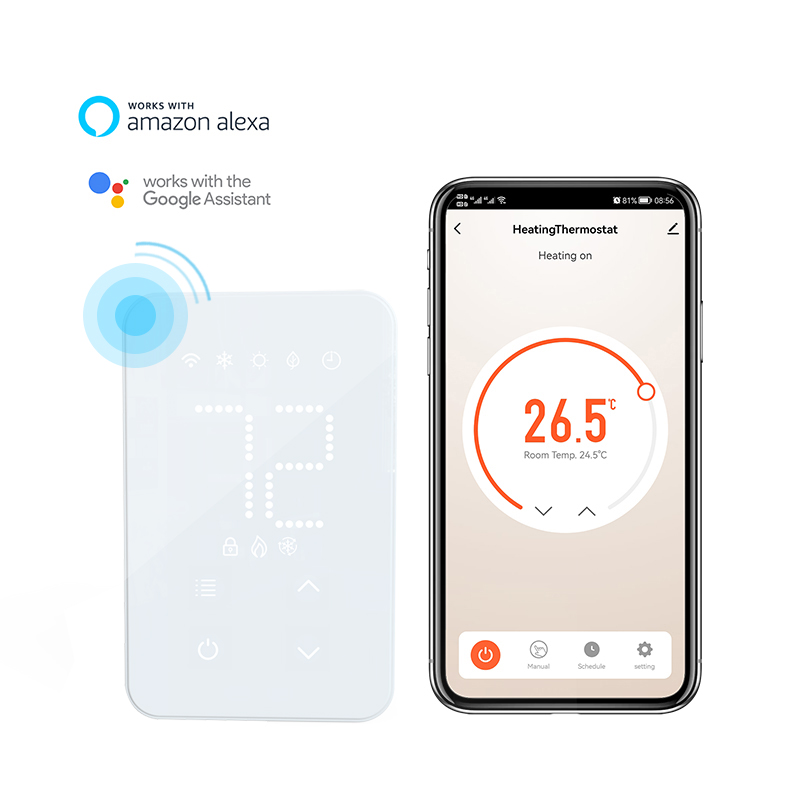
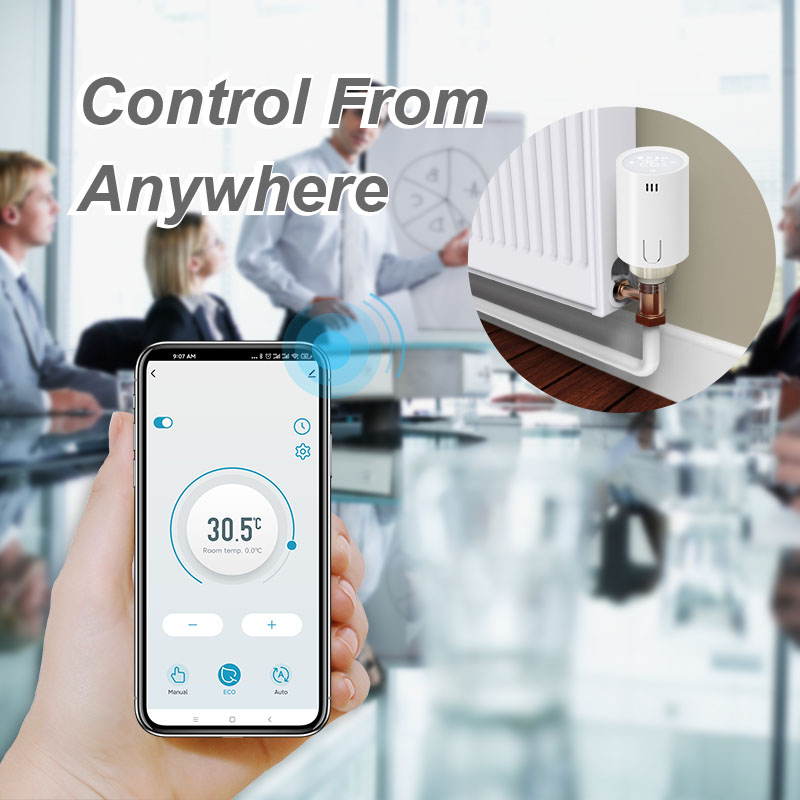
From an operational perspective, the most direct manifestation of centralized management is mobile control. Through a free Android or iOS app, administrators can: view the entire room list, batch turn the machines on and off, uniformly set the temperature, individually adjust the temperature of a specific room, and monitor the operational status in real time. No room-by-room inspections or on-site operations are required. A single smartphone or tablet can manage the temperature of an entire floor or even an entire building. This method significantly reduces labor costs.
Zonal Control
Multi-room management doesn’t mean a “one-size-fits-all” approach. Common operational needs include: unified activation on a specific floor; centralized deactivation in a specific area; energy-saving mode for vacant areas; and comfort mode for occupied areas. The CH7400 supports group or zonal control, allowing for categorized management based on floor, orientation, or functional area. This ensures comfort while avoiding unnecessary energy waste. Control is more precise and better suited to actual usage scenarios.
Remote Real-Time Adjustment
In the traditional model, if guests complain that their rooms are too cold or too hot, engineers must visit the room. Now, they can: remotely view the current temperature, directly modify settings online, and have the changes take effect immediately. Many problems can be resolved without on-site intervention. This not only results in faster response times but also reduces manpower travel time and improves service efficiency. For hotels, this translates to a better customer experience. V. Intelligent Voice Interconnection
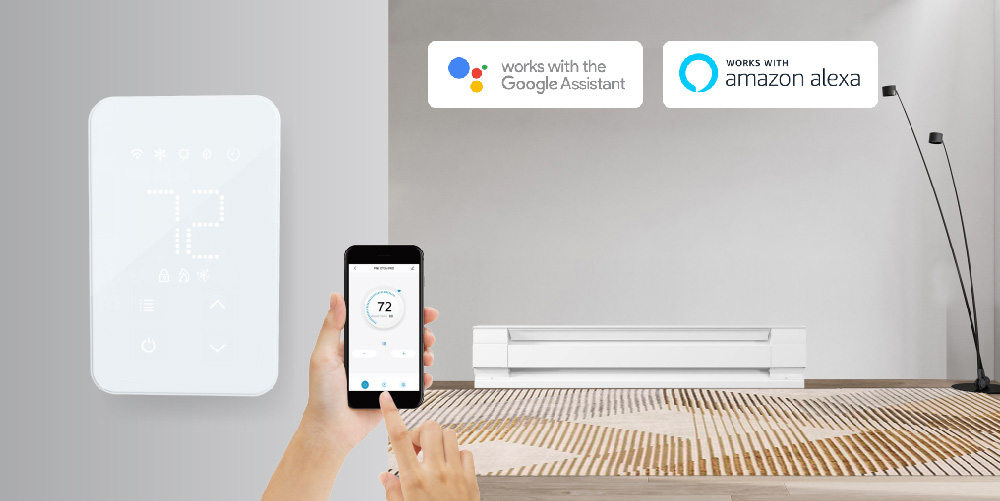
The CH7400 supports integration with Amazon Alexa and Google Assistant. This brings new management methods: voice control for power on/off, voice temperature adjustment, and quick mode switching. It’s more convenient for guests and enables unified ecosystem control in some smart building or smart home scenarios. Simple voice commands can complete complex operations, improving ease of use.
Unified Management of Multiple Device Types
In actual projects, different rooms may have multiple systems: cooling only, heating only, heat pump systems, and systems with auxiliary heating. The CH7400 supports two-stage heating and two-stage cooling (2H/2C) and is compatible with various HVAC types. This means that one platform can manage all devices, eliminating the need for multiple control systems operating in parallel. Unified management reduces system complexity and also reduces training and maintenance costs.
Centralized Energy Saving
The greatest value of centralized management lies in energy saving. The backend can centrally set policies, such as setting maximum/minimum temperature limits, automatic energy saving at night, automatic standby for empty rooms, and batch timed shutdown. These policies can be synchronized to all rooms with a single click. More precise and stable than manual room-by-room adjustments. Overall energy consumption will significantly decrease after long-term operation.
Fault Visualization
When equipment malfunctions, the system will display: offline alarm, abnormal temperature, prolonged operation, and no response prompts. Managers can quickly locate specific rooms and equipment. This transforms “passive repair reporting” into “proactive problem discovery.” This is especially important for projects with a large number of guest rooms.
Heat pump PTAC thermostats with Wi-Fi connectivity and remote APP control are no longer simply temperature control tools, but key nodes in a multi-room centralized management system. Through network connectivity, mobile control, and intelligent linkage, each room is integrated into a unified platform, achieving a visualized, controllable, and statistically significant refined management model. Whether it’s batch temperature adjustment, remote on/off, zoned operation, energy-saving strategy distribution, or fault location, everything can be completed within the same system, greatly improving operational efficiency and management convenience.
For multi-room scenarios such as hotels and apartments, this centralized management not only saves labor costs and reduces energy waste, but also enhances the guest experience. As thermostats evolve from traditional “local devices” to “smart terminals,” the way the entire building’s environment is controlled changes. Heat pump PTAC thermostats, through simple, stable, and easy-to-use networking capabilities, integrate scattered air conditioning equipment into a unified and efficient management network, making multi-room control easier, more organized, and more reliable.