




In the cold winter, radiators bring warmth to indoor spaces, and the thermostatic valve is the key “commander” regulating this warmth. It keeps the room temperature stable at a set value, preventing overheating or undercooling, thus improving comfort and saving energy. But what exactly is the working principle behind this seemingly simple valve? From the “sensing” of the temperature-sensing element to the “action” of the valve core, every step embodies sophisticated design ingenuity.

The core function of a thermostatic radiator valve is to “sensor room temperature and regulate water flow.” When the indoor temperature is lower than the set value, the valve automatically opens, allowing hot water to flow into the radiator; when the temperature reaches the set value, the valve gradually closes, reducing the hot water supply. This process requires no manual intervention, relying entirely on the collaboration between the built-in temperature-sensing element and the mechanical structure. Taking a common liquid-sensing valve as an example, its interior is filled with a special liquid (such as a mixture of paraffin or ethylene glycol). This liquid is extremely sensitive to temperature changes—when the temperature rises, the liquid expands, pushing the valve core; when the temperature drops, the liquid contracts, and the valve core returns to its original position under the action of a spring. This physical property of “thermal expansion and contraction” forms the “sensing basis” of the thermostatic valve.
The temperature sensing element’s “sensing” needs to be precisely transmitted to the valve core for effective regulation. The valve core typically employs a conical or spherical design, forming a sealed structure with the valve seat. When the temperature sensing element expands, it pushes the valve core away from the valve seat, gradually opening the water flow channel; when it contracts, the valve core presses against the valve seat under spring force, closing the channel. During this process, the valve core’s movement distance is linearly related to temperature changes—for example, for every 1°C increase in temperature, the valve core may move 0.1 mm, thus precisely controlling the water flow area. Experimental data from a certain brand shows that its thermostatic valve has a 30% valve core opening at a room temperature of 20°C; when the room temperature rises to 22°C, the opening automatically decreases to 15%, ensuring that heat output matches demand.
The thermostatic valve’s “intelligence” is also reflected in its adaptability to different scenarios. For example, on a winter morning, when the indoor temperature drops due to nighttime heat dissipation, the thermostatic valve will quickly open, allowing hot water to rapidly replenish heat; when sunlight shines through the window and the room temperature begins to rise, the valve will gradually close to prevent the radiator from continuing to heat and causing overheating. This dynamic adjustment capability stems from the “hysteresis effect” of the temperature-sensing element—the expansion and contraction of liquid are not instantaneous, but involve a slight time difference. This precisely prevents the valve from frequently opening and closing due to small temperature fluctuations, extending the equipment’s lifespan. Some users have reported that after installing a thermostatic valve, the room temperature fluctuation range decreased from ±3℃ to ±0.5℃, significantly improving comfort.
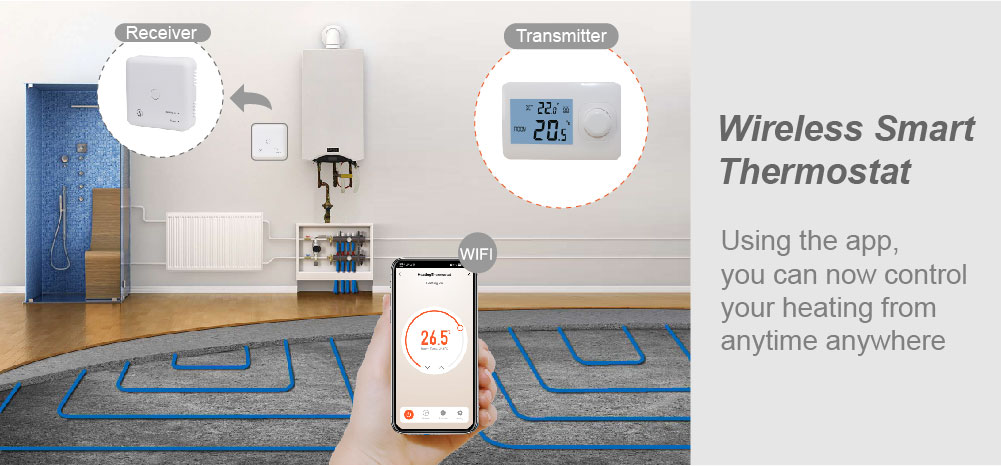
Modern thermostatic valves also incorporate more user-friendly designs. Some products use electronic temperature-sensing elements, replacing traditional liquids with thermistors or semiconductor sensors, resulting in faster response times (up to 0.5 seconds/℃) and higher accuracy (error ≤ ±0.2℃). High-end models even support remote control, allowing users to set temperatures for different time periods via a mobile app, achieving a smart scenario of “low temperature when leaving home, comfortable when returning home.” However, regardless of technological upgrades, the core logic of thermostatic valves remains unchanged—based on precise sensing, using mechanical or electronic means to regulate water flow, ultimately achieving stable room temperature control.
The working principle of a radiator thermostatic valve may seem simple, but it actually integrates multiple layers of wisdom from physics, materials, and mechanical design. From the temperature sensing element’s “temperature perception” to the valve core’s “precise adjustment,” and its adaptability to dynamic scenarios, every aspect has been meticulously optimized. For users, understanding this principle not only allows for better use of the equipment but also enables them to focus on key parameters such as the type of temperature sensing element and the valve core material when selecting a model, making winter heating more comfortable and energy-efficient. After all, a valve that “understands temperature” is the true guardian of a warm home.