

-white.jpg)
-2.jpg)
Many users encounter the same problem during the operation of heating systems: some rooms are too hot, while others remain insufficiently warm, even with constant adjustments to the main thermostat. The cause of this situation often lies not in the heat source itself, but in the precision of the terminal temperature control method. Thermostatic valves for radiators are key components in controlling indoor temperature. They sense environmental changes and automatically adjust the heating output to maintain a more comfortable and stable indoor temperature.
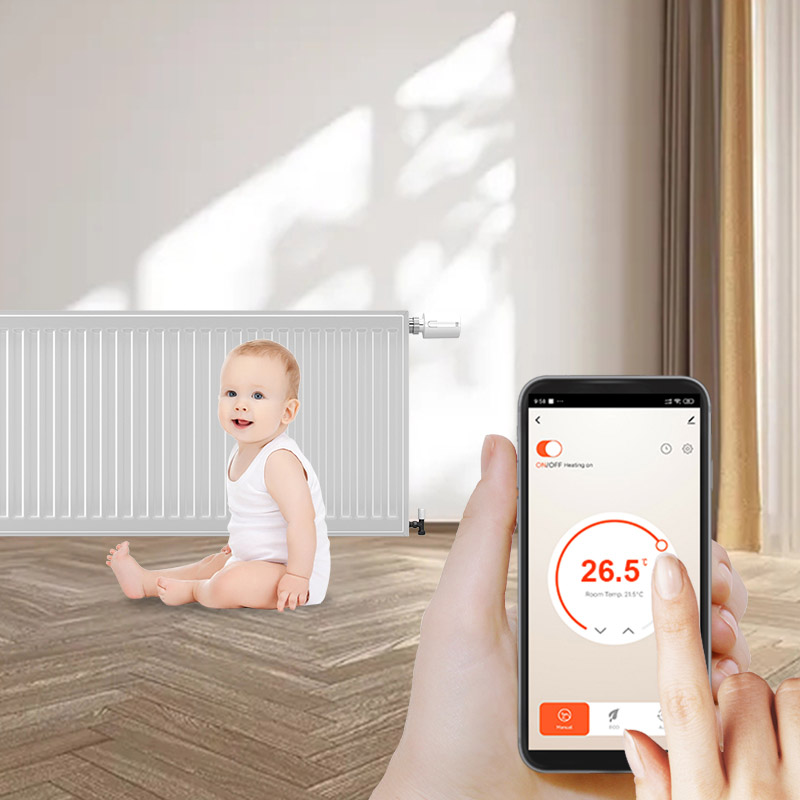
Automatic Adjustment by Radiator Thermostatic Valves Sensing Indoor Temperature
The first step in controlling indoor temperature with a thermostatic valve is the continuous sensing of the surrounding ambient temperature.
- Built-in Temperature Sensing Element:The thermostatic valve is equipped with a temperature sensing structure that can detect changes in room air temperature in real time.
- Automatic Response Based on Set Temperature:When the actual temperature is higher or lower than the set value, the thermostatic valve immediately enters adjustment mode.
- No Frequent Manual Intervention Required:Users only need to set the target temperature, and the system will automatically complete the adjustment process.
- Maintaining a Stable Room Temperature Fluctuation Range:Through continuous sensing and feedback, it avoids large temperature fluctuations.
Radiator Thermostatic Valves Control Heat Dissipation Intensity by Regulating Water Flow
Indoor temperature changes essentially stem from the amount of heat released by the radiators, and the thermostatic valve is the actuator controlling this process.
- Regulating the Hot Water Flow into the Radiator:The valve opening directly affects the radiator’s heating efficiency.
- Automatically Increasing Heating When the Temperature is Low:When the room temperature is detected to be below the set value, the valve will appropriately increase its opening.
- Gradually Tightening the Valve When the Temperature Approaches the Target Value:Avoiding continuous high-temperature output and reducing energy waste.
- Achieving a Continuous and Stable Adjustment Process:Compared to traditional on/off valves, thermostatic valves offer more precise adjustment.
Radiator Thermostatic Valves Enable Independent Room-Level Temperature Control
Radiator thermostatic valves transform the heating system from overall control to a more flexible zoned control method.
- Individual Temperature Setting for Each Room:Different spaces can be set with different temperatures according to usage needs.
- Avoiding Uneven Heating:Rooms with different orientations and sizes can receive more suitable heating intensity.
- Adapting to Diverse Needs of Family Members:Bedrooms, living rooms, studies, and other spaces maintain their ideal temperatures.
- Enhancing Overall Living Comfort:Temperatures are more closely aligned with actual usage scenarios.
Smart Radiator Thermostatic Valves Enable More Flexible Temperature Control
In smart heating systems, the temperature control method of radiator thermostatic valves has been further upgraded.
- Supporting Wireless Communication:Stable connections are achieved through solutions such as Bluetooth, RF Wireless, and Tuya Zigbee.
- Remote Setting and Adjustment of Indoor Temperature:Users can operate the system via mobile phone or control terminal.
- Centralized or Zoned Management of Multiple Rooms:Suitable for multi-zone heating systems.
- Temperature Control Settings Based on Lifestyle:Automatically switches between different temperature modes for different time periods.
Radiator thermostatic valves sense temperature changes, regulate hot water flow, and enable independent room control, ensuring the indoor temperature remains around the user’s set value. They not only participate in every temperature change within the heating system but also subtly optimize the heating experience and energy usage. As heating systems evolve towards intelligence and precision, the role of radiator thermostatic valves in indoor temperature control becomes increasingly apparent, providing reliable support for a stable and comfortable heating environment.