
In apartment heating systems, radiator thermostatic valves are crucial for regulating room temperature and balancing energy consumption. Many users focus on one key question when purchasing: how long will a radiator thermostatic valve last? The answer isn’t simply a matter of time; it’s determined by the materials, manufacturing process, sensor technology, and the operating environment. A high-quality radiator thermostatic valve can last over 20 years, even matching the lifespan of the radiator itself. What core technologies underlie this?
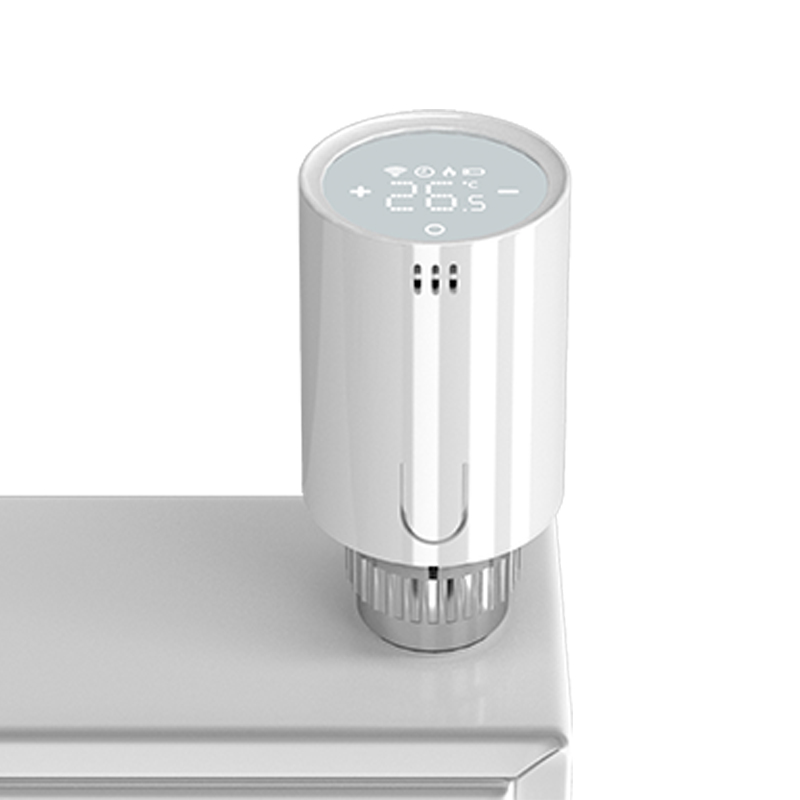
Materials and Manufacturing Process: Laying the Foundation for Durability
The valve body material directly affects the valve’s corrosion resistance and mechanical strength. Currently, most mainstream products use brass or gunmetal, metals that offer excellent thermal conductivity and resistance to oxidation and corrosion. For example, international brands like Danfoss use forging processes to produce valve bodies, resulting in a denser internal structure and preventing manufacturing defects such as pinholes or cracks, thus reducing the risk of leakage from the outset. The valve core uses a stainless steel spring and a ceramic valve seat. The spring’s high actuation force prevents sticking after prolonged closure, while the ceramic valve seat resists water erosion, ensuring a long-lasting, new-looking seal.
The surface treatment of the valve body is equally crucial. Nickel plating or spraying an anti-corrosion coating can prevent moisture from contacting the metal, making it especially suitable for areas with hard water. Some high-end products also add a plastic bushing inside the valve body to further reduce the risk of metal corrosion. These detailed design features allow the radiator thermostatic valve to operate stably in humid and high-temperature heating environments.
Sensor Technology: The Core of Precise Temperature Control
The sensor is the “brain” of the radiator thermostatic valve, and its performance directly determines the valve’s lifespan. Currently, mainstream sensors are divided into three categories: liquid working fluid, gas working fluid, and paraffin. Among them, liquid and gas sensors have a service life of over 20 years due to their sensitive adjustment and fast response speed. Taking Danfoss’s gas-filled sensor as an example, the intermolecular forces of gas are small, and the expansion/contraction is more rapid when the temperature changes, achieving precise temperature control of 0.5℃, and it does not suffer from the aging and failure problems of paraffin sensors with long-term use.
The linkage mechanism between the sensor and the valve core has also been optimized. For example, the built-in thermostatic valve uses a triple-safety valve core design, which disperses stress through mechanical structure to avoid excessive wear of a single component. Even if the thermostatic bulb deforms due to extreme temperatures, the valve core can still be reset by the spring, ensuring normal valve opening and closing. This design allows some products to confidently promise a lifespan “the same as the radiator,” completely eliminating user concerns about lifespan.
Usage Environment and Maintenance: Key to Extending Lifespan
Although radiator thermostatic valves are inherently durable, the usage environment and maintenance methods still affect their actual lifespan. In areas with poor water quality, impurities in the water may clog the valve or corrode metal parts. Therefore, the pipes must be thoroughly flushed before installation, and a filter should be installed before the valve. Regularly checking the filter’s condition and promptly cleaning deposits can prevent premature valve failure due to impurities.
Temperature fluctuations are also a hidden killer. If the heating system frequently starts and stops, causing drastic changes in water temperature, metal parts will experience fatigue due to thermal expansion and contraction, shortening their lifespan. Therefore, it is recommended to use it with a thermostatic boiler or differential pressure control valve to maintain a stable system water temperature. Furthermore, avoid covering the radiator surface with obstructions to ensure the thermostatic bulb can accurately sense room temperature and prevent valve malfunction.
Long-Term Value: The Dual Benefits of Energy Saving and Comfort
From an economic perspective, the durability of radiator thermostatic valves directly translates into long-term benefits. Taking a 100㎡ apartment as an example, installing thermostatic valves can save 10%-20% on heating energy consumption through room-by-room temperature control. Based on an annual heating cost of 3,000 yuan, this translates to savings of 60,000-120,000 yuan over 20 years. Simultaneously, precise temperature control avoids the imbalance of “warmer near the room, colder far away,” improving living comfort and reducing health problems caused by temperature discomfort.
More importantly, some brands extend product lifecycles through modular design. For example, the valve body and sensor can be separated and replaced. When the sensor reaches its lifespan limit, only the temperature bulb needs to be replaced, not the entire valve, reducing maintenance costs. This design concept transforms radiator thermostatic valves from “consumables” into “durable goods,” truly achieving “one-time installation, lifelong benefit.”
The lifespan of a radiator thermostatic valve is not determined by a single factor, but rather by the combined effects of materials, manufacturing processes, sensor technology, and usage and maintenance. Choosing products with brass valve bodies, air-filled sensors, and triple-safety valve cores, along with careful water quality management and regular maintenance, can ensure stable valve operation for over 20 years. For apartment owners, this is not just an upgrade to the heating system, but also an investment in long-term comfort and energy efficiency.