
With the increasing popularity of underfloor heating systems in residential, office, and commercial spaces, more and more users are paying attention to the control methods and supporting equipment for underfloor heating. During consultations, purchases, or installations, the terms “wired control box” and “thermostat” are frequently mentioned together, and in some promotional materials or non-professional discussions, they are even used interchangeably. This easily leads ordinary users to wonder: are wired control boxes and thermostats the same thing? What are their respective roles in the underfloor heating system? Can they be substituted for each other? In fact, although both devices are closely related to underfloor heating control, they differ significantly in their functional positioning, installation location, target users, and system hierarchy.
What is a Wired Control Box for Underfloor Heating?
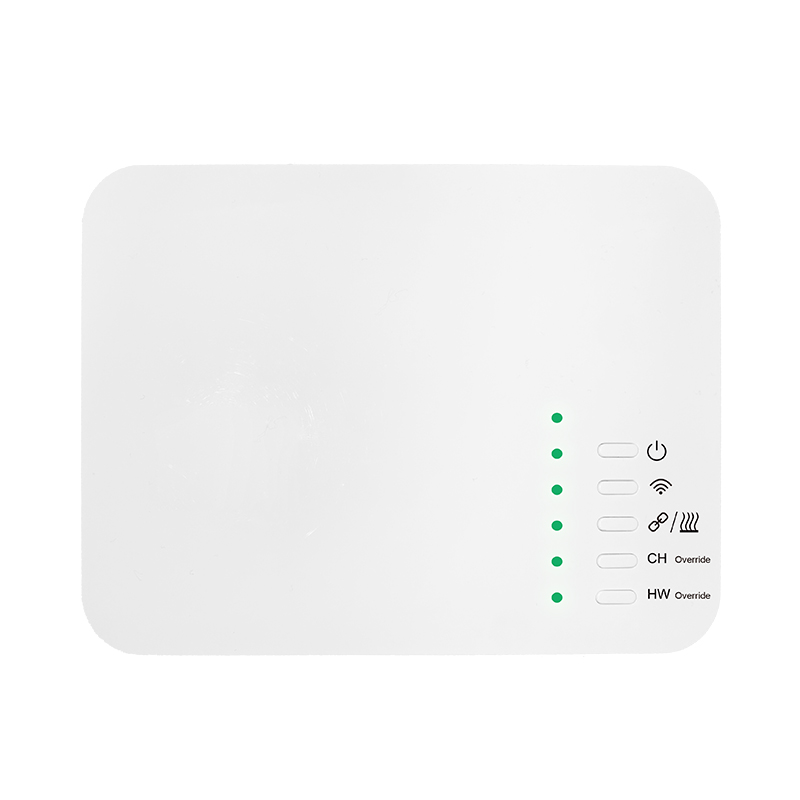
A wired control box for underfloor heating, also commonly referred to as a underfloor heating control box, zone control box, or actuator control box, is the central control and execution hub of the underfloor heating system. It primarily receives control signals from various thermostats and converts these signals into actual action commands for key components of the underfloor heating system. Functionally, the wired underfloor heating control box does not directly sense indoor temperature but rather acts as a “signal aggregator and execution distributor.” It is typically connected to electric actuators, circulating pumps, boilers, or heat source systems, controlling the opening and closing of each circuit according to the needs of different rooms. It can be understood that the control box is more of a system-level, equipment-level management unit. In terms of installation location, the wired underfloor heating control box is generally installed in a concealed but easily maintained location, such as in an equipment room, storage room, or a concealed cabinet in a corridor, rather than being directly exposed in daily living spaces. This also determines that it is not a device frequently operated by users, but rather a long-term, stable, backend core.
What is an Underfloor Heating Thermostat?
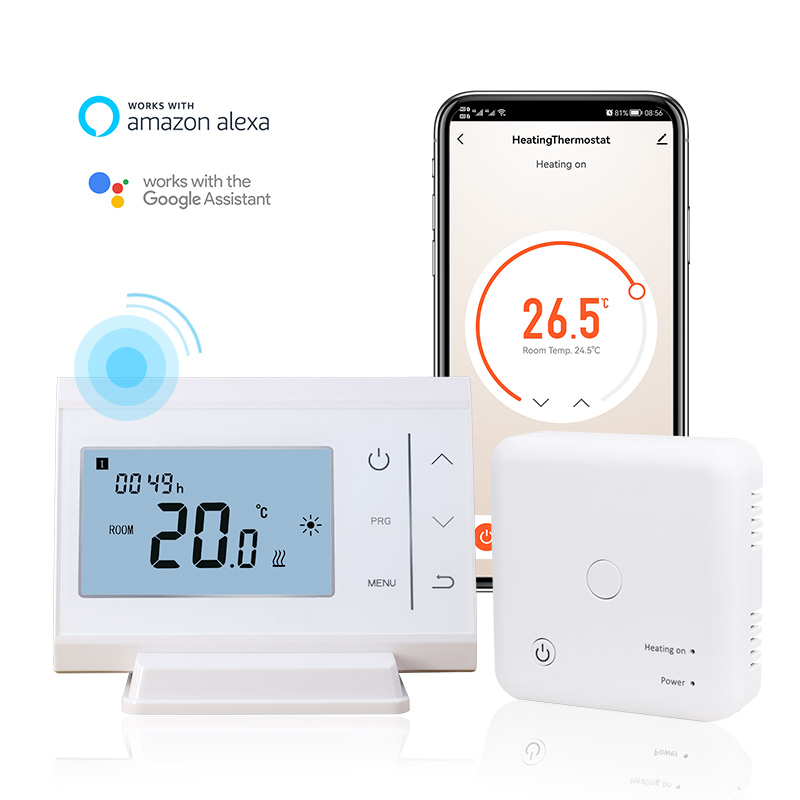
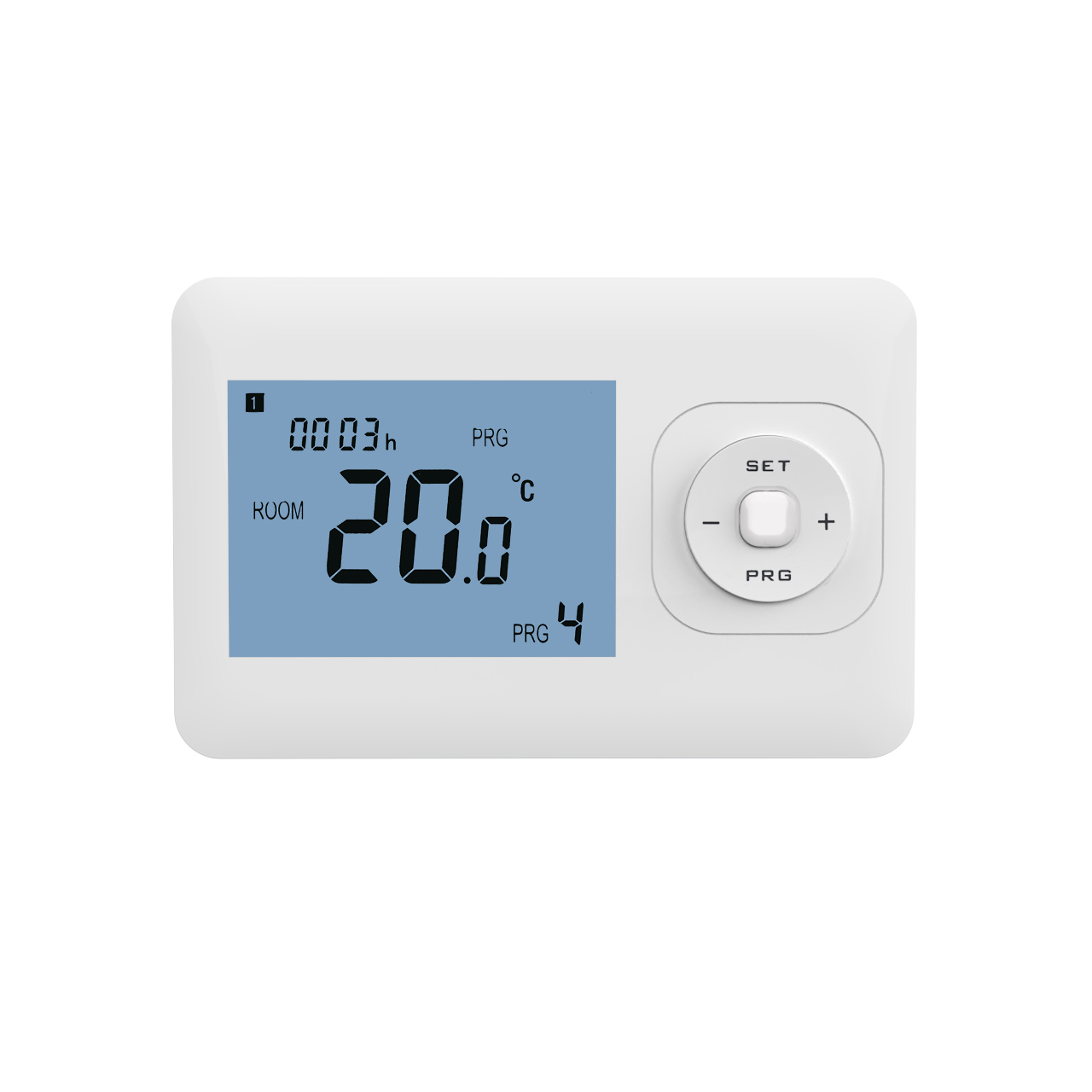
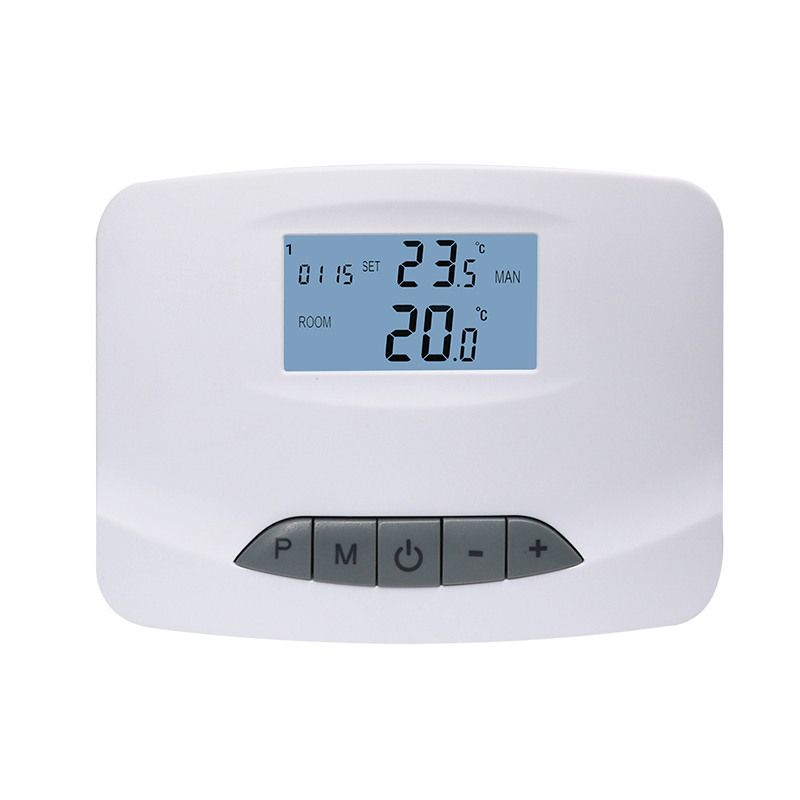
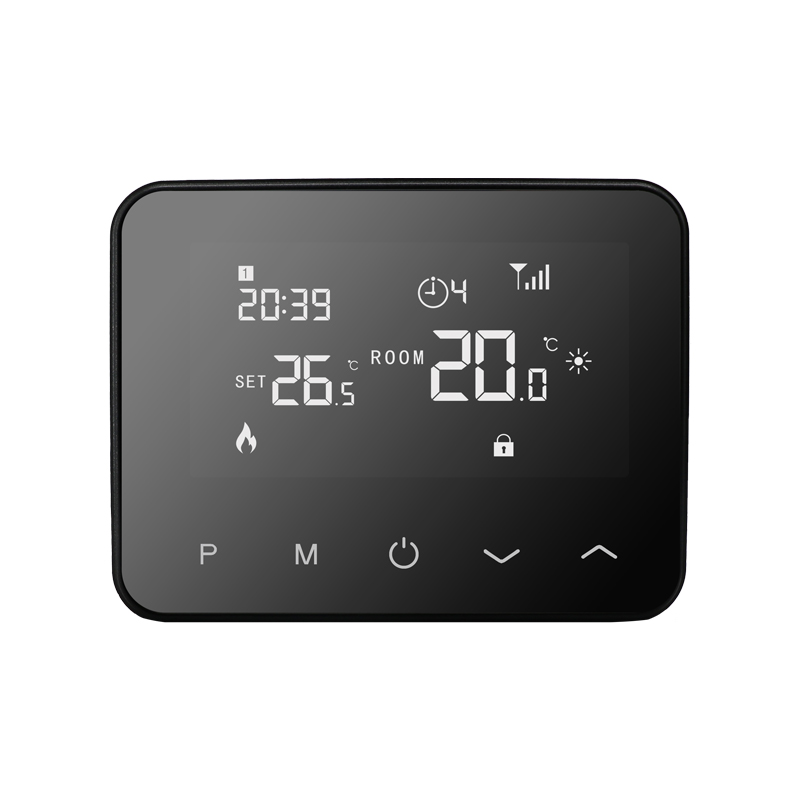
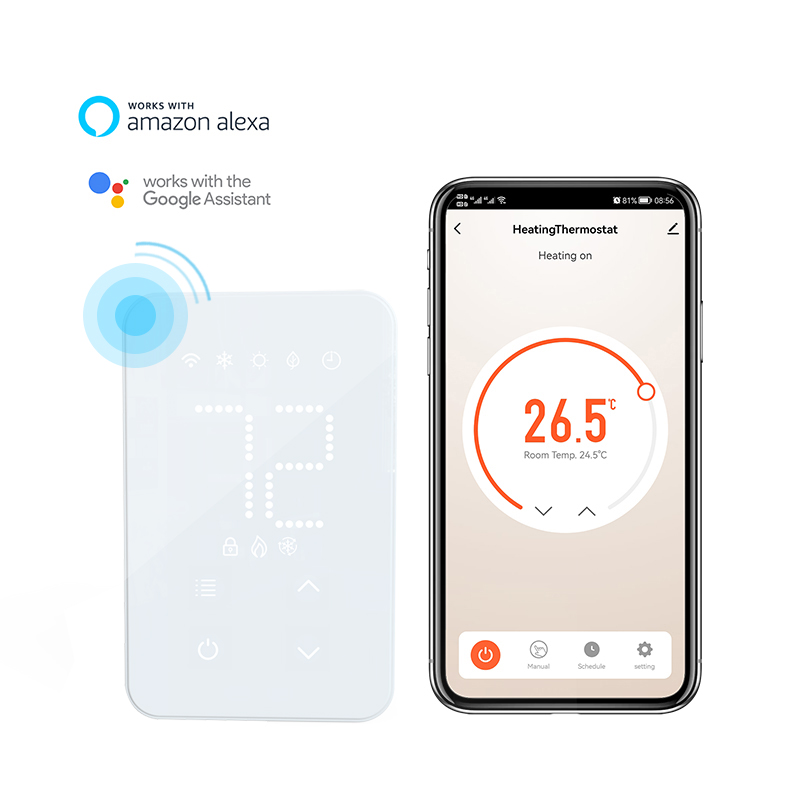
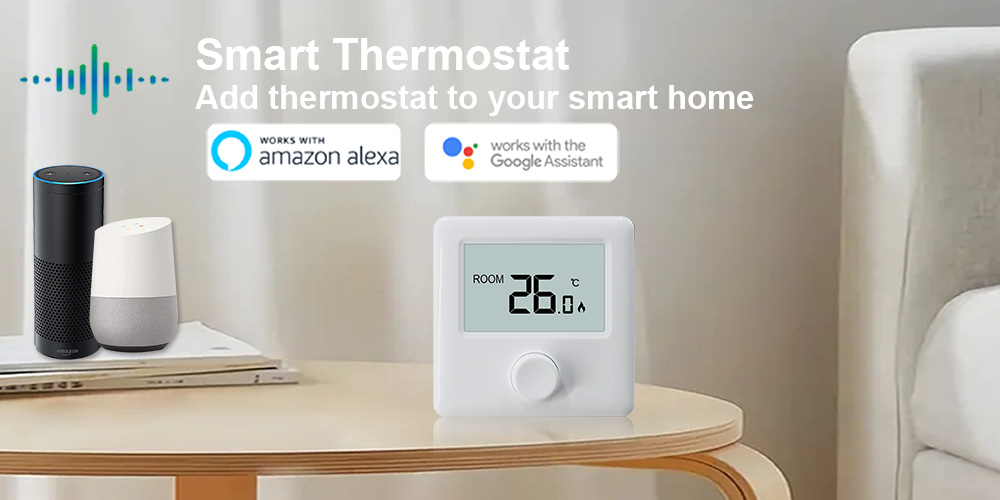
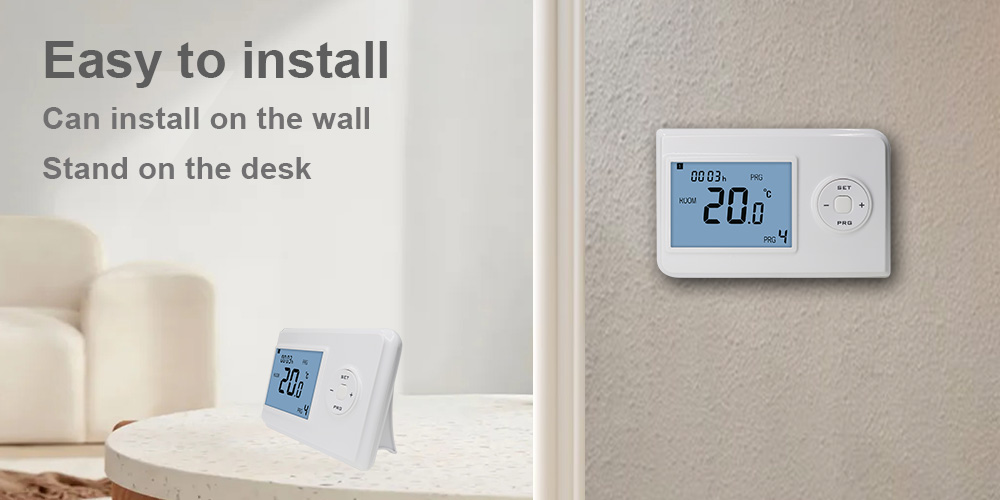
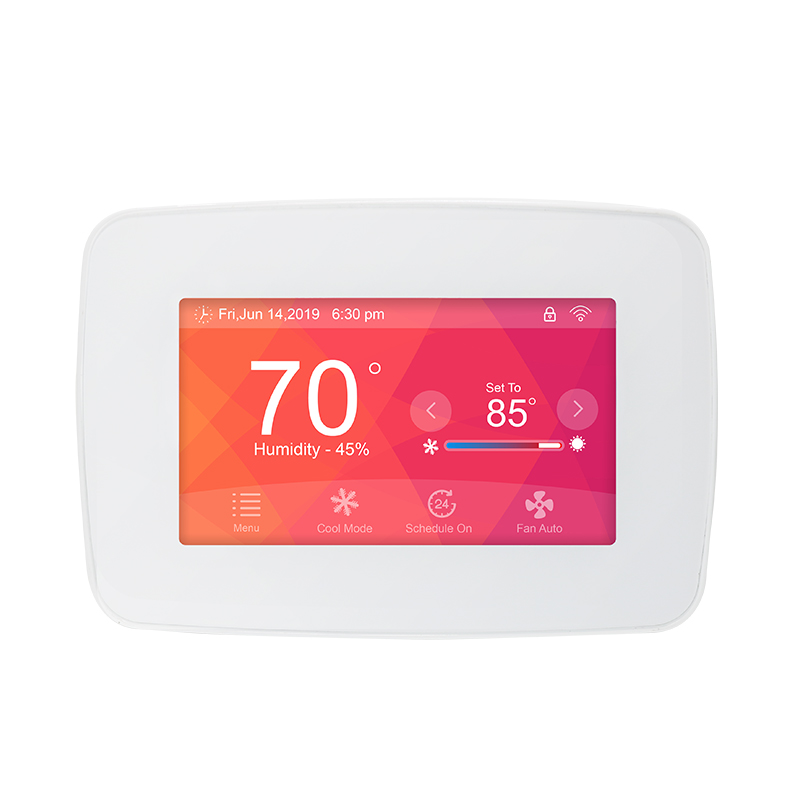
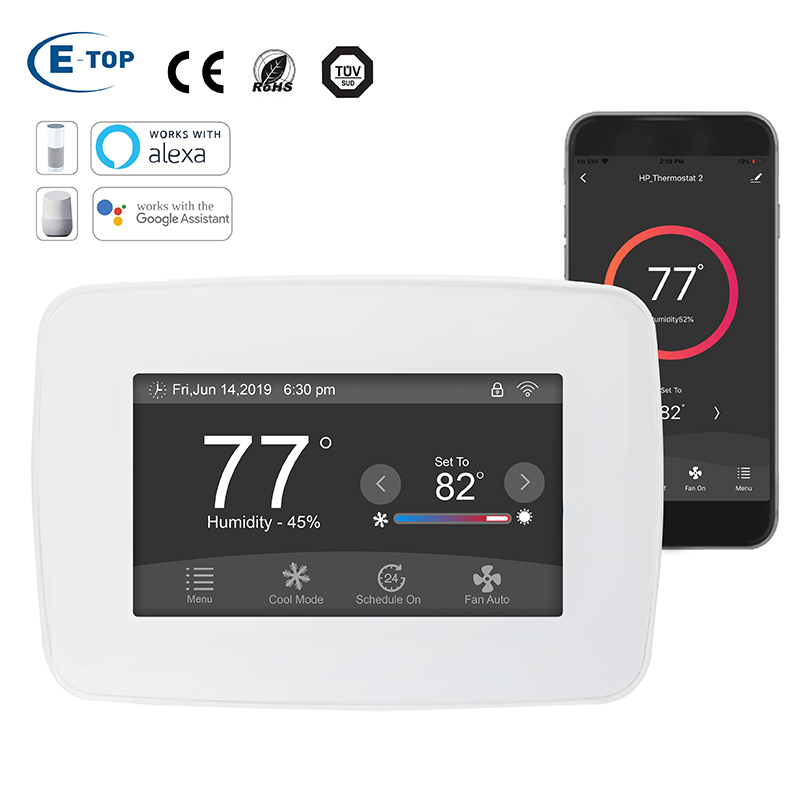
Compared to the control box, the underfloor heating thermostat is closer to the user’s daily life scenario. An underfloor heating thermostat is an indoor temperature sensing and regulation device, mainly installed on the room wall, used to detect indoor temperature in real time and allow users to set a target temperature according to their own needs. From a functional perspective, the core tasks of a thermostat are “sensing” and “issuing commands.” It acquires ambient temperature information through built-in sensors and compares temperature changes with user-set values. If a deviation occurs, it sends a signal to the underfloor heating system to heat or stop heating. For users, the thermostat is the direct interface, bearing the important responsibility of comfort adjustment and energy consumption management. In terms of usage attributes, thermostats emphasize personalization and independence. Different rooms are usually equipped with independent thermostats, allowing bedrooms, living rooms, studies, and other spaces to be controlled differently according to usage frequency and comfort needs. This ability of “room-specific control” is an important manifestation of the comfort of modern underfloor heating systems.
Different Functional Levels
The wired control box and the underfloor heating thermostat are not at the same level. The thermostat is a front-end control and sensing device, responsible for collecting information and issuing demands; while the wired control box is a central execution device, responsible for receiving, processing, and implementing these demands.The thermostat solves the problem of “whether to heat and how much heat,” while the control box solves the problem of “how to make which circuit work.” Without a thermostat, users cannot flexibly set the temperature; without a control box, the thermostat’s commands are difficult to execute effectively. The two are not substitutes, but rather work together, each fulfilling its specific function.
Differences in Installation Location and User Interface
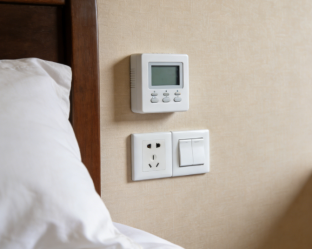
The difference in their installation locations reflects the difference in their functional positioning. Underfloor heating thermostats are typically installed in living spaces at a moderate height for easy viewing and operation; while wired underfloor heating control boxes are mostly installed in centralized areas, emphasizing safety, concealment, and ease of wiring management. Regarding user interface, thermostats are for ordinary users, with an intuitive and user-friendly interface; control boxes are more geared towards installers or maintenance personnel, with a more specialized internal structure and wiring method, unsuitable for frequent manual intervention.
Does a “Two-in-One” Solution Exist?
In some simplified or small-scale underfloor heating systems, there are indeed designs that integrate some control functions. However, even so, this is merely functional integration, not a conceptual merging. Even with changes in appearance or installation method, the essence can still be divided into two main modules: “temperature control” and “execution control.” Therefore, from a professional perspective, regardless of system size, the wired control box and the thermostat for underfloor heating are fundamentally different concepts in terms of function.
The wired control box and the thermostat are not the same thing. Although both are important components of an underfloor heating control system, they differ fundamentally in their functional positioning, system hierarchy, usage, and installation location. The thermostat focuses on sensing indoor temperature and expressing user needs, serving as the human-machine interface for the underfloor heating system; while the wired control box bears the core responsibility of centrally processing signals and controlling the execution components, acting as the central guarantee for stable system operation. They are complementary and indispensable. The thermostat allows the underfloor heating system to “understand the user,” while the control box enables it to “act.” Only when both work together can the underfloor heating system truly achieve zoned control, comfortable adjustment, and efficient operation.