
During the winter heating season, many people complain that “the room temperature fluctuates wildly even with the heating on,” or “in the same building, some rooms are warm enough for short sleeves, while others are bundled up in coats.” The root of these problems often lies in the choice of radiator valves—should one stick with traditional manual valves or upgrade to thermostatic radiator valves? This seemingly simple choice actually determines the efficiency, energy consumption, and living experience of the heating system.
Operating Logic: From “Passive Adjustment” to “Active Sensing”
The word “manual” in “manual valve” perfectly encapsulates its core logic: users must manually rotate the valve, visually observe the radiator temperature, or touch the room to sense the temperature, and then repeatedly adjust the valve. This operating method has two major drawbacks: first, it’s lag—when a user feels cold, they must first open the valve wider and wait for the radiator to warm up before determining whether further adjustment is needed; second, it relies on experience—different users have different temperature sensitivities, and novices may cause drastic fluctuations in room temperature due to over-adjustment, while the elderly or children may endure uncomfortable temperatures for extended periods due to the inconvenience of operation.
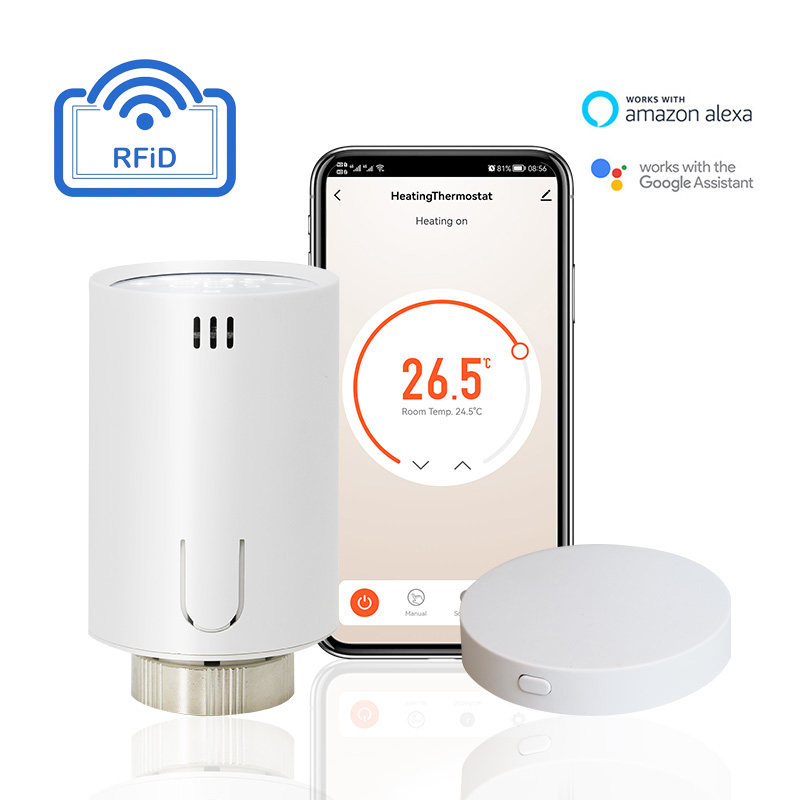
Thermostatic radiator valves completely change this logic through a “sensing-response” closed loop. Their built-in temperature sensor monitors room temperature in real time. When the temperature is below the set value, the sensor expands, pushing the valve core open wider, increasing hot water flow; when the temperature approaches the set value, the sensor contracts, driving the valve core to close narrower, reducing heat input. The entire process requires no manual intervention and has an extremely fast response time (usually adjusting within 1-3 minutes), truly achieving “constant room temperature, no worries.”
Energy Saving Effect: From “Extensive Heating” to “Precise Temperature Control”
The energy efficiency of manual valves depends entirely on user habits. If the user opens the valve to its maximum to quickly raise the temperature, even if the room temperature reaches 25°C, the radiator will continue to output excessive heat, leading to energy waste. If the user frequently opens and closes the valve to save electricity, the frequent starting and stopping of the radiator will actually increase energy consumption (similar to the principle that “frequent starting and stopping of air conditioners consumes more electricity”). Statistics show that in households using manual valves, approximately 30% of heating energy consumption is “ineffective heating.”
The energy-saving logic of thermostatic radiator valves is based on “on-demand heating.” Taking the Danfoss RA2000 series as an example, its temperature sensor uses a gas-liquid mixture, with an expansion coefficient 40% higher than traditional liquid temperature sensors, allowing for more precise detection of room temperature changes. When the user sets the target temperature to 20℃, the thermostatic valve fine-tunes the valve opening to ensure the radiator’s heat output just offsets room heat loss (such as air leakage through door and window gaps, and heat loss from the human body), avoiding “overheating” or “underheating.” Research according to the European Building Energy Efficiency Standard (EPBD) shows that using thermostatic valves can reduce radiator system energy consumption by 18%-25%, a figure even more significant in independent heating scenarios.
Comfort Experience: From “Local Uneven Heating” to “Whole-House Temperature Balance”
Another major pain point of manual valves is the “adjustment blind spot.” For example, if the living room radiator valve is opened wide, the bedroom may heat up slowly due to longer pipes and greater water flow resistance; if the living room valve is opened smaller to accommodate the bedroom, the living room temperature may be insufficient. This “whack-a-mole” dilemma is particularly pronounced in multi-story buildings or large apartments.
Radiator thermostatic valves solve this problem through “individual room temperature control” technology. Each radiator is equipped with an independent thermostatic valve, allowing users to set different temperatures according to the function of different rooms (e.g., 20℃ in the bedroom, 22℃ in the living room). The valve automatically adjusts the water flow distribution, prioritizing rooms with higher demand while preventing overheating in rooms with lower demand. For example, the H-type radiator thermostatic valve is specifically designed for bottom-inlet, bottom-outlet radiators. Its standard interface spacing is 50mm, allowing it to directly replace traditional manual valves without modifying the piping, achieving differentiated temperature control needs such as “mild in the bedroom, warm in the living room.”
Long-Term Costs: From “Frequent Replacement” to “Durable and Worry-Free”
The durability of manual valves is often overlooked. Due to the need for frequent rotation and adjustment, the valve core is prone to wear, leading to poor sealing, leaks, or adjustment malfunctions. Especially with cast iron valves, internal rust can occur after long-term use, affecting water flow and potentially contaminating the heating system water quality.
Radiator thermostatic valves have extended service life through material and manufacturing process upgrades. For example, some models use a brass valve body and stainless steel valve core, offering three times the corrosion resistance of ordinary cast iron valves; the outer layer of the temperature bulb is wrapped with an explosion-proof membrane, capable of withstanding extreme temperatures from -10℃ to 55℃, preventing cracking due to thermal expansion and contraction. Although the unit price of a thermostatic valve is slightly higher than that of a manual valve, over a 10-year lifespan, maintenance costs (such as valve core replacement and leak repair) can be reduced by more than 60%, resulting in higher long-term cost-effectiveness.
The shift from manual valves to radiator thermostatic valves represents not only an upgrade in valves but also a revolution in heating philosophy—from “people adapting to temperature” to “temperature adapting to people,” from “extensive heating” to “precise energy saving.” For users seeking comfort, energy efficiency, and long-term peace of mind, choosing a thermostatic valve suitable for their radiators may be a key step in improving their quality of life during winter.