






As households place greater emphasis on precise temperature control, plug-in thermostats are gaining attention as a flexible and easy-to-use solution. Compared with traditional temperature control systems, they require no installation work, but they are not suitable for every type of appliance. Understanding which heating and cooling devices can be controlled by a plug-in thermostat is essential before deciding whether it is the right choice.
How a Plug-In Thermostat Works
A plug-in thermostat monitors ambient temperature through a built-in sensor and controls the power supply to the outlet based on preset temperature thresholds. When the room temperature moves outside the defined range, the thermostat turns the connected device on or off automatically. This control logic makes plug-in thermostats best suited for appliances that start operating immediately when powered and stop when power is cut, without relying on complex programs or communication protocols.
Compatibility With Heating Devices
Plug-in thermostats work especially well in heating applications. Common electric heaters and fan heaters begin operating as soon as they receive power, making them ideal candidates for temperature regulation through a thermostat. Automatic power cycling helps prevent continuous high-power operation, improving both safety and energy efficiency.
Oil-filled radiators and convection heaters are also well suited for plug-in thermostat control. These devices provide steady heat output and retain warmth effectively, so pairing them with temperature-based power control helps maintain a more stable indoor temperature and improves overall comfort.
For localized heating needs, electric heating films, heating pads, and electric blankets are frequently used with plug-in thermostats. This setup is particularly suitable for bedrooms and home offices, allowing users to maintain comfortable warmth while avoiding overheating and unnecessary energy consumption.
Use of Plug-In Thermostats With Cooling Devices
Plug-in thermostats can also be applied in certain cooling scenarios. Standard electric fans operate immediately once powered, allowing thermostats to automatically turn them on when the temperature rises and off when it drops. This approach works well in environments where precise cooling control is not critical.
Evaporative air coolers can also be managed in a similar way, as long as the device begins cooling immediately after power is supplied. Basic temperature-linked operation can be achieved without modifying the appliance.
Some portable air conditioners are capable of resuming cooling mode automatically after a power interruption. In such cases, a plug-in thermostat may be used to provide indirect temperature control. However, confirming the device’s power-on behavior in advance is essential to avoid ineffective operation.
Devices That Are Not Suitable for Plug-In Thermostats
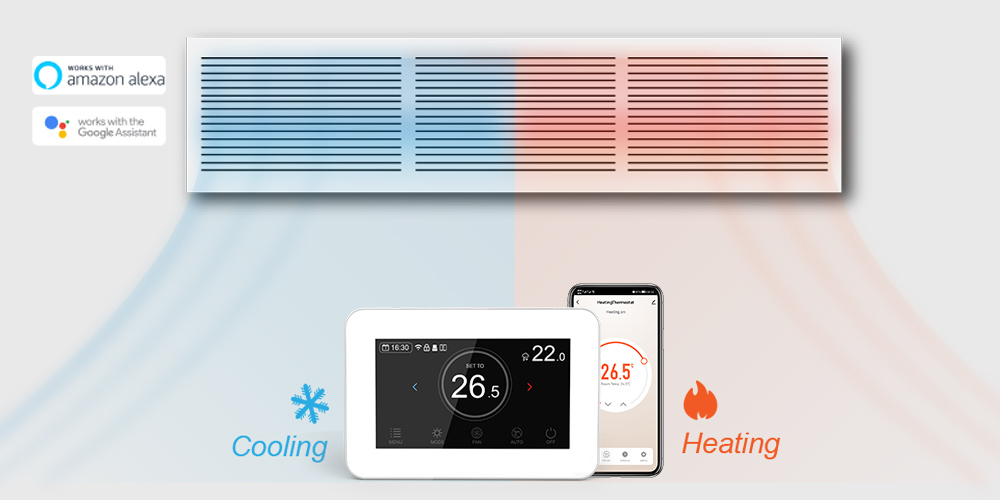
Appliances that rely on remote control signals or internal communication systems are generally incompatible with plug-in thermostats. Split air conditioners and central HVAC systems require coordinated control through internal electronics, and frequent power cycling may reduce equipment lifespan rather than improve temperature regulation.
Smart appliances with built-in temperature management systems also gain little benefit from plug-in thermostats. Since these devices already include sophisticated control logic, adding external power-based control may interfere with their normal operation.
Key Considerations for Safe and Effective Use
When using a plug-in thermostat, it is important to ensure the connected appliance’s power rating stays within the thermostat’s limits to prevent overload. The operating environment should remain dry and stable so that temperature sensing remains accurate. The appliance’s behavior after power is restored should also align with the thermostat’s control method to ensure reliable performance.
Conclusion
Overall, plug-in thermostats are best suited for heating and cooling devices that rely primarily on power on/off operation. They perform particularly well with electric heaters, localized heating products, and basic cooling equipment. When properly matched with compatible devices, a plug-in thermostat can improve temperature stability, enhance comfort, and reduce energy consumption in everyday use.