
-white.jpg)
-2.jpg)
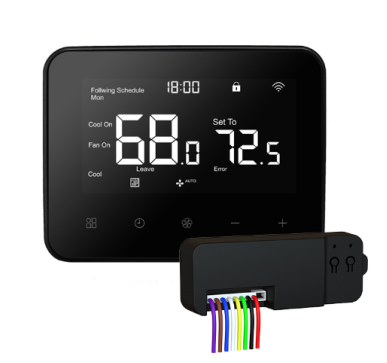
PTAC (Packaged Terminal Air Conditioner) heat pump units are ubiquitous in buildings requiring large guest room management, such as hotels, apartments, dormitories, and hospitals. Their compact structure, easy installation, and independent room control make them very popular in commercial settings. However, due to their large numbers and frequent use, PTACs have a relatively concentrated daily failure rate, especially the thermostat, which is a frequent source of repairs and reports. Many problems such as “air conditioner not cooling,” “not starting,” or “running continuously without stopping” ultimately relate to the thermostat or its control circuitry.
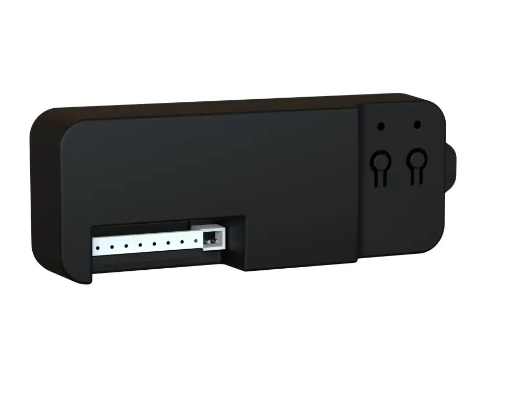
For property engineers or hotel maintenance teams, waiting for manufacturer after-sales service for every minor problem not only prolongs repair cycles but also impacts room sales and guest experience. In reality, most PTAC heat pump thermostat faults are not complex. By understanding the basic principles and troubleshooting steps, they can be quickly located and resolved. Learning some practical tips can save time, reduce spare parts costs, and minimize downtime losses.
Determining if it’s a control problem or a main unit problem?
Core Principle: Control First, Then Troubleshoot Step-by-Step. Many people immediately suspect compressor damage when the unit stops cooling, which is a common misconception.The first step in repair is always to confirm: Does the thermostat have power? Is the display normal? Can it send a start signal? If the thermostat itself has no output signal, the main unit won’t work, no matter how good it is. A simple rule: Check the control first, then the power supply, and finally the refrigeration system. This avoids blindly disassembling the unit.
No Display Troubleshooting Starts with the Power Supply
When the thermostat is completely black, the recommended troubleshooting order is as follows:
Step 1: Check if the plug and socket are loose.
Step 2: Measure the input voltage.
Step 3: Check if the fuse is blown.
Step 4: Confirm if the transformer outputs 24V or 12V control voltage.
Experience Tip: More than half of “freezing” problems are actually just due to a loose power supply or a blown fuse; replacing it will restore functionality.
This is the simplest, but also the easiest, step to overlook.
No Start-up Issues → Three-Point Quick Test Method
If the thermostat displays but the machine doesn’t run, you can quickly diagnose the problem using the “three-point method”:
① Listen to see if the relay is engaged.
② Measure if there is control voltage at the output terminal.
③ Manually short-circuit the start terminal to test the main unit.
The principle is simple:
Short-circuiting starts → Thermostat malfunction
Short-circuiting doesn’t start → Main unit or power supply malfunction
This method can distinguish between control and equipment malfunctions within minutes, greatly shortening troubleshooting time.
Inaccurate Temperature
When the room is very cold, but the machine doesn’t stop running or the set temperature isn’t achieved, it’s likely related to the temperature sensor.Common causes include: probe aging, poor wiring contact, dust accumulation, and installation near the air outlet.
Repair Tips:
First clean the probe.
Then measure the resistance value.
Finally, replace it if necessary.
Thermostat sensors are inexpensive but have a significant impact, so it’s recommended to address them first.
Frequent Start-Stops
When equipment “starts for a few minutes and then stops, then starts again,” it’s often not a hardware failure, but a parameter issue.
Key points to check:
·Insufficient temperature hysteresis setting
·Frequent switching of energy-saving modes
·Timer program conflicts
·False triggering of door magnets or sensors
·Increasing the hysteresis setting appropriately (e.g., 1℃ → 2℃) can significantly reduce the number of compressor start-stop cycles. This not only stabilizes operation but also extends equipment lifespan. This is a typical software optimization technique.
The Most Hidden Common Faults
Loose terminals are very common in environments with long-term vibration.Manifestations include: occasional power outages, random restarts, intermittent operation, and irregular alarms.
Troubleshooting is simple:
·Retighten each wiring terminal one by one
·Check for oxidation of the plugs
·Re-crimp cold-pressed terminals if necessary
Many seemingly difficult problems can ultimately be solved simply by tightening screws. This is one of the most practical tips for on-site maintenance.
Routine Maintenance is More Important than Repair
Instead of frequent repairs, it’s better to perform preventative maintenance. It is recommended to develop a routine maintenance habit: clean the filter monthly, check the wiring quarterly, test sensors semi-annually, regularly test start-stop functions, and ensure proper ventilation.
Dust buildup can lead to: reduced airflow, decreased heat exchange efficiency, increased compressor load, and higher energy consumption. Many malfunctions actually stem from a lack of long-term cleaning. Preventative maintenance is often more time- and labor-saving than repair.
Prepare Commonly Used Small Parts in Advance
On-site efficiency largely depends on the availability of spare parts. It is recommended to keep the following on hand: temperature control panels, temperature probes, fuses, relays, and control wires. These parts are inexpensive and small, yet can solve 80% of common problems. Last-minute purchases often delay operations by more than a day, impacting room operations. With spare parts available, repairs can be completed on-site.
Repairing PTAC heat pump thermostats is not as complicated as it seems. Most problems are concentrated in basic aspects such as power supply, wiring, and sensors, while major malfunctions involving the compressor or refrigeration system are relatively rare. Furthermore, practice has repeatedly proven that standardized daily maintenance is often more important than reactive repairs. Regular cleaning, tightening wiring, checking sensors, and testing thermostat functionality—these seemingly simple actions can effectively prevent a large number of sudden malfunctions. Instead of passively responding to repair requests, proactively maintain the health of the equipment to ensure long-term stable system operation. By establishing standardized maintenance procedures and spare parts management mechanisms, PTAC heat pump thermostats can maintain a low failure rate and high reliability, thereby providing buildings with a continuous, stable, and comfortable indoor environment.