
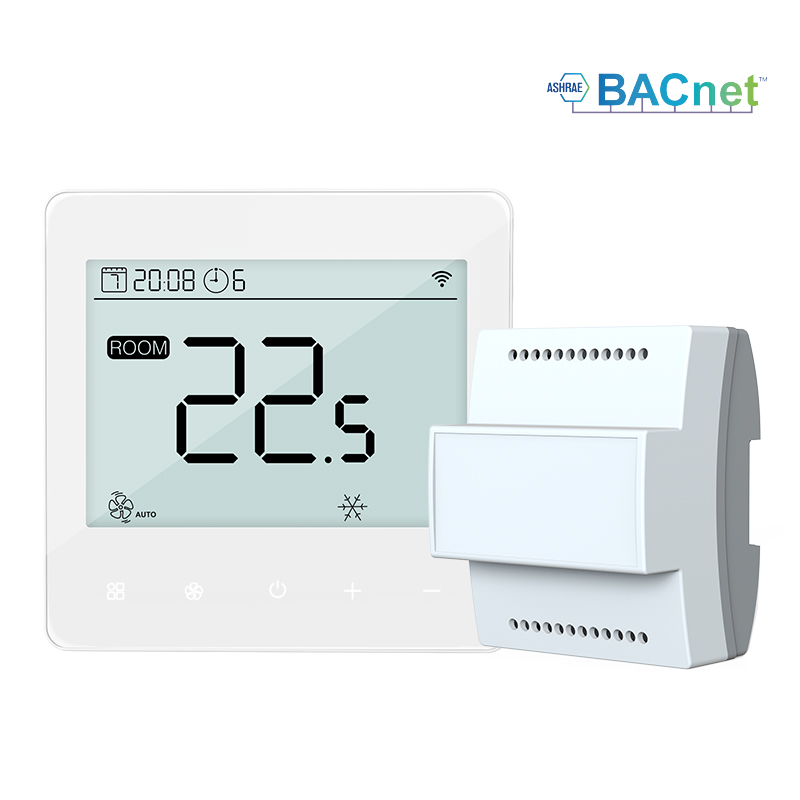
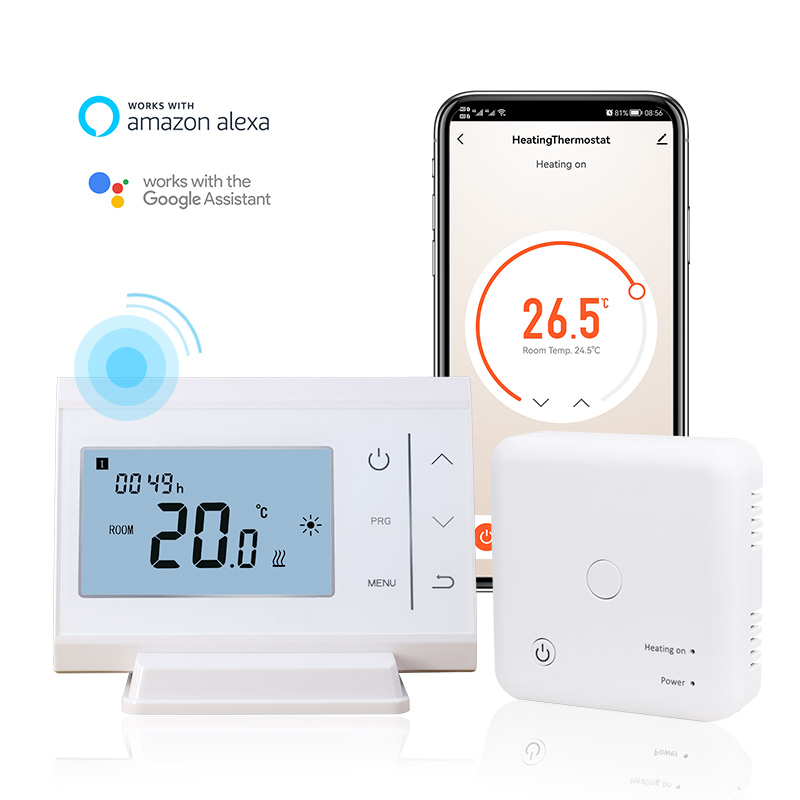
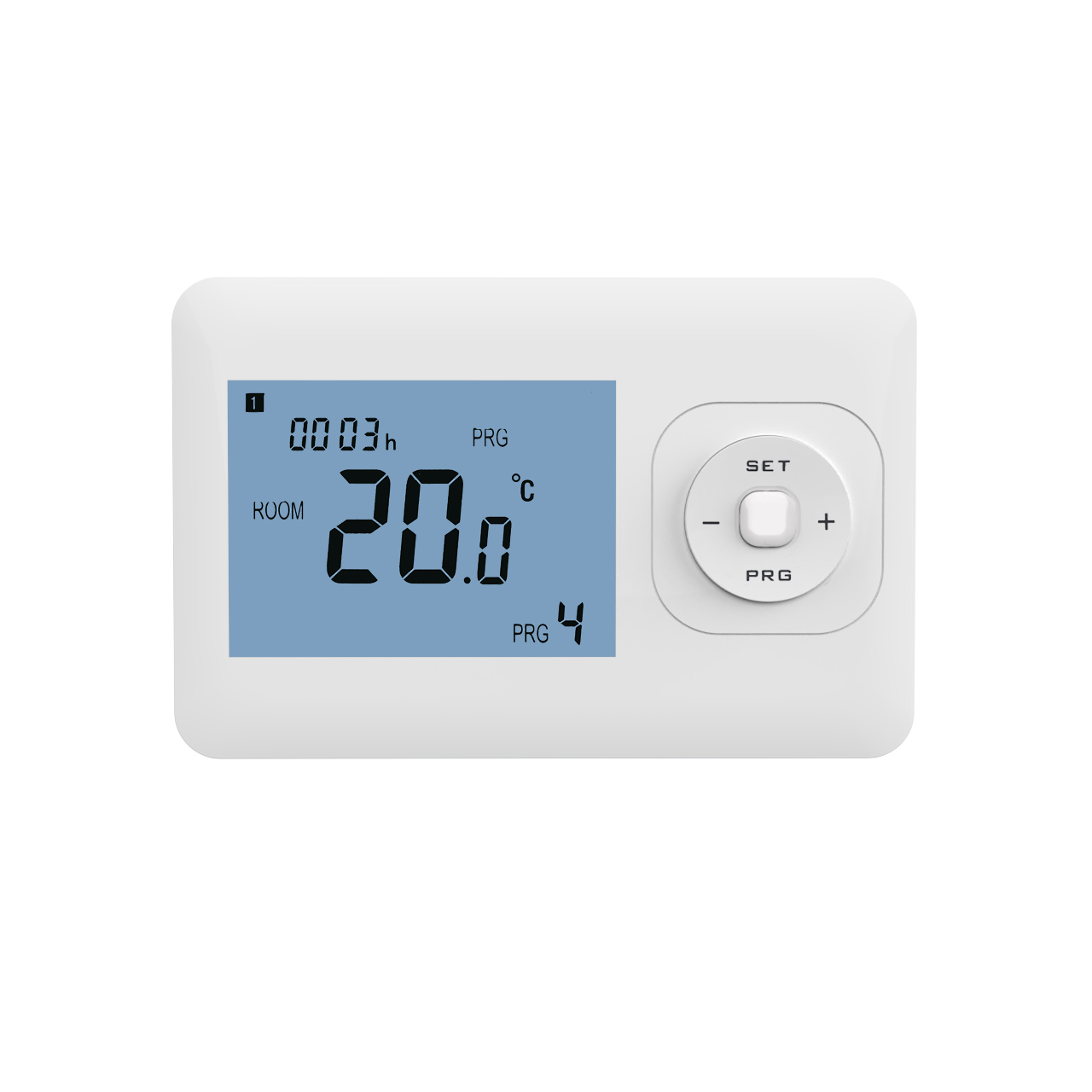
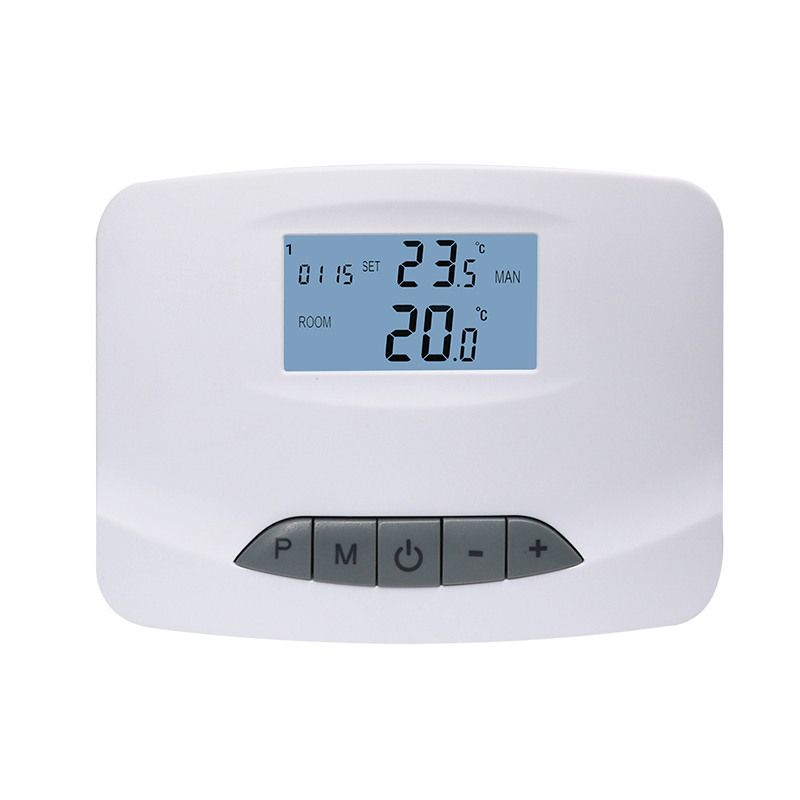
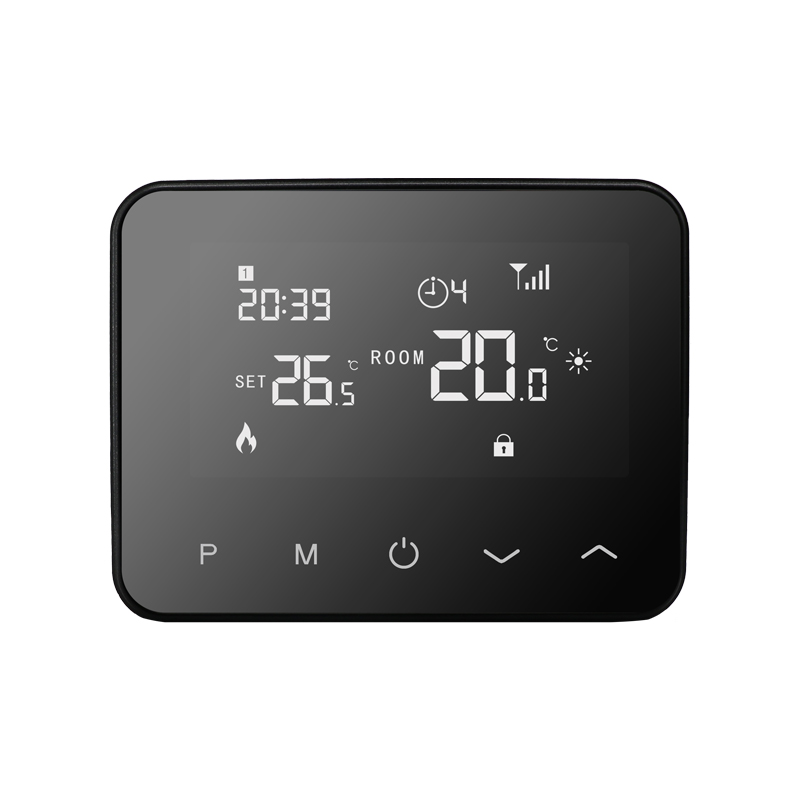
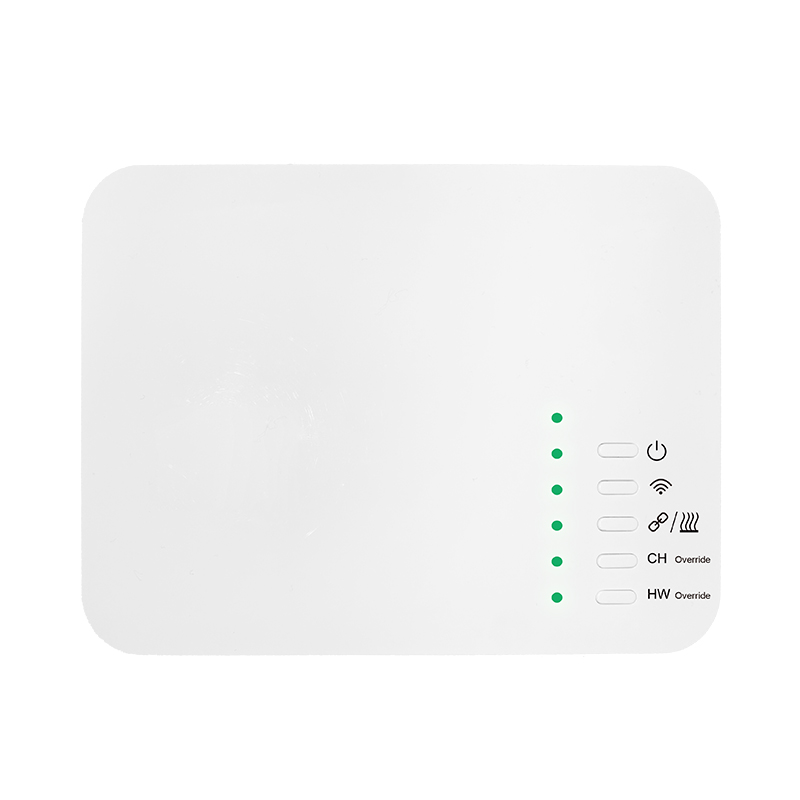
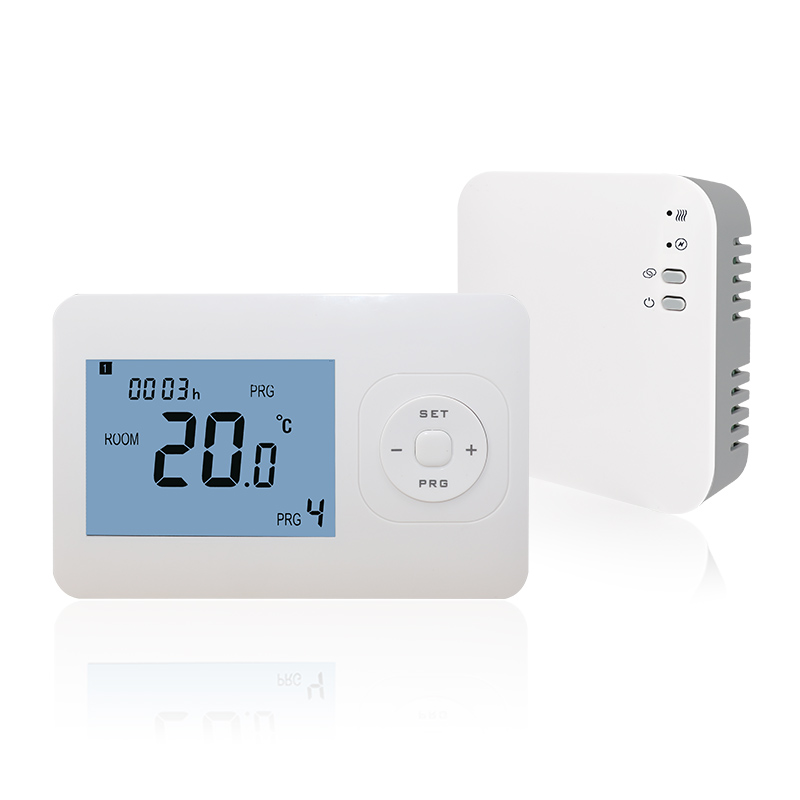
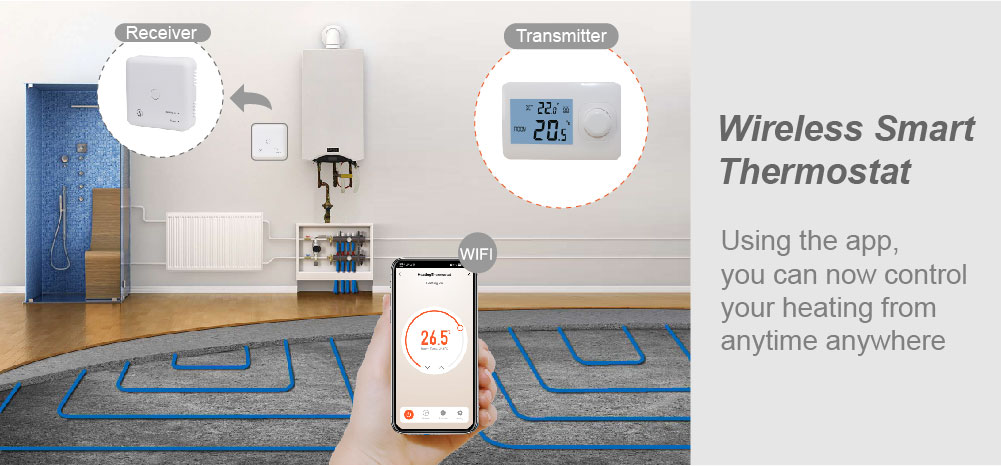
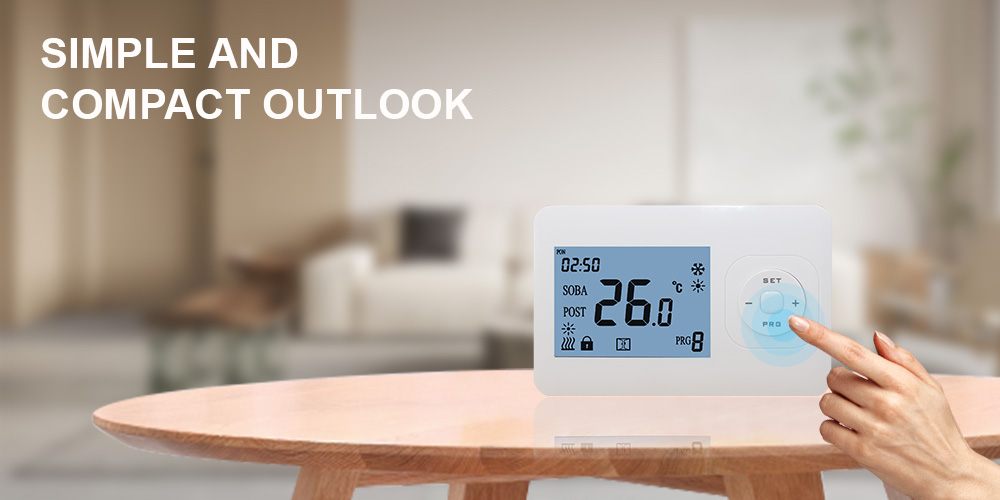
The development of smart home systems is changing the lifestyles of modern families. Wireless radio frequency thermostats, as one of the core control devices, play a crucial role in home comfort and energy management. Wireless radio frequency thermostats can interconnect with various smart devices in the home via wireless signals, including air conditioners, heaters, electric floor heating, and air purification systems, achieving precise control of the home’s ambient temperature. Their independent sensors can monitor indoor temperature changes in real time and transmit the data to the central control system or mobile terminal, thereby achieving remote adjustment and automated control. Through integration with smart home systems, users can achieve personalized temperature control according to different rooms, different time periods, and different activity needs, improving living comfort while saving energy consumption.
Core Functions of Wireless Radio Frequency Thermostats in Smart Homes
Wireless radio frequency thermostats play a vital role in temperature monitoring and control within smart home systems. Their core functions include:
- Real-time Temperature Monitoring
The sensors can accurately sense changes in indoor temperature and quickly feed back to the control system, maintaining the home’s ambient temperature within the set range.
- Remote Control
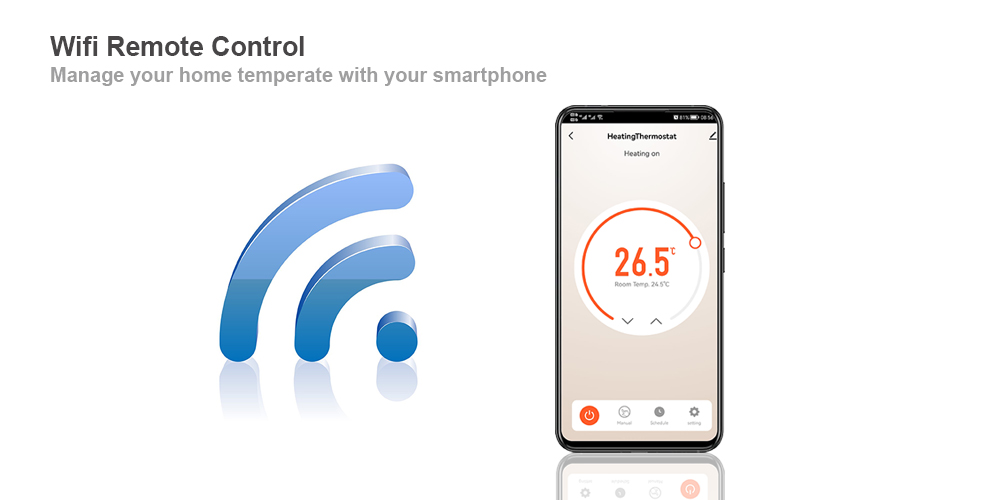
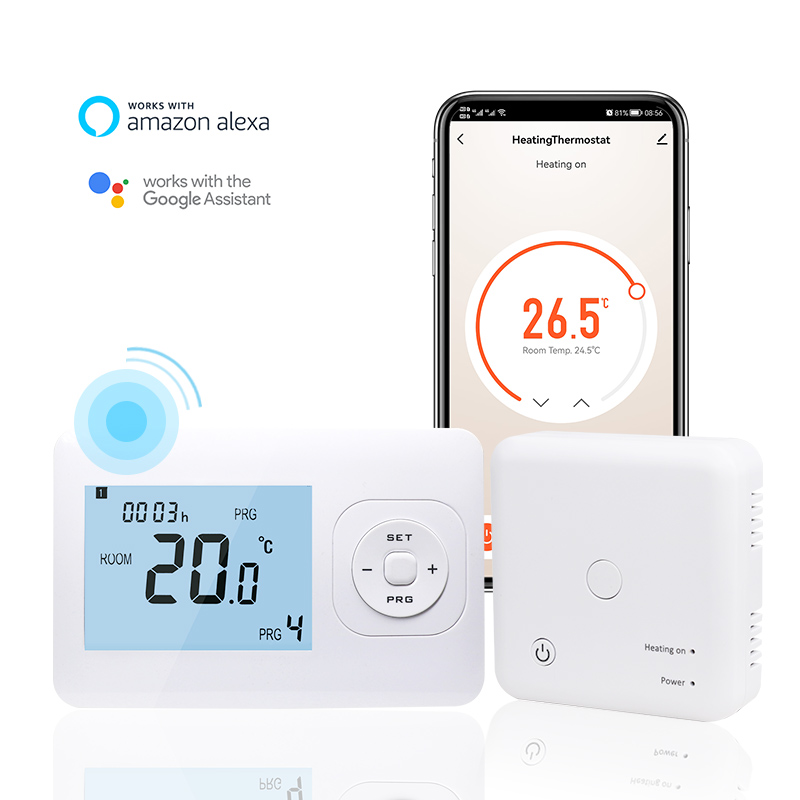
Users can remotely adjust the thermostat via a mobile app or smart speaker, controlling home temperature from anywhere.
- Timer and Scene Modes
Different time-period temperature strategies or specific scene modes can be set, such as morning mode, sleep mode, and home mode, enabling automatic adjustment.
- Integration with Other Smart Devices
The thermostat can be integrated with curtains, air purifiers, humidifiers, etc., automatically triggering device operation when temperature changes or air quality deteriorates, achieving a smart living experience.
These functions make the wireless radio frequency thermostat not only a temperature control tool but also a central device in the smart home system, optimizing energy efficiency while ensuring comfort.
Application Value of Wireless Radio Frequency Thermostats in Smart Home Environments
In smart home environments, the application value of wireless radio frequency thermostats is mainly reflected in improving living comfort, energy saving, and ease of operation:
- Enhancing Living Comfort: Automatically adjusting the temperature according to different rooms and usage scenarios ensures suitable temperatures in bedrooms, living rooms, kitchens, and other spaces, making family life more comfortable.
- Energy Saving and Cost Control: Automatic temperature control and intelligent linkage devices can reduce unnecessary energy waste, improve the efficiency of air conditioning and heating, and thus reduce energy expenditures.
- Convenient Operation and Data Analysis: Users can easily operate the thermostat via mobile phone or smart voice device. The temperature data recorded by the thermostat can be used to optimize household energy usage plans, providing a more scientific management reference.
- Personalized Customization Support: Users can set personalized temperature control strategies based on family members’ work and rest habits, lifestyle preferences, and seasonal changes, making the smart home experience more aligned with actual living needs.
The Significance of Wireless Radio Frequency Thermostats in Promoting Smart Home Development
With the popularization of smart homes, wireless radio frequency thermostats are not only a core tool for temperature control but also an important link in improving the overall performance of smart home systems. Through integration with smart home platforms, thermostats can achieve automated management, device linkage, and remote monitoring, reducing human intervention and improving the quality of family life and energy efficiency. At the same time, the scalability and compatibility of thermostats allow them to adapt to different brands and types of smart devices, enabling flexible configuration and upgrades, providing stable and reliable support for the long-term development of smart home systems. In modern family life, combining wireless radio frequency thermostats with smart home systems not only improves living comfort but also provides a scientific and efficient solution for home energy management.