
In an electric floor heating system, the relationship between the thermostat and the underfloor pipe temperature is a key factor determining indoor comfort and system efficiency. Many users focus only on the set temperature on the thermostat, overlooking how the thermostat adjusts heat output through the pipe temperature. Understanding this relationship can help optimize heating performance, improve comfort, and reduce energy consumption.
Thermostat Working Principle and Pipe Temperature Connection
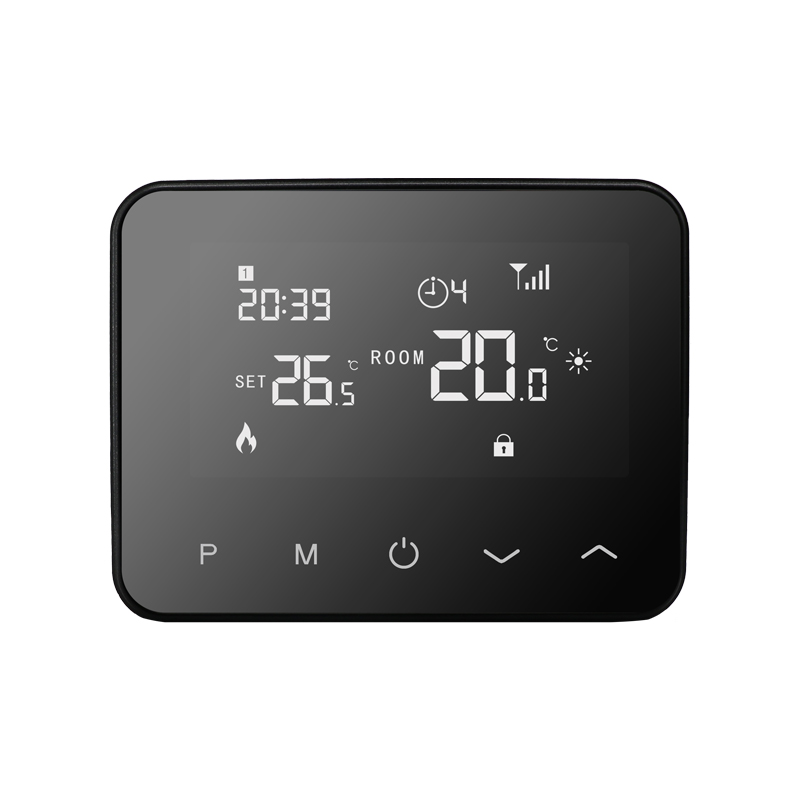
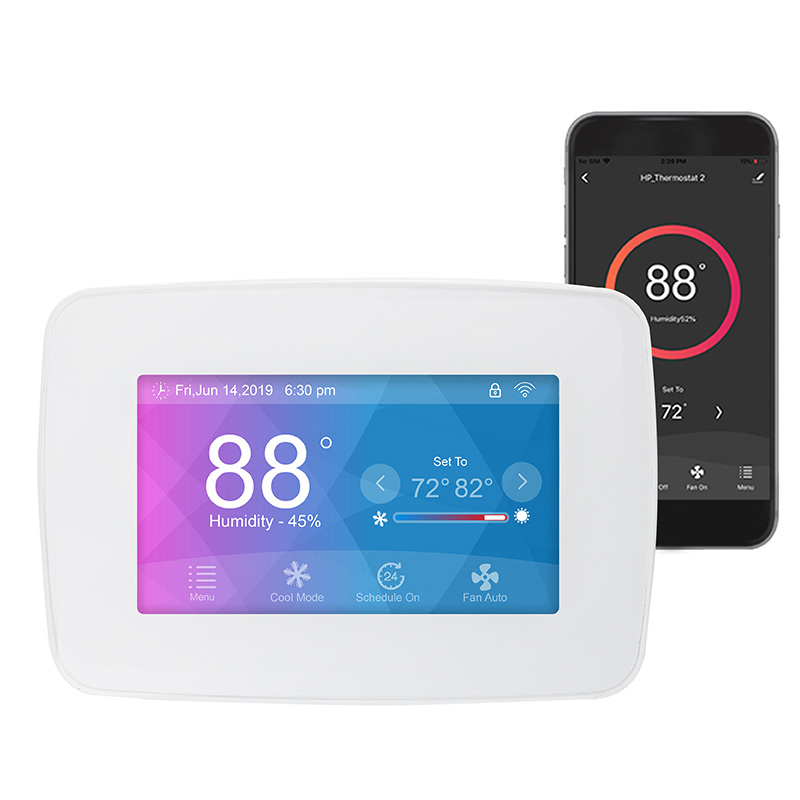
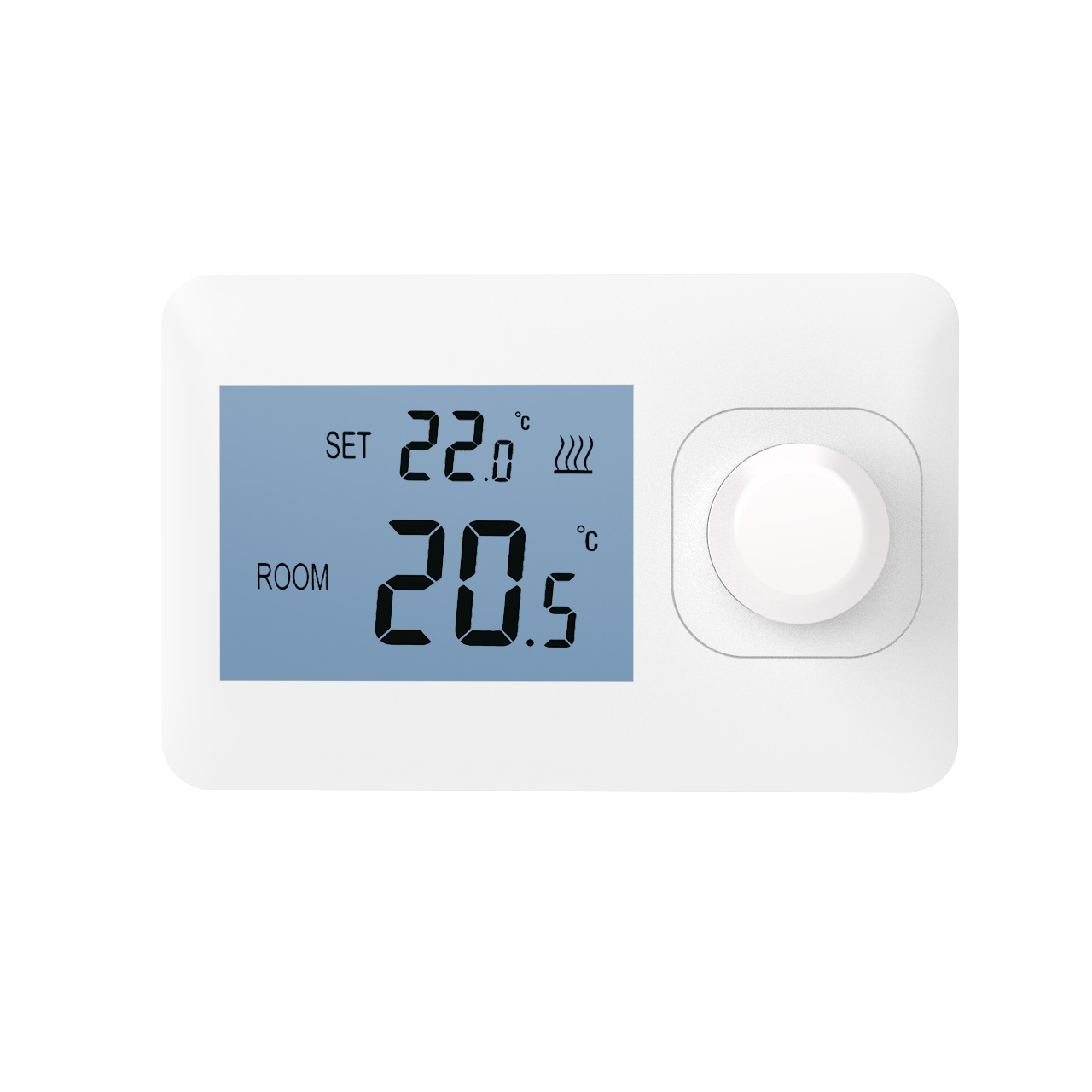
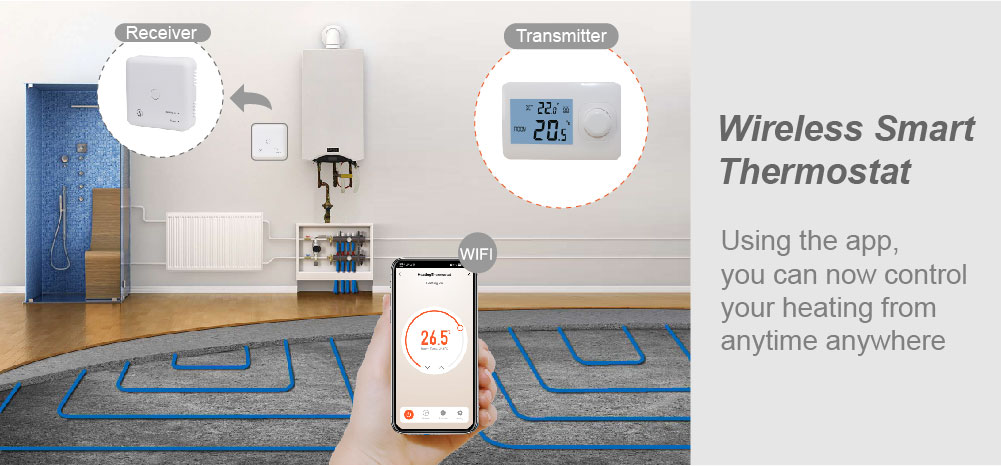
The electric floor heating thermostat primarily controls the system by measuring room or floor temperature. When the room temperature drops below the set value, the thermostat activates the heating element or pump to circulate hot water or electricity through the underfloor pipes to the floor surface.
At this point, the temperature of the fluid or current in the pipes directly affects the rate and intensity of heat released to the floor. If the pipe temperature is too low, the floor warms slowly even if the thermostat is set high, making it difficult for the room to reach a comfortable temperature. Conversely, if the pipe temperature is too high, the floor can become uncomfortably hot, affecting comfort and increasing energy consumption.
Coordinating Pipe Temperature and Room Temperature Control
In practice, thermostats often work with both floor and room temperature sensors to achieve dual control. The floor sensor monitors the surface temperature of the pipes or floor, keeping it within a safe and comfortable range, while the room sensor monitors overall indoor temperature to ensure the air temperature meets the set target.
By coordinating pipe and room temperature control, the thermostat balances heat output, prevents local overheating or underheating, and improves overall heating uniformity and comfort.
The Impact of Pipe Temperature on Energy Efficiency
Proper pipe temperature settings affect not only comfort but also energy consumption. Generally, pipe temperature should be slightly higher than the target room temperature but not excessively high. A temperature that is too high delivers heat quickly but wastes energy and increases electricity costs; too low a temperature requires longer heating periods, raising system workload and reducing efficiency.
By adjusting the pipe temperature through the thermostat, the system can achieve on-demand heating and steady temperature rise, ensuring comfort while minimizing energy use.
Thermostat Settings Tips Related to Pipe Temperature
Adjust settings according to the season: In winter, slightly increase the thermostat set temperature so that the pipe temperature is higher than normal, ensuring stable room temperature. In spring and autumn, lower the pipe temperature appropriately for energy savings.
Use scheduling functions: Preheat the pipes before waking or returning home, allowing the floor temperature to reach the desired level in advance and ensuring comfortable indoor conditions.
Ensure sensor accuracy: Install floor sensors in proper locations to guarantee precise temperature readings. Incorrect placement can cause the thermostat to misjudge pipe temperature, leading to underheating or overheating.
Tips for Optimizing Thermostat and Pipe Temperature Coordination
Avoid frequent manual adjustments, which can cause large fluctuations in pipe temperature and unstable room temperatures.
Ensure uniform pipe layout to prevent local temperature differences that may interfere with thermostat readings.
Combine with proper indoor insulation to reduce cold air infiltration, allowing pipe heat to be more efficiently transferred to the room.
Conclusion
There is a close interactive relationship between the electric floor heating thermostat and underfloor pipe temperature. The thermostat regulates heat output by monitoring room and floor temperature, while the pipe temperature directly affects comfort and energy consumption. Understanding and properly managing this relationship is key to achieving efficient, comfortable operation of electric floor heating systems. Scientific adjustment of thermostat and pipe temperature coordination not only enhances winter heating comfort but also prolongs system life and saves energy.