









In modern buildings, electromechanical systems, and intelligent engineering projects, cabling is no longer simply about “connecting the wires.” As system functions increase, the number of power lines, control lines, signal lines, and data lines surges. Without unified and scientific cabling principles, it can easily lead to chaotic wiring, signal interference, maintenance difficulties, and even affect the overall security and reliability of the system. Many systems experience instability and frequent malfunctions after being put into use, often not due to insufficient equipment quality, but rather to improper early cabling design. Cabling, seemingly basic, is the underlying support for all system operation. Whether it’s underfloor heating control, smart homes, security monitoring, or structured cabling systems, their performance highly depends on cabling quality. A well-designed and properly implemented cabling system not only ensures long-term stable operation but also reserves space for future maintenance, upgrades, and expansion.
The Principle of Standardization
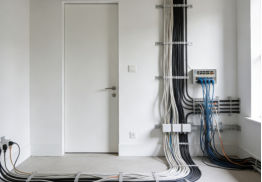
The primary principle of cabling is standardization. Standardization does not mean complexity, but rather emphasizes that the cabling process should follow unified standards and clear rules, including line classification, routing planning, and labeling management. In standardized cabling, lines for different purposes should be clearly distinguished, each with clear numbering and labeling to avoid mixing or incorrect connections. Line routes should be as neat and uniform as possible, minimizing arbitrary detours and intersections. This cabling method is not only aesthetically pleasing but, more importantly, facilitates troubleshooting later. The core of the standardization principle lies in “identifiability and traceability.” Being able to quickly locate and address the corresponding line when a system anomaly occurs is a crucial prerequisite for ensuring efficient system operation and maintenance.
Security Principle
Security is a fundamental and non-negotiable requirement in cabling. Cabling not only concerns system operation but also directly relates to equipment safety and the stability of the operating environment. When adhering to the security principle, the mutual influence between lines should be fully considered, and the spacing and routing of different types of lines should be rationally planned to reduce potential interference and risks. Simultaneously, cabling should have necessary protective measures to prevent damage to lines due to environmental factors. The core of security lies in “prevention is better than cure.” Through rational planning and orderly layout, potential hazards can be controlled to a minimum, ensuring the system remains stable and reliable during long-term operation.
The Principle of Rationality
Rolling should not be overly complex, nor should it be blindly simplified; rather, it should adhere to the principle of rationality. Rationality emphasizes that cabling design should be based on actual functional requirements, achieving just the right balance. During the planning phase, the system scale, usage frequency, and functional zoning must be fully considered to avoid over-route causing resource waste and under-route leading to reactive modifications later. Rational cabling should meet current usage needs while reserving necessary space for future changes. The key to this principle is “balance”—meeting functional requirements while avoiding redundancy, resulting in a clear system structure and efficient operation.
The Principle of Maintainability and Scalability
Rolling is not a one-time task but serves the entire system lifecycle. Therefore, maintainability and scalability are crucial principles that must be considered in cabling. Good cabling design should allow maintenance personnel to easily inspect, adjust, or replace lines without extensive dismantling and modification. Simultaneously, sufficient expansion interfaces and space should be reserved for future functional additions or intelligent upgrades. This principle reflects long-term thinking. By investing in reasonable planning from the initial stage, later maintenance and modification costs are reduced, enabling the system to continuously evolve.
The four principles of cabling—standardization, security, rationality, and maintainability and scalability—form the core framework of scientific cabling. These principles are not independent but interconnected and mutually supportive, requiring comprehensive consideration and unified implementation in practical applications. Standardization ensures a clear and orderly system structure; security guarantees long-term stable operation; rationality ensures cabling meets actual needs; and maintainability and scalability allow for future system development. Neglecting any one of these principles may lead to problems later on, increasing maintenance difficulty and operating costs.