

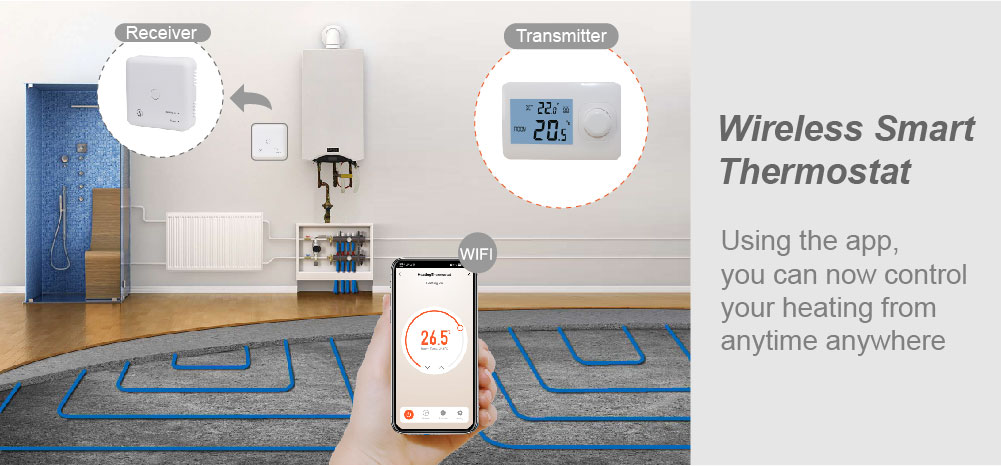
In modern building and electromechanical systems, the rapid increase in the number of cables has become an unavoidable reality. Whether it’s underfloor heating systems, smart homes, security monitoring, or low-voltage and automatic control systems, various power lines, signal lines, and control lines intertwine and coexist in the space. Without unified planning, these lines often appear scattered, messy, and difficult to manage, not only affecting the overall aesthetics but also creating hidden dangers for later maintenance and system stability. It is against this backdrop that wiring centers have gradually become a key component of system design. A wiring center is not a single device, but an integrated and centralized management method. It transforms the system from “disorganized connections” to “orderly operation” by centralizing previously scattered cables, control interfaces, and functional modules into a relatively fixed location. For users, the wiring center is often inconspicuous, but it undertakes extremely important coordination and management tasks behind the scenes.
Centralized Cable Management
The most basic and intuitive function of a wiring center is centralized cable management. By centralizing lines from different areas and devices into the wiring center, the previously scattered connections are reorganized, making the system structure clearly visible. This centralized management avoids the chaos caused by haphazard wiring, ensuring clear identification of the source and destination of each line. Whether during installation and commissioning or later maintenance, relevant lines can be quickly located, reducing unnecessary dismantling, modification, and troubleshooting. The wiring center provides a clear “skeleton” for overall operation, making complex systems manageable and traceable.
Achieving Functional Zoning
The wiring center is not only a convergence point for lines but also a crucial foundation for functional division and system collaboration. Through rational wiring design, different areas and functional modules can be clearly distinguished within the wiring center and connected according to predetermined logic. This structure enables the system to achieve a combined regional control and unified management operating mode. Each area can operate independently yet can also coordinate when needed, avoiding system fragmentation and incoordination. In increasingly diverse systems, the wiring center is key to achieving “overall order and local flexibility.”
Enhancing System Stability
The wiring center plays a crucial role in system stability. Centralized cabling effectively reduces line crossings and interference, improves signal transmission reliability, and lowers the probability of faults caused by messy wiring. Furthermore, the wiring center typically incorporates necessary protective measures to rationally separate and manage the lines. In case of an anomaly, the affected area can be quickly isolated to prevent the impact from escalating. This centralized management approach makes system operation safer and more controllable. For systems requiring long-term continuous operation, the wiring center provides a vital guarantee for stability.
Facilitating Maintenance, Upgrades, and Future Expansion
Another important function of the wiring center is to facilitate system maintenance and upgrades. The centralized structure eliminates the need for maintenance personnel to repeatedly check multiple locations, significantly reducing the difficulty and time cost of repairs. Simultaneously, the wiring center usually reserves some expansion space, allowing for future functional additions or intelligent upgrades without requiring large-scale adjustments to the existing wiring. This forward-looking design helps extend the overall lifespan of the system. The wiring center not only solves current problems but also prepares for future changes.
The role of the wiring center goes far beyond simply “organizing the wiring.” By centrally managing wiring, clearly defining system structure, and coordinating functional operations, it establishes a clear and orderly operational foundation for complex systems. It is this centralization and standardization that enables the system to maintain stable and efficient operation even as its functions continuously increase. In modern buildings and intelligent systems, neglecting the planning of wiring centers often leads to problems such as maintenance difficulties and limited upgrades later on. Conversely, a properly designed wiring center lays the foundation for long-term stable operation from the very beginning.