Water floor heating

Is the Program Mode of a Floor Heating Thermostat Practical?

As floor heating systems continue to upgrade, the function of thermostats has evolved from simple temperature control to multi-mode management. Among these, the program mode has gradually come into the public eye. Many families have questions when purchasing a floor heating thermostat: what changes does the program mode actually bring, and is it truly suitable…

Read article
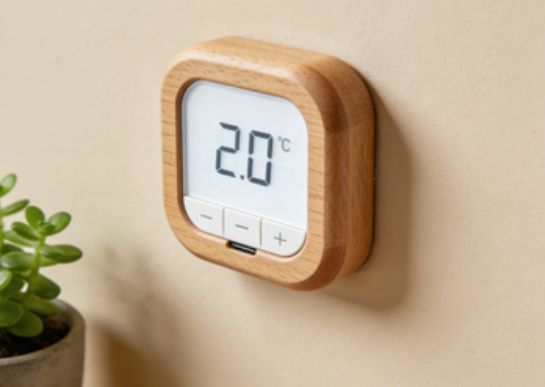
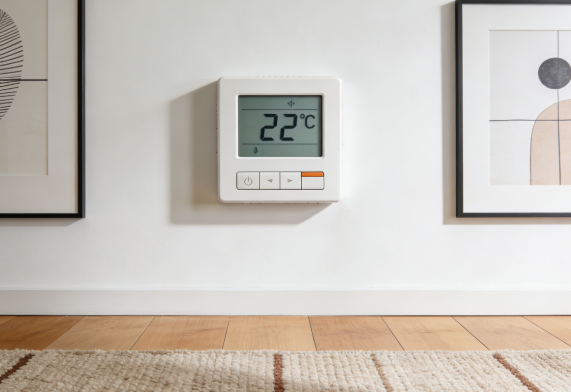
Does a Floor Heating Thermostat Support Timer Control?

With the increasing demand for home heating, floor heating thermostats are no longer just simple temperature regulating devices. More and more users are paying attention to their time management capabilities, with “whether it supports timer control” being a frequently asked question during purchase and use. Reasonable time settings not only affect the heating experience but…

Read article
What are the advantages of combining water-based underfloor heating with a smart thermostat?

Water-based underfloor heating is widely used in residential and commercial spaces due to its even heating and high comfort level. The addition of a smart thermostat further enhances the user experience and operational management of this system. Compared to traditional control methods, a smart thermostat can more precisely adjust the operating status of the water-based…

Read article
Why Does an Underfloor Heating System Need a Thermostat?

Underfloor heating systems are increasingly favored by families for their comfortable and even heating. However, many people overlook a crucial component in actual use—the thermostat. Underfloor heating is not simply a heating device; its operation is affected by indoor temperature, usage habits, and environmental changes. Without effective temperature control, not only is comfort compromised, but…

Read article
Is a 3A Maximum Current Sufficient for a 220V Thermostat?

When selecting a 220V thermostat, the maximum current parameter is often a key concern for users. A nominal maximum current of 3A means that the thermostat’s design has a clearly defined load capacity. Understanding the meaning of this parameter and its role in practical use helps determine whether the 3A current specification can meet daily…

Read article
Is a 220V Underfloor Heating Thermostat More Stable?

The core of an underfloor heating system’s operation lies in the continuity and reliability of temperature control. As a control unit directly connected to the heating equipment, the thermostat’s stability significantly impacts the overall operating status. 220V underfloor heating thermostats, because they are directly powered by mains electricity, are often considered to have an advantage…

Read article
Differences Between 220V and Low-Voltage Thermostats As a key component in temperature control systems, the power supply method of a thermostat directly affects its installation and usage. 220V and low-voltage thermostats are two common types, differing significantly in operating voltage, control logic, and application environment. Understanding these differences helps in making clearer judgments during selection and installation. Fundamental Differences Due to Power Supply Methods 220V thermostats operate directly on mains power, with an operating voltage consistent with common household appliances. This power supply method eliminates the need for an additional power module, making the wiring logic relatively straightforward and offering high compatibility with traditional heating or electric heating systems. Low-voltage thermostats typically operate within a safe voltage range and require power through a transformer or control unit. Their power supply method prioritizes electrical safety and system integration, with a higher degree of dependence on external power. These different power supply methods create a clear distinction in the electrical structure and system configuration of the two types of thermostats. Differences in Installation Conditions and System Compatibility 220V thermostats require adherence to mains wiring specifications during installation, demanding certain levels of line stability and insulation. Their installation location is typically close to the controlled equipment, with a relatively independent overall structure, suitable for applications with clearly defined electrical conditions. Low-voltage thermostats, on the other hand, emphasize compatibility with the control system during installation. The wiring is usually signal or low-voltage, requiring specific wiring methods and interface matching. This installation characteristic makes low-voltage thermostats easier to integrate into centralized control systems, but also places higher demands on initial design and wiring planning. Differences in Usage Characteristics and Safety Focus 220V thermostats offer direct response and a clear control path. Their stable operation depends on good power supply conditions and standardized wiring; therefore, electrical safety and load matching are paramount during use. Low-voltage thermostats, due to their lower operating voltage, have advantages in controlling the risk of electric shock. Their safety relies more on the voltage level itself and the stable operation of the control system. Different safety focuses lead to different characteristics in the application environments and usage habits of the two types of thermostats. Conclusion The differences between 220V thermostats and low-voltage thermostats lie mainly in their power supply methods, installation conditions, and usage characteristics. There is no simple superior-inferior relationship between the two; rather, they each have their own application directions tailored to different system needs. Understanding these differences helps in making a more rational choice of the type of thermostat suitable for one's specific conditions in actual use.
Differences Between 220V and Low-Voltage Thermostats

As a key component in temperature control systems, the power supply method of a thermostat directly affects its installation and usage. 220V and low-voltage thermostats are two common types, differing significantly in operating voltage, control logic, and application environment. Understanding these differences helps in making clearer judgments during selection and installation. Fundamental Differences Due to…

Read article
Is a 220V Thermostat Suitable for Old House Renovation?

Upgrading the heating and temperature control systems is often a crucial part of old house renovations. 220V thermostats are widely used in various temperature control scenarios due to their common power supply and intuitive control methods. However, existing buildings have different wiring structures, electrical environments, and installation space compared to new residences. Therefore, whether they…

Read article