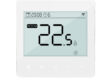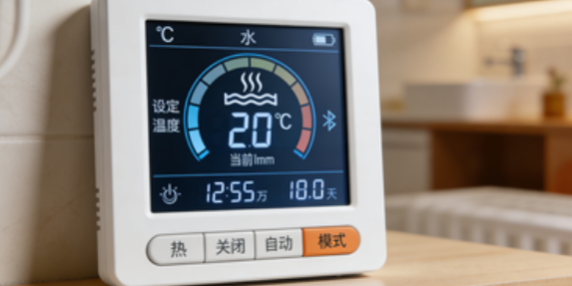
The core of an underfloor heating system’s operation lies in the continuity and reliability of temperature control. As a control unit directly connected to the heating equipment, the thermostat’s stability significantly impacts the overall operating status. 220V underfloor heating thermostats, because they are directly powered by mains electricity, are often considered to have an advantage in operational stability. Analyzing their working characteristics and usage conditions will help to gain a clearer understanding of this issue.
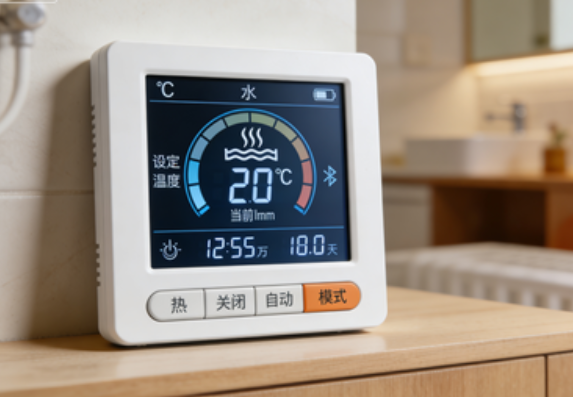
The Impact of 220V Power Supply on Operational Continuity
220V underfloor heating thermostats are directly connected to a conventional power source, providing a stable and clearly defined power supply. This power supply structure allows the thermostat to operate without relying on additional power modules or conversion devices, reducing potential uncertainties from intermediate links.
In scenarios involving long-term operation of underfloor heating systems, a continuous and stable power supply is a prerequisite for the thermostat’s normal operation. The 220V power supply method has a mature electrical foundation in most building environments, which is conducive to maintaining the thermostat’s continuous operation, providing support for stability from the power supply structure level.
Impact of Control Method and System Matching
220V underfloor heating thermostats typically control the actuators directly, resulting in a relatively simple control path. The shorter link between temperature signal acquisition, judgment, and control output makes the system response process clearer.
This control method helps reduce the impact of signal transmission on stability in underfloor heating systems. Clear control logic allows the thermostat to maintain a consistent adjustment rhythm as ambient temperature changes. A higher degree of system matching leads to more stable overall operation.
Constraints of Installation and Usage Conditions on Stability
The stability of a thermostat depends not only on its own structure but also on installation conditions and the usage environment. During installation, 220V underfloor heating thermostats must adhere to electrical wiring specifications to ensure secure and reliable connections.
Furthermore, a suitable installation location contributes to more accurate temperature sensing and avoids external interference affecting measurement results. Under proper installation and normal usage conditions, 220V underfloor heating thermostats maintain good operational consistency, providing stable temperature control support for the underfloor heating system.
Conclusion
The 220V underfloor heating thermostat possesses the fundamental conditions for stable operation in terms of power supply method, control structure, and system matching. Its stability is not determined by a single factor, but is closely related to the power supply environment, control logic, and installation specifications. Provided these conditions are met, the 220V underfloor heating thermostat can maintain continuous and reliable operation in the underfloor heating system.