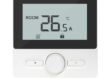
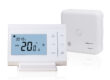
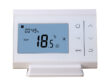
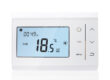
In the cold season, boiler thermostats become the “smart brain” of home heating, rationally setting daytime and nighttime temperatures to create a comfortable living environment and effectively reduce energy consumption, saving household expenses. However, many users are often confused when faced with the thermostat’s temperature setting interface, unsure how to precisely adjust it according to the needs of different time periods. Actually, by mastering the scientific methods, it’s easy to achieve reasonable daytime and nighttime temperature settings.
During the daytime, family members are more active and have relatively higher temperature requirements, but the specific temperature setting should be based on actual conditions. If there are elderly people or children in the household, their immune systems are weaker and they are more sensitive to temperature changes. In this case, the temperature can be set between 20℃ and 22℃. This temperature range ensures a warm and comfortable indoor environment without being too hot and uncomfortable. For working families, where no one is home for most of the day, maintaining a high temperature would undoubtedly waste energy. In this case, the temperature can be appropriately lowered, set between 16℃ and 18℃. This temperature setting prevents safety issues like pipes freezing and bursting due to excessively low indoor temperatures. It also allows for quick temperature increases to a comfortable range before family members return home by turning on the boiler in advance or using the thermostat’s timer function. Furthermore, if the house has good insulation and plenty of sunlight during the day, the indoor temperature rises quickly, allowing for a lower daytime temperature setting to reduce boiler operating time and save energy.
At night, during sleep, the body enters a resting state, metabolism slows down, and the need for temperature decreases. Generally, setting the bedroom temperature between 16℃ and 18℃ is suitable. Excessively high temperatures can cause discomfort and affect sleep quality; while excessively low temperatures can easily lead to colds. If you are concerned about low nighttime temperatures, you can choose a boiler thermostat with intelligent adjustment functions. It automatically adjusts the boiler’s operation based on changes in indoor temperature to maintain a stable temperature. For light sleepers or those sensitive to temperature changes, a “sleep mode” on the thermostat can be used before bed. This mode gradually lowers the indoor temperature based on the physiological characteristics of sleep, creating a comfortable sleeping environment.
When setting daytime and nighttime temperatures, the boiler’s operating efficiency and energy type must also be considered. Different types of boilers, such as gas-fired boilers and electric boilers, have different thermal efficiencies and response times to temperature changes. Gas-fired boilers heat up faster, but temperature fluctuations may be relatively larger; electric boilers heat up relatively slower, but temperature control is more precise. Users can adjust the temperature setting appropriately according to the characteristics of their own boiler. At the same time, energy prices vary across regions. In areas with higher energy prices, more emphasis can be placed on energy conservation, and the temperature setting can be appropriately lowered; in areas with lower energy prices, the temperature can be appropriately increased while ensuring comfort.
Properly setting the daytime and nighttime temperatures on a boiler thermostat is an art that balances comfort and energy conservation. By comprehensively considering factors such as the needs of family members, the insulation performance of the house, the characteristics of the boiler, and energy prices, we can enjoy a warm and comfortable home environment while achieving efficient energy use. Let the boiler thermostat become a helpful assistant in our lives, bringing more convenience and enjoyment.