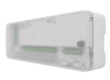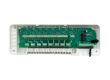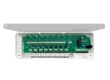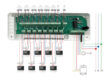
During the design and installation of underfloor heating systems, many users focus on the heat source type, pipe quality, manifold brand, or temperature control method, neglecting seemingly “detailed” issues, including the installation height of the underfloor heating control box. In fact, as a crucial hub connecting the thermostat, actuator, and heat source system, the installation location and height of the underfloor heating control box are not arbitrary but directly affect the system’s stability, safety, and ease of maintenance. In practice, many users ask: Is it better to install the underfloor heating control box as high as possible? Can it be placed directly on the ground? Is there a standardized height? These questions arise because the underfloor heating control box is not as visually obvious as the thermostat or as “conspicuous” as the manifold, yet it plays an indispensable functional role in the entire system. An improper installation height can, at best, affect operation and maintenance, and at worst, create safety hazards or even shorten the lifespan of the entire underfloor heating system.
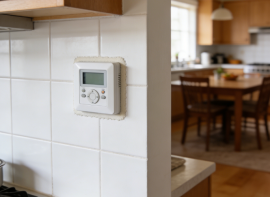
Are there any requirements for the installation height?
要确定地暖控制箱的安装高度是否有要求,首先必须了解它在地暖系统中的作用。地暖控制箱并非仅仅是装饰部件,而是一个集电源输入、信号聚合和控制执行于一体的功能单元。它通常连接多个房间的温控器、电动执行器以及循环泵或锅炉的信号端口,是典型的“低压+控制”设备。由于其内部包含线路连接、电气元件和控制模块,地暖控制箱的安装位置必须远离潮湿、积水和强热源等不利环境因素。如果高度过低,容易受到地面潮气、积水甚至意外撞击的损坏;如果高度过高,则可能导致线路布局不合理,增加维护难度。因此,地暖控制箱的安装高度必须根据设备的特性,在一个“合理范围内”确定,而不能随意设定。
Basic Installation Principles
While the specific installation height of the underfloor heating control box may vary slightly depending on the region and project, the industry generally follows several core principles:
Safety Principle
The control box typically contains power terminals and control modules. Prolonged exposure to damp or water-prone areas increases the risk of short circuits and corrosion. Therefore, the installation height should be significantly higher than the ground to avoid damage from mopping, leaks, or dampness.
Stability Principle
The underfloor heating control box needs to be fixed to a wall with reliable load-bearing capacity to prevent internal wiring from loosening due to vibration or shaking. A reasonable height helps ensure even stress distribution within the box, resulting in more stable long-term operation.
Ease of Maintenance Principle
Although the control box is not a routine operating device, it still requires manual opening for system debugging, later inspections, or partial maintenance. Installation heights that are too high or too low increase maintenance difficulty and affect the user experience.
The Importance of Installation Height from a Construction and Wiring Perspective
The underfloor heating control box is not isolated; it needs to be centrally connected to the thermostat wiring, actuator wiring, and power supply wiring. Therefore, the installation height directly affects the rationality of the overall wiring. If the control box is installed too low, the signal lines from the wall thermostat need to be concentrated downwards, easily leading to cable crossings or excessive bends; if it is installed too high, the lines connecting to the manifold actuators may need to be routed upwards, increasing construction complexity. A reasonable height allows for smoother upstream and downstream wiring, facilitating wiring organization and later troubleshooting. Furthermore, from a decoration coordination perspective, control boxes are usually hidden in cabinets, walls, or equipment rooms; a suitable height makes it easier to match the overall spatial layout, avoiding the problems of “difficulty in concealing” or “difficulty in hiding.”
The Impact of Different Installation Environments on Height Requirements
Although underfloor heating control boxes generally have height requirements, the specific values are not fixed and need to be comprehensively judged based on the installation environment. In dry, well-ventilated spaces, the installation height of the control box can prioritize maintenance convenience; while in areas where there may be moisture or temperature fluctuations, moisture prevention and safety should be emphasized, and the installation position should be appropriately raised. For centralized installations, the operating space and heat dissipation conditions when multiple control boxes are placed side-by-side must also be considered to avoid overcrowding or poor heat dissipation due to improper height settings. However, regardless of environmental changes, the core objective remains ensuring stable operation, convenient maintenance, and safe use of the control box, rather than simply pursuing a fixed height value.
Common Misconceptions
In actual installation, some non-professional operations often involve misconceptions. For example, some people install the control box directly near the baseboard to save time; others install it too high or even near the ceiling to make it “out of sight.” These practices may not seem to affect use in the short term, but from a long-term operation and maintenance perspective, they pose significant hidden dangers. The underfloor heating control box is not a device that is installed once and then forgotten; a reasonable installation height is an important prerequisite for leaving safe and convenient space for future use.
The installation height of the underfloor heating control box has clear requirements, but these requirements are not simply “fixed values,” but rather a comprehensive consideration centered on safety, stability, and ease of maintenance. As the control center of an underfloor heating system, the control box must be located away from damp environments and avoid the inconvenience of maintenance due to excessive height. Its height must be designed to ensure the long-term, stable, and reliable operation of the system. A reasonable installation height helps optimize wiring layout, reduce the risk of malfunctions, and improve overall construction quality. From the user’s perspective, it reduces later maintenance costs and avoids unnecessary trouble caused by improper installation. In short, while the height of the underfloor heating control box may seem like a detail, it reflects the professionalism of the underfloor heating system’s design and construction. Therefore, during the underfloor heating installation process, whether the user plans it themselves or entrusts it to a professional team, the installation height of the control box should be given full attention. Only by being scientific and standardized in these details can the underfloor heating system truly achieve the goal of comfort, safety, and efficiency.