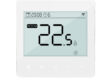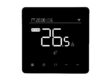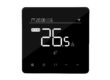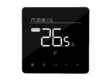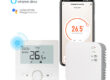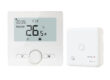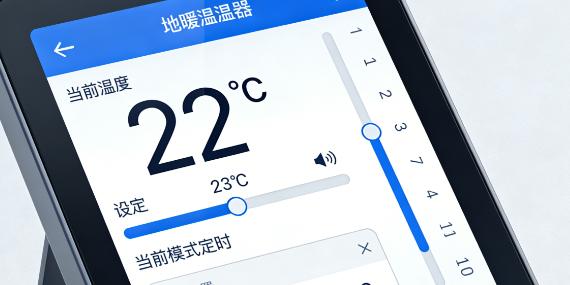
As floor heating systems continue to upgrade, the function of thermostats has evolved from simple temperature control to multi-mode management. Among these, the program mode has gradually come into the public eye. Many families have questions when purchasing a floor heating thermostat: what changes does the program mode actually bring, and is it truly suitable for daily use? Understanding the practical significance of this function helps to better judge its value in home heating.
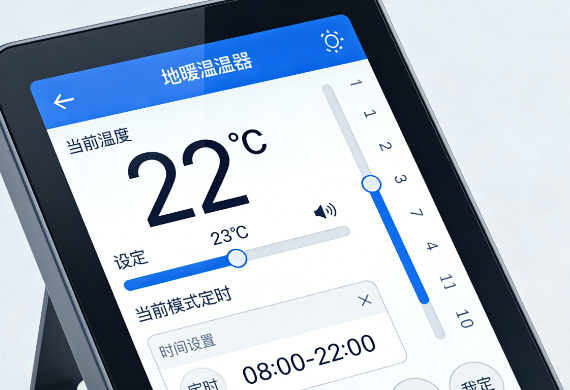
Basic Operating Logic of Program Mode
Program mode refers to the thermostat’s ability to automatically operate according to preset time periods and temperature requirements. By setting different time points, the floor heating system can present multiple temperature states throughout the day. This operating method does not rely on temporary operations but continuously executes according to established rules, making the heating process more orderly. The existence of program mode transforms floor heating from passive adjustment to active management.
Impact of Program Mode on Usage Habits
When the program mode of the thermostat is activated, the frequency of daily operation will be significantly reduced. Users do not need to repeatedly adjust the temperature; the system will maintain the corresponding state at the appropriate time. This change makes floor heating use more in line with the rhythm of life and reduces temperature deviations caused by forgetting to adjust. For families with relatively stable routines, programmed heating modes offer a more consistent heating experience.
The Relationship Between Programmed Heating Modes and Comfort
Indoor comfort depends not only on the temperature level but also on the smoothness of temperature changes. Programmed heating modes, through pre-setting, allow for a more gradual heating process, avoiding discomfort caused by sudden temperature increases or decreases. A constant and rhythmic heating environment better meets long-term living needs and contributes to improving overall living quality.
The Role of Programmed Heating Modes in Energy Management
The energy consumption of an underfloor heating system is closely related to its operating time. Programmed heating modes can automatically adjust the heating intensity according to the needs of different time periods, reducing the system’s operating pressure during periods of low demand. This approach makes energy use more targeted, avoiding unnecessary continuous heating while ensuring a reasonable indoor temperature, thus contributing to a more rational energy consumption pattern.
Are Programmed Heating Modes Suitable for All Families?
More complex programmed heating modes are not necessarily better; the key is whether they suit the family’s actual situation. Families with a clear lifestyle and well-defined time patterns are more likely to benefit from programmed heating modes; while families with frequently changing routines require more flexible adjustment methods. When choosing a thermostat that supports program modes, the intuitiveness of operation and the clarity of settings directly impact the actual user experience.
Conclusion
The program modes of underfloor heating thermostats demonstrate significant value in temperature management, ease of use, and energy consumption control. It’s not an extra burden, but rather a more planned heating method. As long as it matches the family’s lifestyle, program modes can make underfloor heating operate more stably and efficiently, maintaining a comfortable and balanced home environment without the user even realizing it.