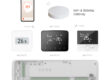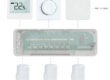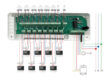
In the actual use of underfloor heating systems, water temperature control is always one of the core factors affecting comfort, energy efficiency, and system stability. Excessively high water temperatures can easily lead to increased energy consumption, overheating of the floor, and even affect the lifespan of floor materials; excessively low water temperatures result in slow heating and insufficient indoor warmth, weakening the comfort advantages that underfloor heating should provide. As underfloor heating systems develop towards multi-zone and intelligent systems, the traditional method of relying on a single boiler for water temperature regulation is no longer sufficient to meet the needs of homes and commercial spaces for refined control. Different rooms and functional areas have significantly different usage times and heat demands. If a “uniform water temperature, uniform heating” approach is still adopted, it not only wastes energy but also fails to achieve truly comfortable heating. It is against this backdrop that multi-zone wireless cabling centers are gradually becoming key control hubs in underfloor heating systems. New control solutions, represented by the HR-02 multi-zone wireless cabling center, achieve a shift in water temperature control from “coarse adjustment” to “precise distribution” by centrally managing thermostats, thermal actuators, boilers, and water pumps.
The Essence of Water Temperature Control
Efficiently controlling underfloor heating water temperature requires understanding its essence. It’s not simply about achieving a fixed temperature, but about matching heating capacity with actual heat demand. Different rooms have significantly different heat requirements at different times. If the system cannot identify these differences, it can only “cover” by raising the overall water temperature, leading to increased energy consumption. The significance of multi-zone control lies in enabling the system to “sense demand.” By receiving temperature feedback from multiple room thermostats, the wiring center can determine which areas need heating and which areas already meet the requirements, providing a basis for subsequent water temperature adjustments.
The precondition of realizing the efficient water temperature management
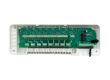
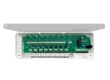
In a multi-zone wireless wiring center architecture supporting up to 16 room thermostats, the underfloor heating system is no longer a “black box” operating as a whole, but is clearly divided into multiple independent but collaborative zones. Each zone sends a signal to the system to heat or stop heating based on its own needs. The direct benefit of this structure is avoiding situations where “some rooms are overheated while others are underheated.” The system avoids raising the overall water temperature to meet the needs of individual areas. Instead, it achieves more rational heat distribution through regional control, fundamentally improving the efficiency of water temperature regulation.
Precise Heating Through Thermal Actuator Collaborative Control
The efficiency of water temperature control also depends on the precise delivery of heat to the target area. The wiring center supports up to 16 thermal actuator connectors, allowing each area’s loop to be controlled independently. When a region reaches its set temperature, the corresponding loop shuts off to prevent further absorption of high-temperature hot water; while areas requiring heating keep their loops open. This ensures that the boiler’s heat output is not wasted, significantly improving the effective utilization rate of water temperature. Precise collaboration of thermal actuators is a crucial foundation for efficient water temperature control.
Optimizing Water Temperature Stability Through Boiler and Pump Delay Settings
Efficient water temperature control is not only about “how hot” it is, but also about “how stable” it is. Frequent start-ups and shutdowns of the boiler and pumps not only affect equipment lifespan but also easily cause water temperature fluctuations, reducing user comfort. By enabling configurable delay times for boilers and water pumps through the cabling center, the system can buffer changes in demand across multiple areas, avoiding frequent start-ups and shutdowns due to short-term signal fluctuations. This delay logic helps maintain relatively stable water supply temperature, resulting in smoother and more efficient temperature regulation.
Centralized Cabling Improves System Response Efficiency
Traditional distributed cabling methods result in complex signal transmission paths, easily affecting response speed and reliability. However, by using a cabling center as the central hub, the signal paths between thermostats, thermal actuators, boilers, and water pumps are significantly simplified. The ease of cabling and installation not only reduces construction difficulty but also minimizes the hidden risks associated with wiring errors. More direct signal transmission allows for a faster system response to temperature changes, resulting in more timely and effective water temperature regulation.
Opentherm and Intelligent Linkage Enhance Water Temperature Regulation Accuracy
With Opentherm connectivity, the underfloor heating system can dynamically adjust the boiler water temperature, going beyond simple on/off control. The boiler can adjust its output power and water temperature level according to system requirements, making the heating process more precise.This collaborative approach upgrades water temperature control from “fixed-value control” to “demand-driven control.” When overall heat demand is low, the system automatically lowers the water temperature; when multiple areas require heating simultaneously, it appropriately increases the water temperature output, achieving a better balance between comfort and energy efficiency.
Wireless and Intelligent Extensions Expand the Boundaries of Water Temperature Management
The addition of optional wireless network connectivity expands water temperature control beyond local operation, enabling remote management and system collaboration. Monitoring and adjustments through a unified platform provide a more intuitive understanding of the operating status of each area, offering more decision-making support for water temperature optimization. This intelligent trend transforms underfloor heating water temperature control from passive response to proactive management, laying the foundation for long-term efficient operation in homes and commercial spaces.
Efficiently controlling underfloor heating water temperature is not a problem that can be solved by a single device or parameter, but rather relies on a comprehensive approach that combines a multi-zone control architecture, precise execution mechanisms, and system collaboration capabilities. The control solution, centered around the HR-02 multi-zone wireless cabling center, centrally manages up to 16 room thermostats and thermal actuators, enabling precise identification of heating needs and accurate heat distribution. Simultaneously, boiler and pump delay settings, Opentherm linkage, and wireless expansion capabilities make water temperature regulation more stable, flexible, and efficient. Water temperature is no longer a fixed, one-size-fits-all output, but dynamically adjusted according to actual needs, achieving a better balance between comfort, energy efficiency, and system lifespan.