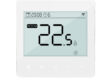
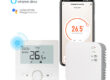
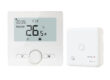
As smart homes become increasingly integrated into daily life, more and more users are paying attention to the interconnectivity between devices. Among these, whether a smart thermostat, as a crucial control terminal for home heating and cooling systems, supports voice assistants has become a major concern for many during the purchase and use process. Voice interaction not only represents a change in operating methods but also reflects the potential for upgrades in technological integration and user experience for smart thermostats.

The Technological Basis for the Integration of Smart Thermostats and Voice Assistants
Supporting voice assistants in smart thermostats is not simply about adding a voice command entry point; it’s a result built upon a complete smart system architecture. The thermostat needs to have network connectivity, maintaining stable communication with a cloud platform via wireless network, and reserving interfaces at the system level for interfacing with mainstream voice assistants.
Under this technological architecture, voice commands do not directly affect the thermostat hardware. Instead, they are recognized and parsed by the voice assistant platform before being sent to the thermostat for execution. This approach makes the thermostat more flexible in terms of functional expansion and provides room for future upgrades. Because of these fundamental conditions, smart thermostats can perform more naturally and smoothly in terms of voice control.
Changes in the Use of Smart Thermostats Brought by Voice Assistants
When smart thermostats support voice assistants, users’ operating habits will change significantly. These changes are mainly reflected in the following aspects:
More Intuitive Operation: Users are no longer limited to touchscreens or mobile applications. They can complete operations such as temperature adjustment and mode switching through simple voice commands, reducing the steps of searching for devices or opening applications.
More Flexible Usage Scenarios: Voice control is particularly useful when both hands are inconvenient to operate the device. Whether resting, doing housework, or getting up at night, the voice assistant allows the thermostat to respond quickly to needs.
Increased Family Member Involvement: Voice interaction lowers the barrier to entry, allowing family members of different ages to easily participate in the use of smart thermostats, improving overall comfort.
With the addition of voice assistants, smart thermostats are gradually transforming from simple control devices into an integral part of home environment management.
Enhanced Smart Thermocontrol Experience with Voice Assistant Support
The integration of voice assistants not only changes the way the device is operated but also brings more possibilities to the smart thermostat experience:
More Natural Control Response: Users issue commands in everyday language, and the system completes the corresponding operation based on semantics, making the interaction between people and devices closer to real communication.
Richer Smart Scene Linkage: Thermostats can work collaboratively with other smart devices, completing multiple operations under voice commands, making indoor environment adjustment more seamless.
More Consistent Lifestyle: By controlling temperature changes with voice, users can focus more on life itself, rather than frequently paying attention to the details of device operation.
These changes in experience transform smart thermostats from mere temperature adjustment tools into an important component for improving the quality of life.
Development Direction of Smart Thermostats under the Trend of Voice Control
With the increasing popularity of voice assistants, the support for voice control in smart thermostats is gradually shifting from an “optional function” to an “essential capability.” In the future, thermostats will place greater emphasis on understanding and response accuracy in voice interaction, making command execution more closely aligned with users’ actual needs.
Meanwhile, the addition of voice control has also driven changes in the design philosophy of smart thermostats. Devices need to strike a balance between stability, security, and ease of use, making voice control both convenient and reliable. This trend has placed smart thermostats in a more central position in home environment management.
Conclusion
Whether a smart thermostat supports voice assistants has become one of the important indicators for measuring its level of intelligence. Through deep integration with voice assistants, thermostats have seen significant improvements in operation methods, user experience, and home interaction. For users seeking a convenient and comfortable lifestyle, smart thermostats that support voice assistants are not only a technological advancement but also a smart choice that is closely integrated into daily life.