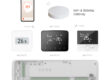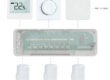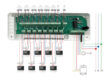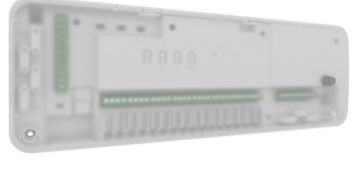
With the increasing popularity of underfloor heating systems, many users prioritize wireless thermostats when choosing a control solution. The reasons are simple: no control wiring is required, installation is more flexible, and there’s minimal impact on the overall decor—it seems convenient and hassle-free. However, many overlook the fact that while wireless thermostats are “wireless,” they only transmit signals; the actual heating system still requires connections to the power supply, actuators, boiler, and water pump. Without a proper centralized management system, the system can become more complex. This is especially true in multi-room, multi-zone underfloor heating systems, where wireless thermostats alone struggle to handle the large number of actuators and complex inter-functions. In such cases, using traditional distributed wiring methods is not only inefficient but also prone to causing instability in wireless control due to messy wiring. Wireless thermostat wiring centers were developed to address this contradiction. They combine the flexibility of wireless control with the reliability of centralized wiring, making underfloor heating systems easy to install, easy to use, and less prone to problems.
How to Make Wireless Thermostats More Stable?
Many users worry about the stability of wireless temperature control. In most cases, the problem isn’t with the wireless signal itself, but with messy backend wiring. If actuators, boilers, and pumps are wired separately, a loose or incorrect connection will affect the overall control performance. The wireless temperature controller wiring center acts as the central hub of the system, unifying all critical equipment in one location. This clear wiring logic reduces human error. The wireless signal only issues commands, while the wiring center coordinates the execution. This division of labor actually makes the system more stable.
Easier Installation, Truly Demonstrating the Advantages of “Wireless”
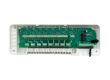
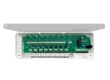
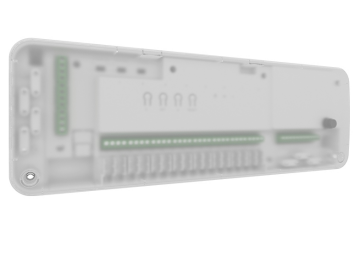
Choosing a wireless temperature controller is primarily about reducing wiring workload. However, if the backend still requires running cables everywhere and connecting at multiple points, the installation experience is significantly diminished. With a wiring center, all actuators, boilers, and circulating pumps are connected from a single point, greatly reducing the complexity of on-site wiring. Wiring centers like the HR02 only require wiring in the concentrated equipment area to achieve complete control with the wireless temperature controller, truly achieving “wireless front-end, organized back-end,” making installation faster and more worry-free.
How to Make Multi-Zone Control Clearer?
Wireless thermostats are typically used for multi-room control, but with many rooms, zone management becomes a challenge. Which thermostat controls which zone? Are the actuators connected correctly? Without a unified platform, confusion is easily generated. A wireless thermostat cabling center supporting 8 or 16 zones clearly defines control zones. Each zone has a clearly defined interface, with thermostats corresponding to zones one-to-one, reducing errors during installation and debugging. Whether for residential or commercial spaces, multi-zone control remains clear and orderly.
Centralized Actuator Management for More Even Heating
The comfort of an underfloor heating system largely depends on the rationality of heat distribution. The wireless thermostat cabling center allows up to 5 thermal actuators to be connected per zone, flexibly configured according to room size and usage needs. Centralizing all actuators to the cabling center not only facilitates unified power supply and control but also avoids the problem of an actuator “dropping out” without being easily detected. For users, this translates to more even room heating and more precise control.
How to Make Boiler and Water Pump Interoperability Smoother?
Wireless thermostats issue more than just “on” and “off” commands; they affect the overall system’s efficiency. Poor coordination between the boiler, water pump, and zone controls can easily lead to high energy consumption and malfunctions. The wireless thermostat cabling center provides dedicated output interfaces for the circulation pump and boiler, pre-designing the linkage relationships. When a zone requires heating, the system can synchronously activate related equipment, reducing unnecessary operation and making the entire heating process more coordinated.
Easier Upgrades and Maintenance
Wireless thermostat systems often change with usage needs, such as adding rooms, adjusting zones, or changing control methods. If the wiring is too scattered, later adjustments become very troublesome. A centralized cabling center makes all wiring and control relationships clear at a glance. Whether upgrading the system or performing routine maintenance, operations can be performed from a single location, eliminating the need for extensive wall demolition or wiring troubleshooting. This is especially important for spaces that have already been renovated.
While wireless thermostats offer flexible and convenient control, the overall architecture behind the system truly determines its usability. Without proper wiring management, even the most advanced wireless control will struggle to achieve its intended effect. The wireless thermostat wiring center is a crucial link connecting “wireless convenience” and “system stability.” Through centralized wiring, clear zoning, unified actuator management, and intelligent linkage between the boiler and water pump, wiring centers like the HR02 ensure that wireless thermostats are not just “convenient to look at,” but truly worry-free, reliable, and durable. Whether installing new underfloor heating or upgrading an existing system, wireless thermostats paired with a professional wiring center are an important choice for enhancing the overall heating experience.