

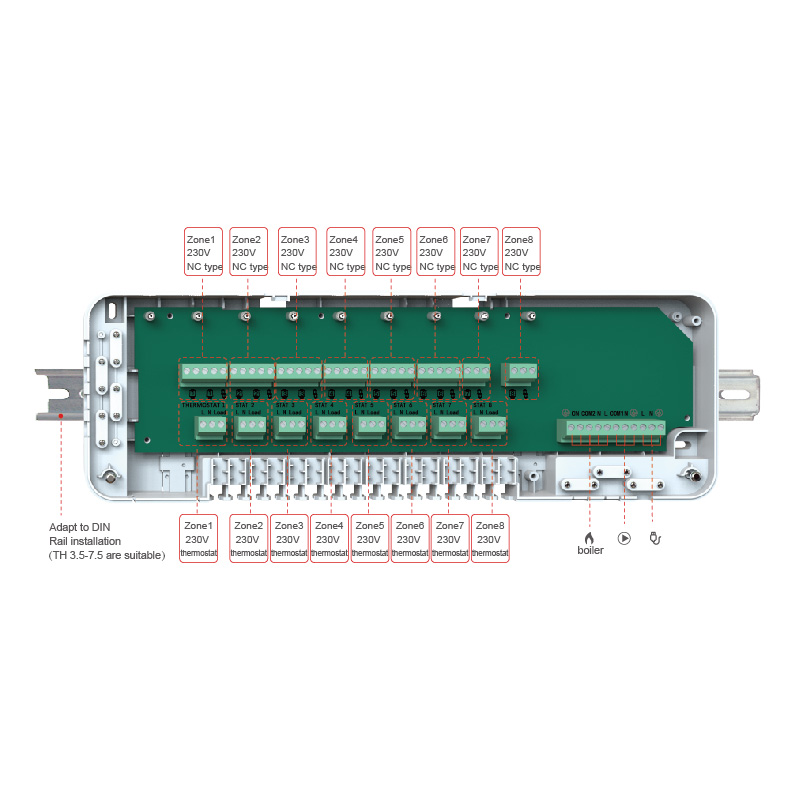
In the actual operation of underfloor heating systems, stability is always a major concern for users. Whether for residential heating or industrial projects, failures not only affect the user experience but can also lead to additional maintenance costs. As the core management component of the system, the control center’s role is reflected in equipment linkage and is related to the overall coordination and reliability of operation. Products like multi-zone wired control centers, by centrally managing key equipment such as boilers, pumps, and actuators, can reduce operational uncertainties to a certain extent. Regarding whether a control center can reduce the failure rate, we can analyze it from the aspects of structural management, operational control, and maintenance convenience.
Centralized control improves system stability
This relates to whether the various components of the system can operate in an orderly manner.
- Unified management of multiple devices: The control center can connect the boiler, pumps, and actuators in each zone in a unified manner, avoiding the chaos caused by independent operation of equipment.
- Zoned control reduces mutual interference: By managing the operating status of different zones, it is possible to prevent anomalies in one part from affecting the overall system operation.
From an overall structural perspective, the combination of centralization and zoning helps reduce the probability of system failures.
Optimized Operating Logic Reduces Abnormalities
A well-designed control logic can prevent frequent equipment malfunctions.
- Automatic Interlocking Mechanism: The control center can automatically start and stop relevant equipment as needed, such as simultaneously starting water pumps and boilers when heating is required, reducing human error.
- Avoiding Frequent Start-Stop Losses: By uniformly scheduling equipment operation, unnecessary frequent start-stops can be reduced, thereby decreasing equipment wear.
From an operational perspective, scientific control effectively reduces the probability of abnormalities.
More Efficient Maintenance and Troubleshooting
Good management also facilitates later maintenance.
- Clearer Fault Location: A zoned control structure makes it easier to locate problems to specific areas or equipment, shortening troubleshooting time.
- More Standardized Wiring and Structure: Wired control centers typically have centralized and clear wiring, reducing the risks associated with messy wiring.
From a maintenance perspective, this design improves the long-term reliability of the system.
In practical applications, the control center plays a crucial role in connection and control, significantly impacting system stability. Through reasonable structural design and optimized operating logic, human error and conflicts between equipment can be reduced, thereby lowering the likelihood of overall system failure. For users seeking stable operation, this type of centralized control solution offers a more reassuring user experience and makes system management clearer and more efficient. Furthermore, its standardized management methods help extend equipment lifespan and ensure smoother and more reliable operation of the entire heating system over the long term.