

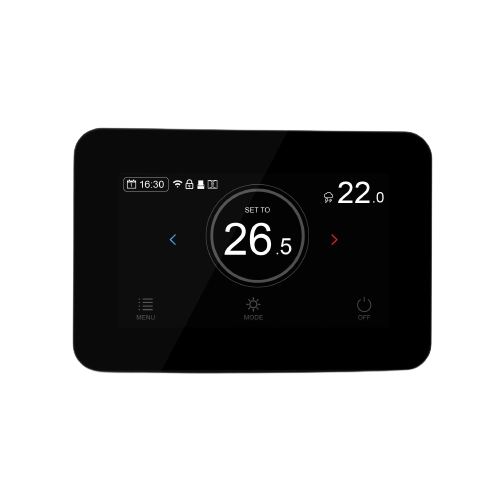
In modern HVAC systems, indoor temperature stability directly affects living comfort and energy efficiency. Compared with traditional heating methods that rely on manual adjustment, thermostatic valves achieve automatic regulation through sensing and continuous modulation. This enables precise heat output control, keeping indoor temperatures within a stable and comfortable range.
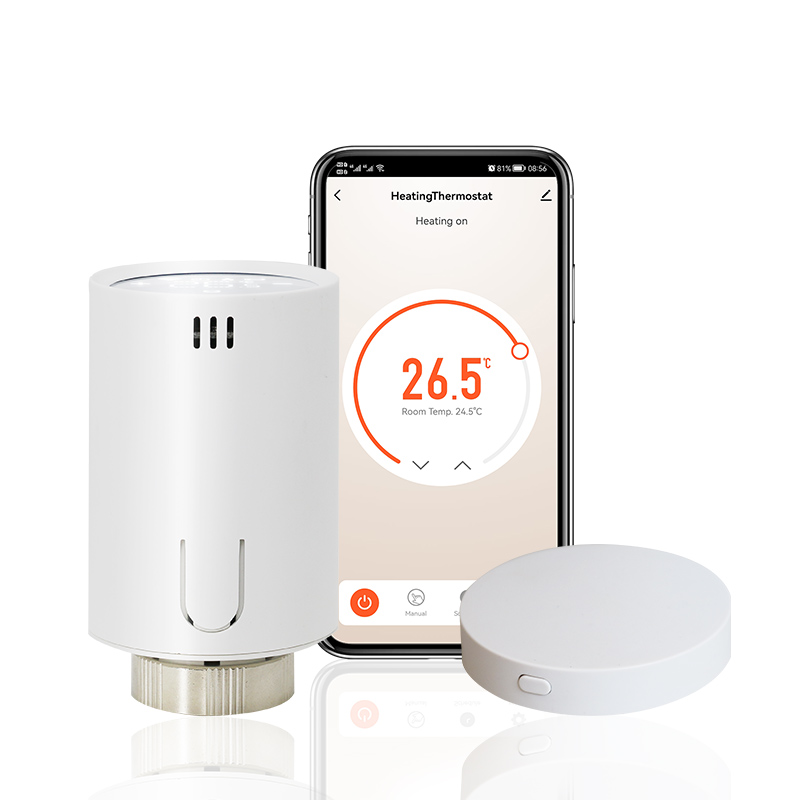
Working Principle of a Thermostatic Valve: Temperature Sensing and Automatic Adjustment
The core of a thermostatic valve lies in its internal temperature-sensing element, which adjusts valve opening based on ambient temperature changes.
- Temperature-responsive sensing element
Wax or liquid expansion elements inside the valve react to temperature changes. When room temperature rises or falls, the material expands or contracts, moving the valve core.
- Automatic control of hot water flow
As temperature increases, the valve gradually closes to reduce hot water entering the radiator. When temperature drops, it opens to increase heating output.
- No external power required
Most mechanical thermostatic valves operate purely on physical thermal expansion principles, ensuring reliable and stable performance without electricity.
How Indoor Temperature is Precisely Regulated
A thermostatic valve is not simply an on/off device; it maintains balance through continuous adjustment.
- User-defined target temperature
Users set a desired comfort level, such as 18°C, 20°C, or 22°C, which becomes the control reference.
- Continuous micro-adjustments
When the temperature approaches the set point, the valve fine-tunes its opening to avoid large fluctuations.
- Prevention of localized overheating
Areas near radiators often heat up faster, and thermostatic valves help eliminate uneven heat distribution.
Energy Efficiency and Comfort Benefits
Thermostatic valves improve not only comfort but also energy efficiency.
- Reduced energy waste
Avoids constant high-temperature heating and reduces unnecessary energy consumption.
- Improved indoor comfort
Maintains stable temperatures and eliminates sudden hot-and-cold fluctuations.
- Extended system lifespan
Reduces frequent cycling and system stress, helping extend equipment durability.
- Zoned temperature control
Different rooms can be independently adjusted for personalized comfort.
Applications and Installation Considerations
Thermostatic valves are widely used, but proper installation is essential for optimal performance.
- Compatible with multiple heating systems
Suitable for radiator systems and underfloor heating manifold systems.
- Avoid obstruction of the sensing area
Do not cover the valve with curtains or furniture, as this affects temperature sensing accuracy.
- Proper system matching required
Different heating systems require appropriate valve models to ensure accurate control.
Thermostatic valves achieve continuous indoor temperature control through precise sensing and automatic adjustment mechanisms, making heating systems more intelligent, efficient, and stable. In modern energy-conscious buildings, they have become essential components of HVAC systems. If you are looking to improve system efficiency and temperature control accuracy, E-top provides professional thermostatic valves and HVAC solutions to help achieve better comfort, smarter regulation, and lower energy consumption.