
In modern HVAC systems, thermostats have become essential devices for maintaining a comfortable indoor environment. However, many people often confuse fan coil thermostats with standard thermostats when selecting or designing an HVAC system, assuming that they only differ in appearance while offering similar functions. In reality, there are significant differences between the two in terms of control targets, application scenarios, control logic, and system compatibility. Especially in hotels, apartments, office buildings, and commercial facilities, fan coil thermostats have become indispensable control devices for fan coil unit systems. Understanding these differences helps ensure proper product selection while improving system efficiency and occupant comfort.
Significant Differences in Control Targets
Although both devices are used for temperature control, they are designed to manage different systems.
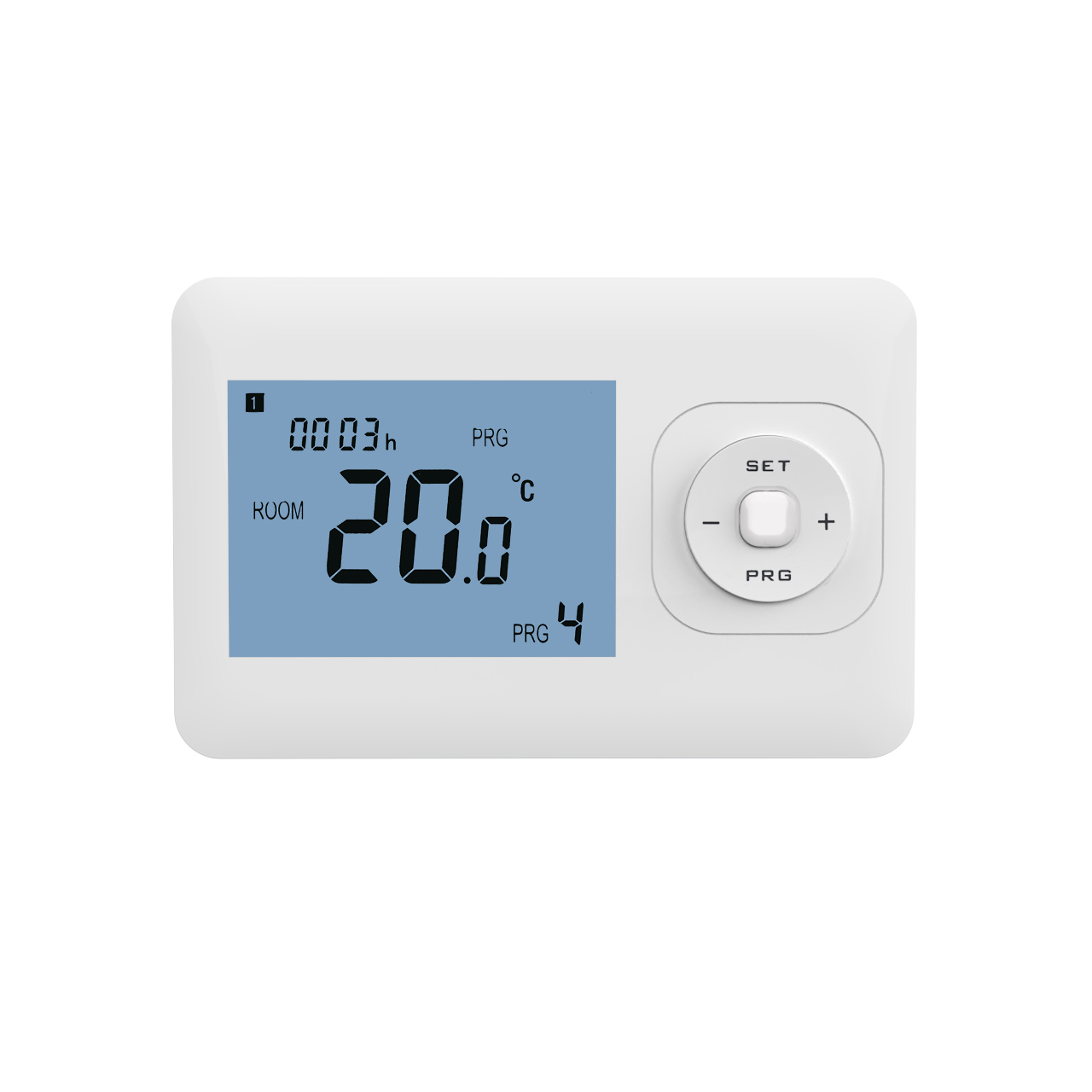
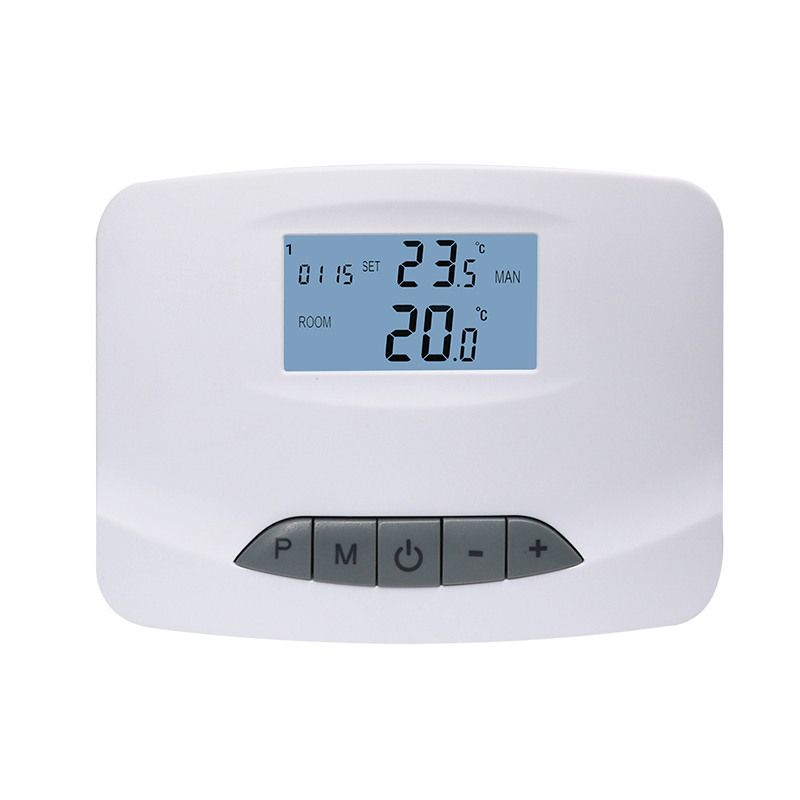
- A standard thermostat is mainly used to control equipment such as air conditioners, underfloor heating systems, electric heaters, or boilers. Its primary task is to turn equipment on or off according to the set temperature, providing basic temperature regulation.
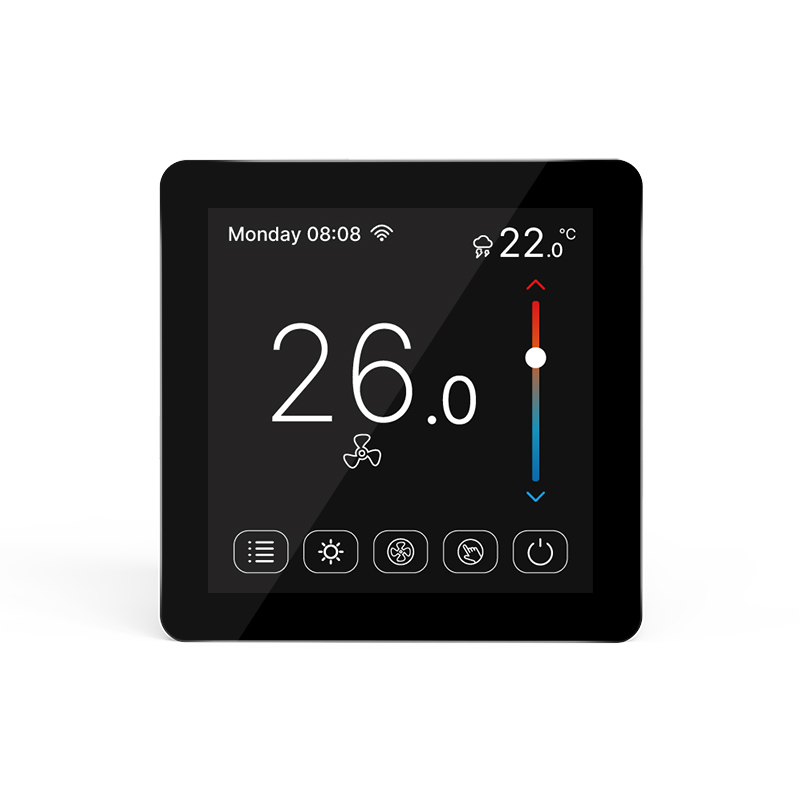
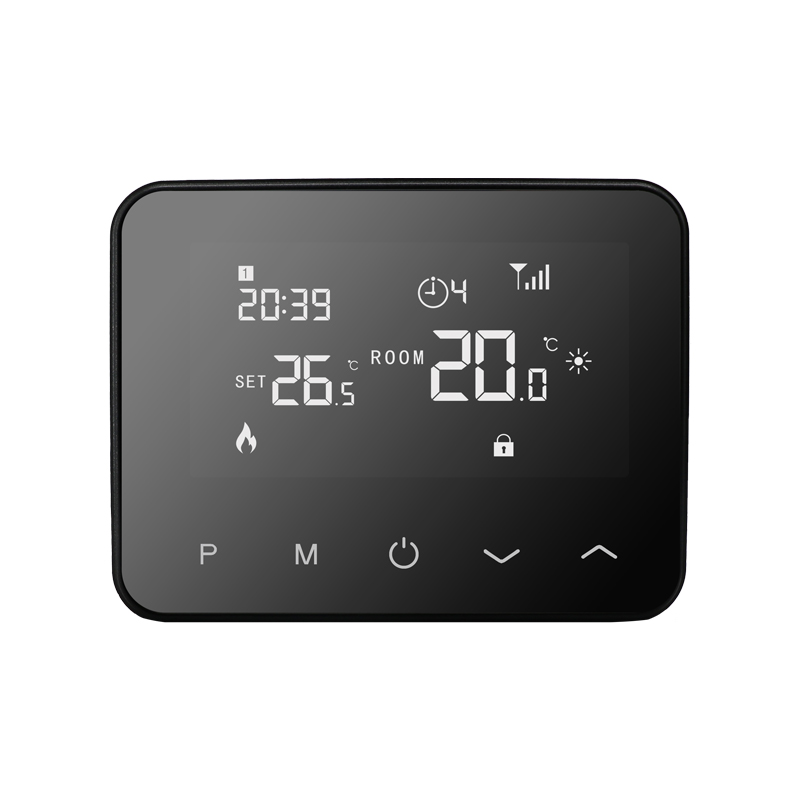
- A fan coil thermostat, on the other hand, is specifically designed for fan coil unit systems. It not only monitors room temperature but also controls fan operation and water valve switching to regulate cooling or heating performance.
- In a fan coil system, the thermostat must work together with fans, water valves, actuators, and other components. As a result, its control scope is much more complex than that of a standard thermostat.
Because the control targets are different, the design concepts and functional configurations of these two types of thermostats also differ significantly.
More Advanced Control Functions
For large building projects, control functionality directly affects overall system performance. Compared with standard thermostats, fan coil thermostats offer a much broader range of features.
- More Flexible Fan Speed Control
Standard thermostats typically provide temperature setting, mode switching, and simple on/off control functions, which are sufficient for basic temperature regulation. In contrast, fan coil thermostats can control high, medium, and low fan speeds and automatically adjust operation according to room temperature changes.
- Water Valve Control Capability
A fan coil thermostat not only controls fan operation but can also coordinate with motorized water valves to regulate chilled or hot water flow, improving temperature control accuracy.
- Automatic Heating and Cooling Changeover
Some smart fan coil thermostats support automatic heating and cooling switching, eliminating the need for frequent manual adjustments. The thermostat can automatically select the appropriate operating mode based on environmental conditions.
- Enhanced Energy-Saving Features
Many models include scheduling functions, energy-saving modes, and temperature limitation settings, helping reduce energy consumption while maintaining occupant comfort.
- Compatibility with EC Fan Control
For systems equipped with EC fans, fan coil thermostats can use 0–10V control signals to achieve stepless speed regulation, ensuring smoother operation and greater energy efficiency.
These advanced control functions enable fan coil thermostats to better meet the demands of modern smart buildings for comfort, energy savings, and efficient management.
Different Application Scenarios
Different building environments have different requirements for temperature control equipment, which leads to distinct application scenarios for these two thermostat types.
- Residential Applications
Standard thermostats are commonly used in residential heating systems, small central air conditioning systems, and standalone heating or cooling equipment. Since these systems are relatively simple, thermostat requirements are generally less demanding.
- Hotels and Apartments
Hotel rooms and serviced apartments often use fan coil air conditioning systems, where each room requires independent temperature control. In these situations, fan coil thermostats can coordinate fan operation, water valve control, and temperature regulation to provide a more comfortable guest experience.
- Office Buildings and Commercial Complexes
In office buildings, shopping malls, and other large commercial facilities, HVAC systems operate for extended periods and cover large areas. These environments require precise temperature control and effective energy management. Fan coil thermostats help facility managers achieve more refined system control.
- Two-Pipe and Four-Pipe Systems
Two-pipe systems typically control the fan and a single changeover valve for heating and cooling. Four-pipe systems require separate control of chilled water and hot water valves, allowing independent cooling and heating throughout the year. Different system configurations therefore require different types of fan coil thermostats.
- Smart Building Trends
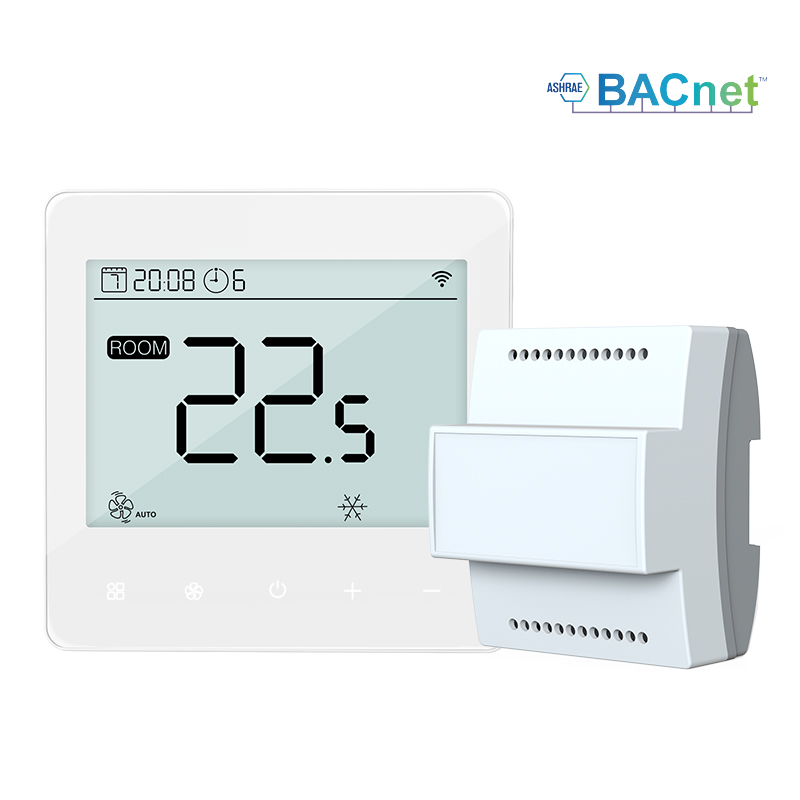
As building automation technology continues to evolve, more projects are adopting fan coil thermostats that support communication protocols such as Modbus and BACnet. These thermostats enable remote monitoring, centralized management, and energy consumption analysis.
Overall, fan coil thermostats are better suited for commercial buildings and engineering projects, while standard thermostats are primarily used for basic temperature control applications.
Significant Differences in Smart Features and Expandability
Modern HVAC systems increasingly emphasize intelligent control capabilities, which is another major distinction between these two thermostat types. Traditional standard thermostats mainly focus on local control and offer limited expansion options.
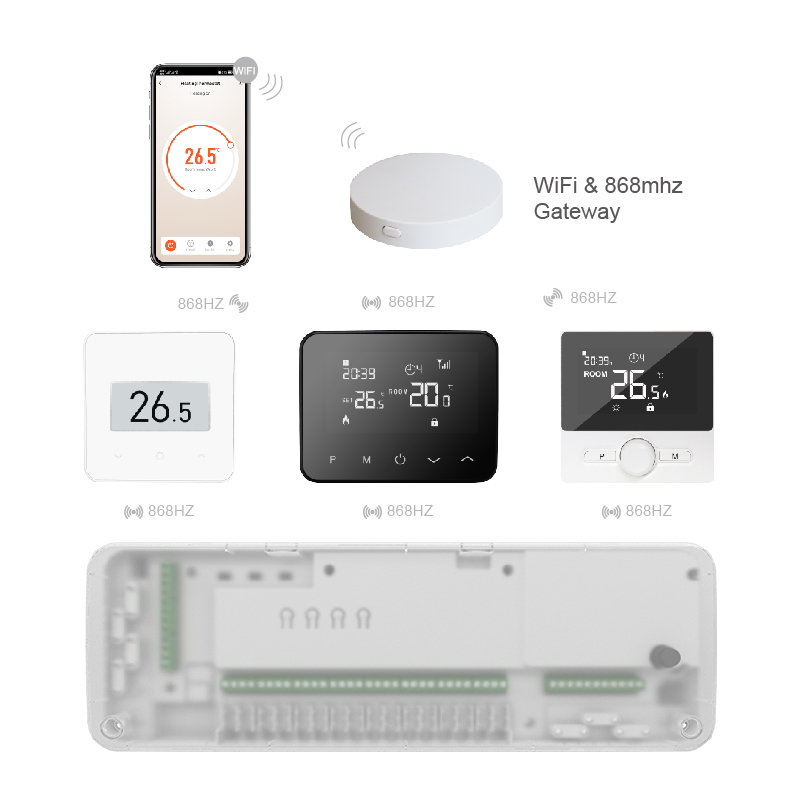
- Fan coil thermostats typically provide additional communication interfaces and control ports, allowing integration with Building Management Systems (BMS) for remote monitoring, centralized control, and energy analysis.
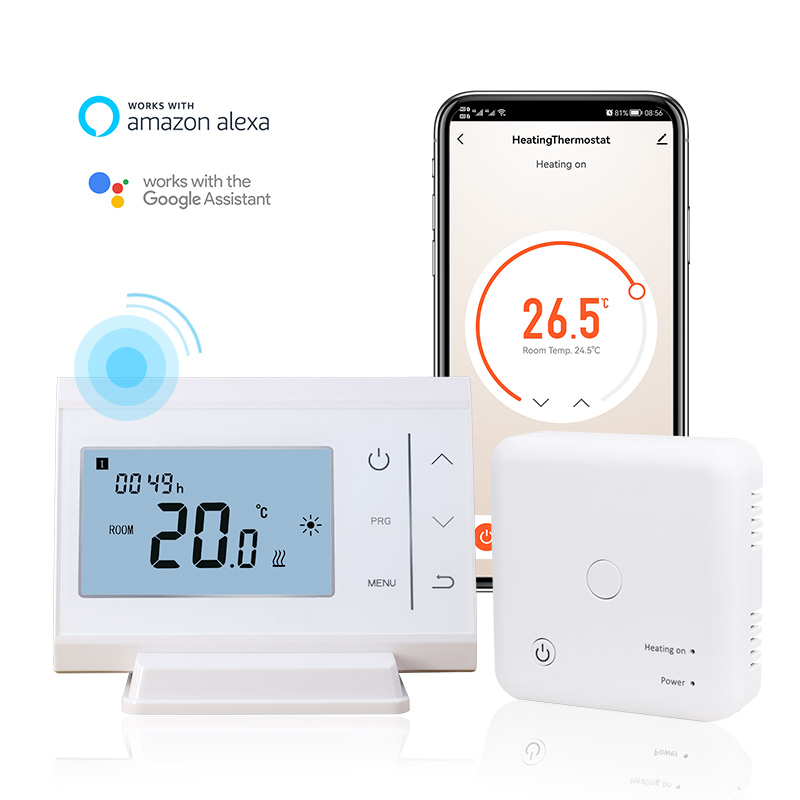
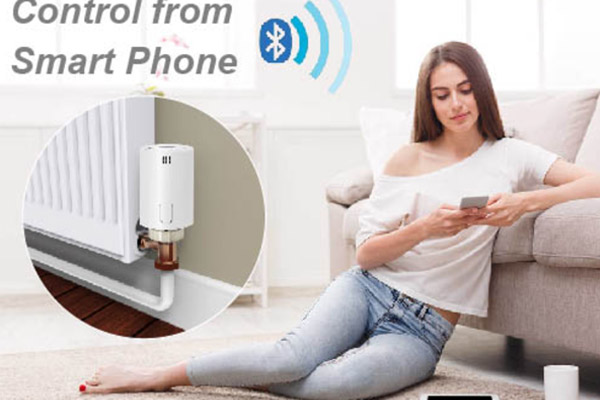
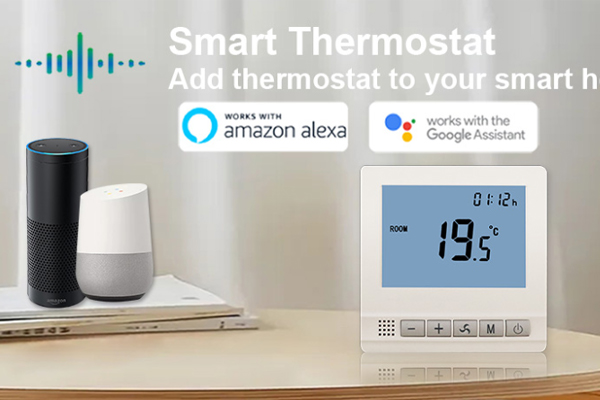
- Some advanced models also support WiFi connectivity, smartphone app control, hotel room card energy-saving functions, and external sensor integration.
- For large hotels and commercial projects, these intelligent features not only improve management efficiency but also help reduce operating costs.
Looking ahead, smart connectivity and networking capabilities are becoming key competitive advantages for fan coil thermostats.
Although both fan coil thermostats and standard thermostats perform temperature control functions, they differ fundamentally in terms of control targets, functional capabilities, application scenarios, and intelligent features. Standard thermostats are better suited for simple environmental control, while fan coil thermostats are specifically designed for FCU systems, enabling coordinated control of fans, water valves, and temperature while supporting building automation and energy management. For hotels, apartments, office buildings, and commercial projects, selecting the right fan coil thermostat can significantly improve system comfort, efficiency, and overall performance.