
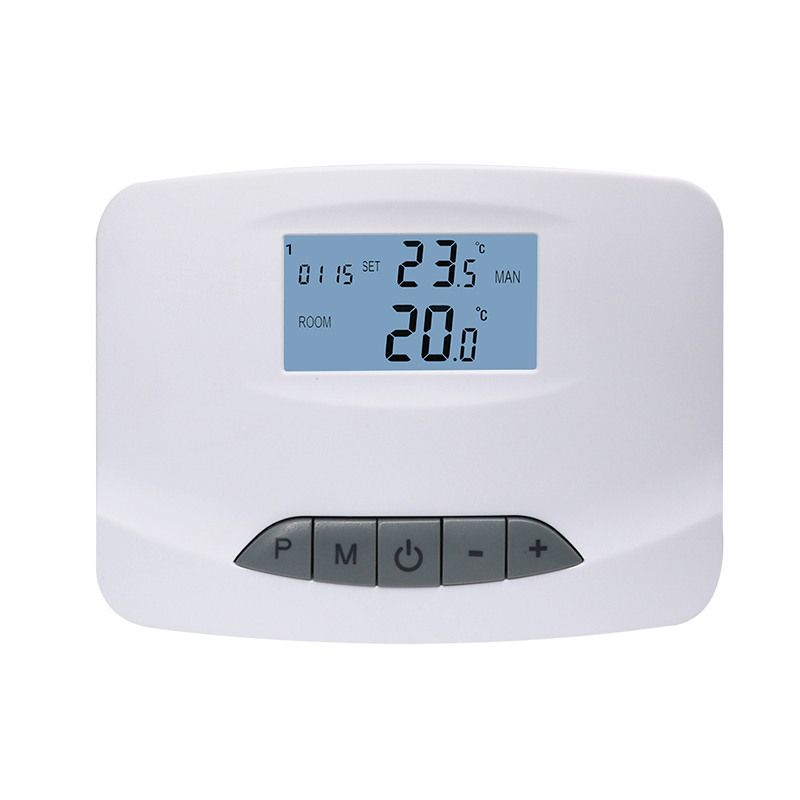
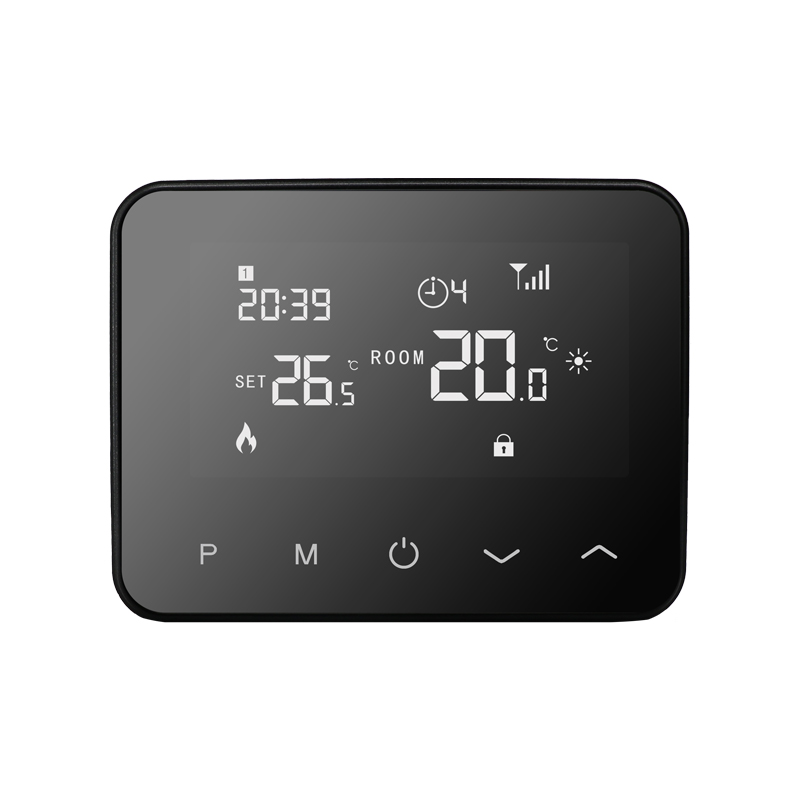
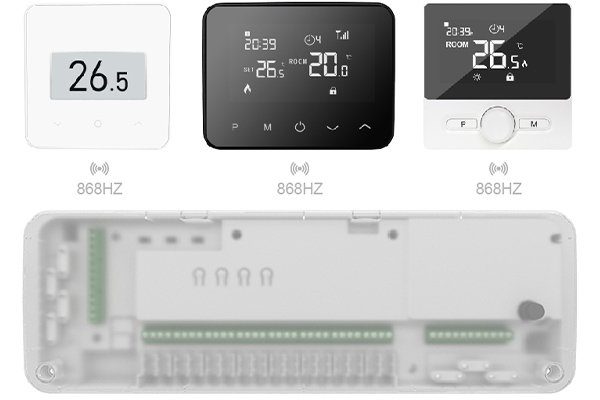
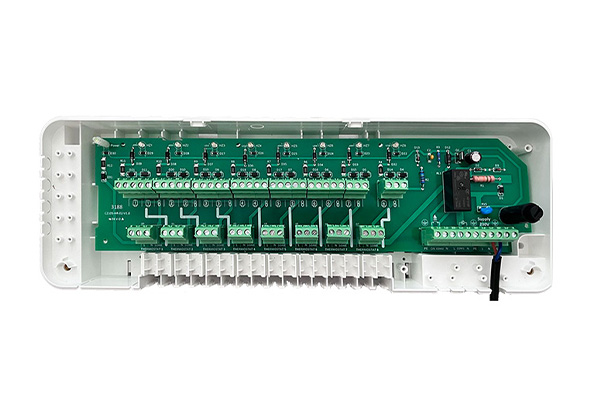
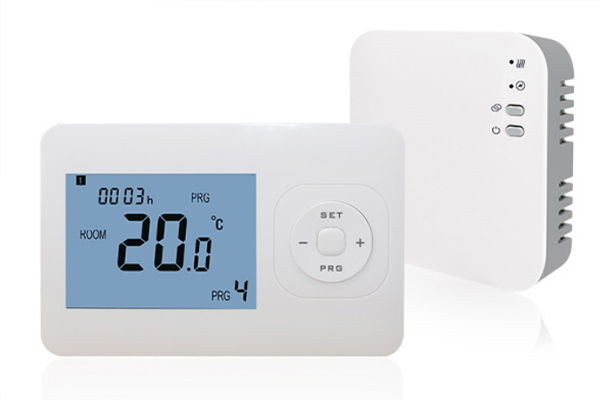
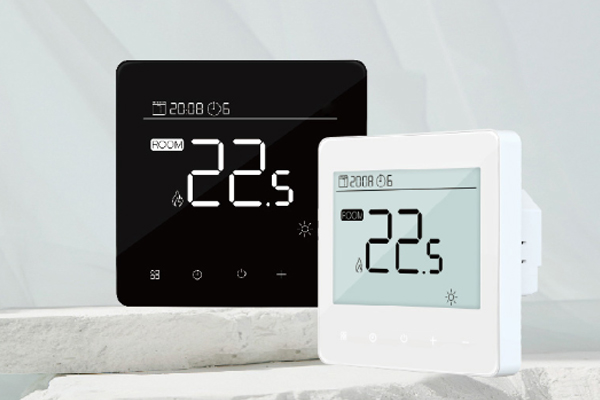
In modern multi-zone heating systems, smart TRVs have become crucial for achieving precise temperature management. By working in conjunction with the boiler system and wireless gateways, they connect the terminal controls of radiators in each room with the controls at the heat source, enabling the entire heating system to automatically adjust its operating status according to actual needs. This linkage mechanism not only improves the accuracy of temperature control but also makes energy distribution more rational, thus achieving more efficient heating operation while ensuring comfort.
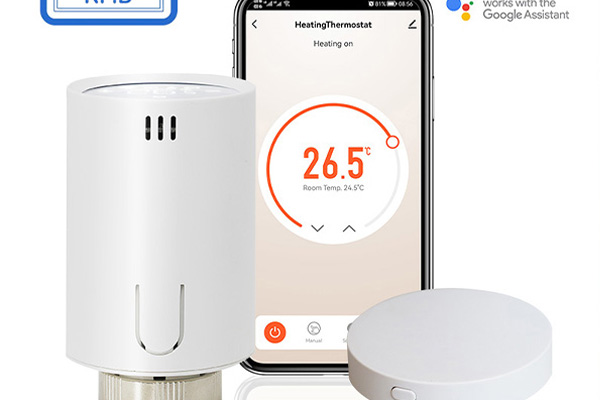
Zigbee wireless communication enables system connectivity.
In a smart heating architecture, the communication method between devices determines the overall linkage efficiency.
- TRV and gateway wireless connection: Smart TRVs connect to home or building gateways via the Zigbee protocol, enabling unified access and stable communication for multiple devices.
- Gateway and boiler system linkage: The gateway, as a central device, aggregates the demand signals from each TRV and transmits them to the boiler for centralized control.
Zigbee wireless communication forms the foundation for a stable and efficient connection between the TRVs and the boiler, making system linkage smoother and more reliable.
Zoned Temperature Demand-Driven Boiler Start/Stop
The core function of the intelligent TRV (Heating Radiator Controller) is to control heat source operation based on the heat demand of each room.
- Independent Room Temperature Sensing:Each TRV monitors the temperature of its assigned room in real time and automatically adjusts valve opening according to the set value.
- Centralized Heat Demand Feedback Boiler: When multiple TRVs simultaneously issue heating requests, the system triggers the boiler to start or increase output.
This zoned temperature-driven mechanism makes boiler operation more responsive to demand, thereby avoiding energy waste and improving heating efficiency.
Dynamic Adjustment Enables System Collaborative Operation
During the interconnected process, the system needs to continuously optimize its operating status based on real-time changes.
- Automatic Valve Opening Adjustment: The TRV continuously adjusts the radiator water flow according to changes in room temperature to achieve precise temperature control.
- Intelligent Boiler Power Matching: The system dynamically adjusts the boiler output power according to overall demand, avoiding frequent start-ups and shutdowns.
Dynamic collaborative control ensures real-time matching between the TRV and the boiler, making the heating process more stable and efficient.
Intelligent Strategy Optimizes Overall Energy Management
In the integrated system of intelligent TRV and boiler, energy management no longer relies on the simple start-up and shutdown of a single device. Instead, it achieves more precise energy allocation through multi-node collaborative judgment and dynamic strategy adjustment. The system comprehensively judges whether heating is needed based on real-time feedback from the TRV in each room, starting or maintaining heating only in areas with actual heat demand, thus avoiding ineffective cycles and energy waste. Simultaneously, when multiple areas are operating, the system can optimize heat distribution based on the priority and temperature differences of different spaces, keeping the boiler output within a more reasonable operating range, rather than frequent high-load or low-efficiency operation. This demand-driven intelligent strategy not only improves overall energy utilization efficiency but also makes the heating system more stable and economical in long-term operation, achieving a balance between comfort and energy saving.
Intelligent TRV achieves efficient linkage control with the boiler system through Zigbee wireless communication, zoned demand feedback, dynamic adjustment mechanisms, and energy optimization strategies. It not only allows for independent and precise temperature control in each room but also enables the heat source to operate intelligently according to overall demand, thereby improving the stability and energy-saving performance of the entire heating system. With the continuous development of modern intelligent buildings, this multi-device collaborative control mode is becoming an important solution for improving comfort and energy efficiency.